Does Visitix Work? What the Clinical Evidence Actually Shows
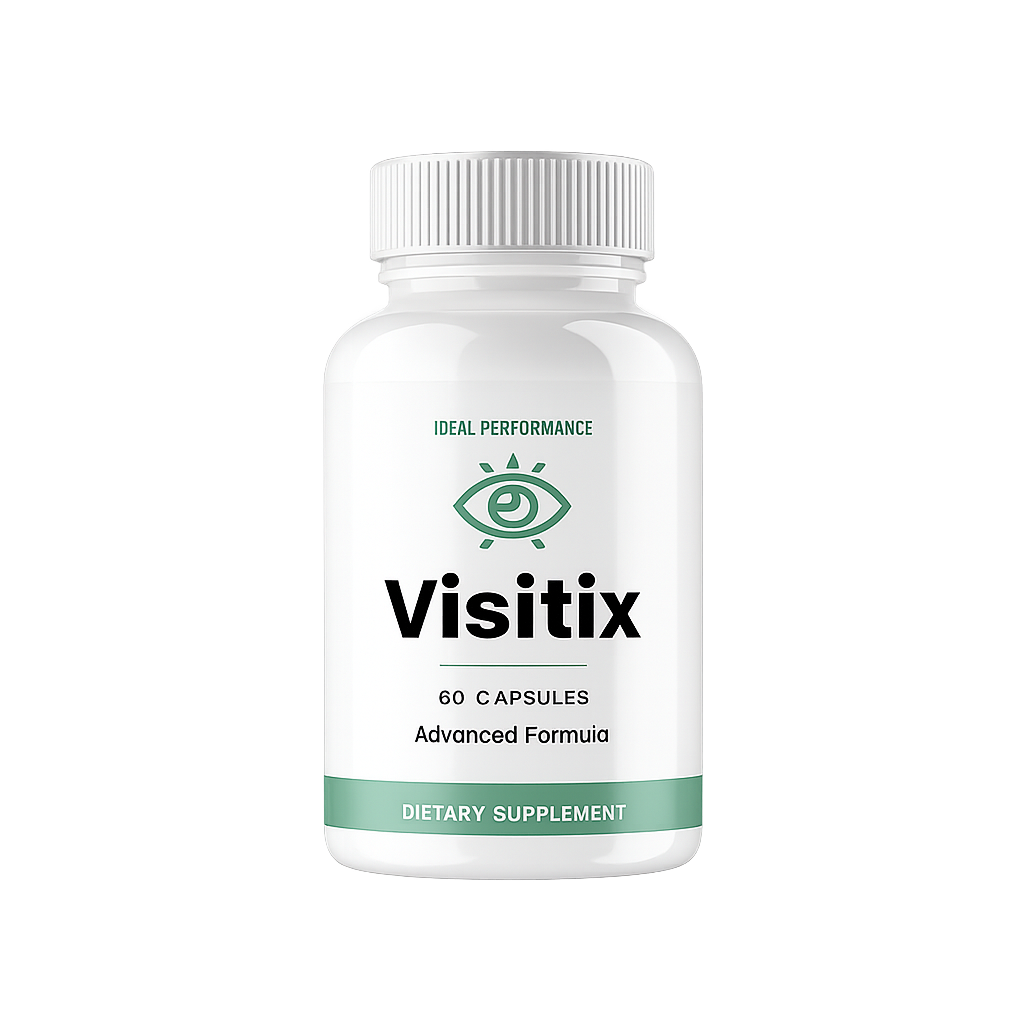
Visitix contains several ingredients with legitimate eye-health relevance, especially lutein, zeaxanthin, zinc, vitamin A and riboflavin. However, JeffsReviews did not verify a matching clinical trial of the complete Visitix formula, so its likelihood of improving eyesight, eye comfort or screen-related symptoms cannot be calculated.
Visitix is also not the AREDS2 formula. Its ingredient amounts and overall composition differ materially, so it cannot inherit the clinical findings of AREDS2.
The fairest conclusion is that Visitix is a research-relevant formula with uncertain finished-product results. It may interest someone who understands that limitation, but it should not be treated as a clinically proven eye treatment, an AREDS2 substitute or a replacement for an eye examination.
Jeff has not purchased, used or personally tested Visitix.
By Jeff, Editor-in-Chief · Updated 29 July 2026 · Literature searches performed 29 July 2026 · Research-based analysis (not personally purchased)
Read alongside the complete Visitix review, the ingredient and label analysis and the dosage and directions guide.
Visitix evidence at a glance
- Matching finished-product trial:
- No clearly matching published trial verified (checked 29 July 2026)
- Ingredient-level human research:
- Yes, particularly for lutein and zeaxanthin
- Identical to AREDS2?
- No
- Proof of clearer everyday eyesight:
- Not established for Visitix
- Seven-day / 90-day timeline:
- Merchant claims; not independently established
- Editorial conclusion:
- Research-relevant ingredients, uncertain finished-product benefit.
Who may — or may not — find Visitix worth considering?
May still consider it
- Adults interested in a disclosed multi-nutrient eye supplement
- Buyers who understand ingredient research is not proof of a finished-product result
- People willing to verify the current label, serving and claims before purchasing
- Buyers with realistic expectations rather than a promise of clearer eyesight
Probably not the right fit
- Anyone expecting it to correct a glasses prescription
- Anyone seeking a clinically equivalent AREDS2 formula
- Anyone expecting proven dry-eye, screen-strain or night-vision results
- Anyone expecting guaranteed improvement within seven or 90 days
- Anyone planning to delay appropriate assessment of persistent visual changes
Visitix is easier to justify as a general nutritional purchase than as a clinically proven solution to a particular eye problem.
JeffsReviews may earn a commission if you purchase Visitix through links on this page, at no additional cost to you. Jeff has not purchased Visitix or measured his own eye-health outcomes. Every conclusion here is based on the supplied label, supplied merchant materials and dated public sources.
The current product page is useful for checking whether the label, serving instructions and benefit claims still match the version analysed here.
Check the current Visitix formula and claimsWhat would “it works” actually mean?
Different claims require different evidence. A change in macular pigment, for example, is not the same as correcting blurry vision.
- Nutrient maintenance — supplying nutrients that contribute to normal eye function.
- Symptom relief — subjective changes in eye comfort or perceived clarity.
- Objective performance — measured changes in acuity, contrast sensitivity or macular pigment.
- Disease prevention or treatment — reducing risk or slowing progression of AMD or cataracts.
Exact-product Visitix literature search
The first question is whether researchers tested this complete formula, not merely one ingredient found in it.
JeffsReviews did not identify a clearly matching published or registered human study for the exact Visitix formula in the databases successfully searched on 29 July 2026. This does not prove that no study exists anywhere.
See the database-by-database search log
| Registry | Queries entered | Outcome | Checked |
|---|---|---|---|
| PubMed |
| Finished-product evidence: Not verified No published human trial of the exact 60-capsule Visitix formula reviewed here was located. Ingredient-level records (lutein, zeaxanthin, alpha-lipoic acid, blueberry, grape-seed, quercetin) exist but concern different products and formulations. | 2026-07-29 |
| ClinicalTrials.gov |
| Finished-product evidence: Not verified No registered study of a product identified as this exact Visitix formula was located. | 2026-07-29 |
| WHO ICTRP |
| Finished-product evidence: Not verified No cross-registry record identified as this exact Visitix formula was located. | 2026-07-29 |
| ISRCTN |
| Finished-product evidence: Not verified No ISRCTN registration for this exact Visitix formula was located. | 2026-07-29 |
PubMed
Checked 2026-07-29
"Visitix""Visitix" AND (eye OR vision OR macular OR retina OR AMD)"Visitix" AND (trial OR randomised OR randomized OR clinical)
No published human trial of the exact 60-capsule Visitix formula reviewed here was located. Ingredient-level records (lutein, zeaxanthin, alpha-lipoic acid, blueberry, grape-seed, quercetin) exist but concern different products and formulations.
ClinicalTrials.gov
Checked 2026-07-29
"Visitix"Visitix eye supplement
No registered study of a product identified as this exact Visitix formula was located.
WHO ICTRP
Checked 2026-07-29
"Visitix"
No cross-registry record identified as this exact Visitix formula was located.
ISRCTN
Checked 2026-07-29
"Visitix"
No ISRCTN registration for this exact Visitix formula was located.
Where a database was unavailable during a check, search availability could not be confirmed. A failed query is not the same as zero results.
Visitix is not the AREDS2 formula
The two formulas share some ingredient names, but the amounts and total compositions are substantially different.
Vitamin C
Visitix: 100 mg
AREDS2: 500 mg
Vitamin E
Visitix: 10 mg
AREDS2: 400 IU
Lutein
Visitix: 50 mg
AREDS2: 10 mg
Zeaxanthin
Visitix: 20 mg
AREDS2: 2 mg
Zinc
Visitix: 10 mg
AREDS2: 80 mg (elemental)
Copper
Visitix: 1 mg (label % inconsistent)
AREDS2: 2 mg
Beta-carotene
Visitix: Vitamin A source; gross amount not disclosed
AREDS2: Not included in the AREDS2 formula
Population studied by AREDS2: Adults with intermediate age-related macular degeneration (AMD) in both eyes, or intermediate AMD in one eye and advanced AMD in the other. AREDS2 did not establish a benefit for people without AMD or with only early AMD.
Higher lutein or zeaxanthin does not prove greater effectiveness. Lower zinc and antioxidant amounts do not establish equivalent effectiveness. Additional Visitix ingredients do not create wider clinical benefits. Visitix should not be promoted as an AMD treatment or AREDS2 substitute.
Extended AREDS/AREDS2 background
AREDS2 was a randomised, multi-centre trial run by the US National Eye Institute. Its findings relate to a specific diagnosed population and a specific studied formula — not to any commercial multi-ingredient supplement that happens to include some of the same nutrients.
Lutein and zeaxanthin evidence
Lutein and zeaxanthin give Visitix a credible connection to eye-health research. Human studies report changes in macular pigment and, in some settings, selected visual-function measurements. However, the studies do not validate the exact Visitix combination of 50 mg lutein and 20 mg zeaxanthin as superior or predict how noticeable a result would be.
The label identifies how much is supplied. It does not tell us how large the benefit will be.
- Macular pigment is a biological measurement, not a visual-acuity score.
- Contrast sensitivity is not the same as refractive correction.
- Subjective eye comfort is not the same as objective performance.
- None of this research corrects short-sightedness, long-sightedness, astigmatism or presbyopia.
Extended mechanism and study context
Randomised research has reported changes in macular pigment optical density and, in some settings, contrast-sensitivity measures with lutein/zeaxanthin supplementation. Results are not uniform across studies, populations or outcomes, and different products used different carotenoid sources.
Other ingredient evidence
Some Visitix ingredients have human research, but the studies use different preparations, amounts, populations and outcomes.
| Ingredient | Visitix amount | Relevant evidence type | Important formula limitation | What can be concluded |
|---|---|---|---|---|
| Blueberry extract | Undisclosed | Anthocyanin biology | Blueberry ≠ bilberry; species/standardisation not stated | Indirect |
| Grape-seed extract | Undisclosed | Proanthocyanidin ingredient research | Preparation and standardisation not disclosed | Indirect |
| Eyebright (Euphrasia) | Undisclosed | Traditional use | Limited controlled oral trials; preparation not stated | Indirect |
| Alpha-lipoic acid | Undisclosed | Ingredient research for other conditions | Isomer and preparation not specified | Indirect |
| Vitamin C | 100 mg | Authorised nutrient wording | Below AREDS2 amount | Nutritional only |
| Vitamin E | 10 mg | Authorised nutrient wording | Below AREDS2 amount | Nutritional only |
Blueberry extract
Amount: Undisclosed
Evidence: Anthocyanin biology
Limitation: Blueberry ≠ bilberry; species/standardisation not stated
Conclusion: Indirect
Grape-seed extract
Amount: Undisclosed
Evidence: Proanthocyanidin ingredient research
Limitation: Preparation and standardisation not disclosed
Conclusion: Indirect
Eyebright (Euphrasia)
Amount: Undisclosed
Evidence: Traditional use
Limitation: Limited controlled oral trials; preparation not stated
Conclusion: Indirect
Alpha-lipoic acid
Amount: Undisclosed
Evidence: Ingredient research for other conditions
Limitation: Isomer and preparation not specified
Conclusion: Indirect
Vitamin C
Amount: 100 mg
Evidence: Authorised nutrient wording
Limitation: Below AREDS2 amount
Conclusion: Nutritional only
Vitamin E
Amount: 10 mg
Evidence: Authorised nutrient wording
Limitation: Below AREDS2 amount
Conclusion: Nutritional only
For the complete quantified label and NRV audit, see our Visitix ingredients and label analysis.
Visual performance
Visual acuity, contrast sensitivity, blurry vision, refractive error and night vision each need a specific study design. None have been established for Visitix at finished-product level.
- Acuity and refraction: not affected by nutrient supplementation in well-nourished adults; refractive error is corrected with glasses, lenses or surgery.
- Contrast sensitivity: some carotenoid research reports changes, but not with the Visitix formula.
- Night vision: vitamin A is essential for rod-photoreceptor function, but a nutrient role is not a demonstrated night-vision result for Visitix.
Comfort and screen use
Digital eye strain
Screen-strain management is primarily an ergonomic and habit issue. No matching Visitix trial verified.
Dry eye
Established interventions include artificial tears, lid hygiene and clinical treatments. No Visitix dry-eye trial verified.
Retinal and macular outcomes
Macular pigment can shift with carotenoid intake in research. That is an intermediate biological signal, not a promise that a buyer will see the world more clearly. AREDS2 relevance is discussed in the comparison section above.
Disease-prevention claims
- AMD prevention: prevention reviews do not establish benefit in people without AMD.
- AMD progression: AREDS/AREDS2 studied a specific diagnosed population with a specific formula; Visitix cannot inherit those findings.
- Cataracts: AREDS/AREDS2 did not establish an overall cataract benefit, and no direct Visitix cataract evidence exists.
- Treatment: eye diseases are diagnosed and managed by an eye-care professional. A food supplement is not a treatment.
Are the seven-day and 90-day Visitix timelines evidence-based?
The merchant says effects may be noticed within seven days and recommends using Visitix for at least 90 days for optimal results. JeffsReviews did not verify a matching Visitix study supporting either timeline.
The claims do not define which outcome should change, how it should be measured, how many people respond or how large the improvement should be.
A longer package duration may be commercially convenient, but it does not validate a clinical course.
Some nutritional studies last for several months. That provides general research context, not proof that Visitix works after 90 days.
For the two-capsule schedule and bottle-duration arithmetic, see our Visitix dosage guide.
Evidence matrix
The table below shows where the research is relevant and where the merchant’s broader result claims remain unsupported.
Maintains normal vision
Best evidence: Authorised claims for qualifying nutrients (subject to conditions of use)
Visitix match: Nutrient-level
Verdict: Does not prove improved vision from the complete product
Increases macular pigment
Best evidence: Human lutein and zeaxanthin research
Visitix match: Ingredient-level; 50 mg + 20 mg formula not established
Verdict: Plausible but not proven for Visitix
Improves contrast sensitivity
Best evidence: Some carotenoid and antioxidant trials
Visitix match: Different formulas and populations
Verdict: Not established for Visitix
Improves blurry vision
Best evidence: No clearly matching Visitix evidence
Visitix match: None verified
Verdict: Unsupported
Relieves dry eye
Best evidence: Studies of other formulas and established dry-eye interventions
Visitix match: No direct match verified
Verdict: Not established
Relieves digital eye strain
Best evidence: Limited research involving other carotenoid or multi-ingredient products
Visitix match: No direct match verified
Verdict: Not established
Improves night vision
Best evidence: Vitamin A deficiency biology and separate ingredient research
Visitix match: No product-specific trial
Verdict: Not established
Prevents AMD
Best evidence: Prevention reviews do not establish benefit in people without AMD
Visitix match: Not applicable
Verdict: Do not claim
Slows AMD progression
Best evidence: AREDS and AREDS2 formulas in specific diagnosed populations
Visitix match: Materially different formula
Verdict: Cannot inherit AREDS2 evidence
Prevents cataracts
Best evidence: AREDS/AREDS2 did not establish an overall cataract benefit
Visitix match: No direct evidence
Verdict: Do not claim
Works within seven days
Best evidence: Merchant statement
Visitix match: No matching trial verified
Verdict: Unsubstantiated timeline
Optimal after 90 days
Best evidence: Merchant recommendation
Visitix match: No matching trial verified
Verdict: Not clinically established
Realistic expectations
Reasonably supported
- Visitix contains nutrients and carotenoids relevant to normal eye biology
- Lutein and zeaxanthin have human research
- Some nutrients may support authorised normal-function wording when conditions are met
Possible but not established for Visitix
- Changes in macular pigment
- Changes in selected visual-function measurements
- Subjective changes in eye comfort
- Subjective changes during screen use
Not supported as Visitix results
- Correcting a glasses prescription
- Treating blurry vision
- Treating dry-eye disease
- Preventing or treating AMD
- Preventing cataracts
- Restoring lost sight
- Guaranteed improvement within seven or 90 days
- Producing the same outcomes as AREDS2
Visitix sits between two exaggerated positions: its ingredients are not meaningless, but the finished product is not clinically proven to produce the outcomes promoted in broad marketing language.
When to see an eye-care professional
- Sudden vision change or loss
- Persistent blurred vision
- Distortion or missing areas
- Flashes, floaters or a “curtain” effect
- Eye pain, redness or discharge
- Persistent dryness, watering or grittiness
- Difficulty with night vision
- A known AMD, cataract, glaucoma or diabetic-eye diagnosis
Continued Visitix use should not delay an eye examination. This page is research-based consumer information, not medical advice.
Visitix verdict: credible ingredients, uncertain finished-product results
What the evidence supports
Visitix contains several nutrients and carotenoids with legitimate relationships to normal eye biology. Lutein and zeaxanthin have the strongest directly relevant human research in the formula.
What the evidence does not support
JeffsReviews did not verify a matching trial of the complete Visitix formula. The available research therefore cannot establish how likely it is to improve eyesight, dry-eye symptoms, screen-related discomfort or night vision.
Important formula limitation
Visitix is not the AREDS2 formula and should not inherit AREDS2 findings for slowing AMD progression in specific diagnosed populations.
Buying decision
Visitix may still interest an adult looking for a disclosed multi-nutrient formula and willing to accept uncertain practical benefits. It is not a strong fit for someone seeking a clinically proven treatment, an AREDS2-equivalent formula or a guaranteed result timeline.
Jeff has not purchased, used or personally tested Visitix.
Read alongside the complete Visitix review, the Visitix ingredient and label analysis, the Visitix dosage and merchant-timeline analysis and the Visitix complaints and customer-review investigation.
Confirm the current formula, directions and merchant wording before deciding whether the product fits your expectations.
Review the current Visitix product detailsOur Visitix research
Formula and Use
Buying
Frequently asked questions
Sources
1. Visitix label and merchant claims
- Supplied Visitix 60-capsule bottle and two-capsule ingredient declaration. Merchant material. Used for exact-product identity, formula matching and AREDS2 comparison. Checked 29 July 2026.
- Supplied Visitix merchant page and FAQ. Merchant-controlled material. Used for the benefit-claim inventory, seven-day statement, 90-day recommendation and testimonial classification. Not treated as clinical evidence. Checked 29 July 2026.
2. Exact-product literature and trial searches
- PubMed (US National Library of Medicine). Exact-product literature search. Checked 29 July 2026. View source
- ClinicalTrials.gov. Exact-product registered-trial search. Checked 29 July 2026. View source
3. AREDS and authoritative eye-health guidance
- US National Eye Institute — Age-Related Eye Disease Study 2 (AREDS2). Formula amounts, studied population and outcomes referenced in the comparison. Checked 29 July 2026. View source
Additional source groups (systematic reviews, regulatory claims, general eye-care)
4. Systematic reviews and human studies (additional)
- WHO International Clinical Trials Registry Platform (ICTRP). Cross-registry exact-product search. Checked 29 July 2026. View source
- ISRCTN Registry. Exact-product registration search. Checked 29 July 2026. View source
5. Regulatory nutrient-claim sources
- Great Britain Nutrition and Health Claims Register. Authorised nutrient-function wording and conditions of use for qualifying nutrients. Checked 29 July 2026. View source
6. General eye-care context
- NHS — Eye health and when to get help. General consumer information about eye symptoms that require professional assessment. Checked 29 July 2026. View source
- Competition and Markets Authority — Reviews: Guidance for Online Review Sites. Balanced presentation, evidence hierarchy and commercial-relationship disclosure. Checked 29 July 2026. View source