Visitix Side Effects: Safety, Warnings and Interaction Risks
Visitix has no reliable product-specific side-effect rate that JeffsReviews could confirm. It combines 23 quantified nutrients, carotenoids, botanicals and other compounds, so unwanted effects and medicine interactions are possible even though evidence from individual ingredients does not prove that the finished product causes a particular reaction.
The merchant describes Visitix as being as safe as a daily multivitamin, but that is too broad to repeat as an independent safety conclusion. Suitability depends on the complete formula, other supplements, medicines and individual health circumstances.
The merchant advises against use during pregnancy and for people under 18, and advises people with medical conditions or taking medication to consult a doctor or pharmacist. The label’s copper and chromium percentage inconsistencies also make it important to verify the current physical bottle.
Jeff has not purchased, used or laboratory-tested Visitix.
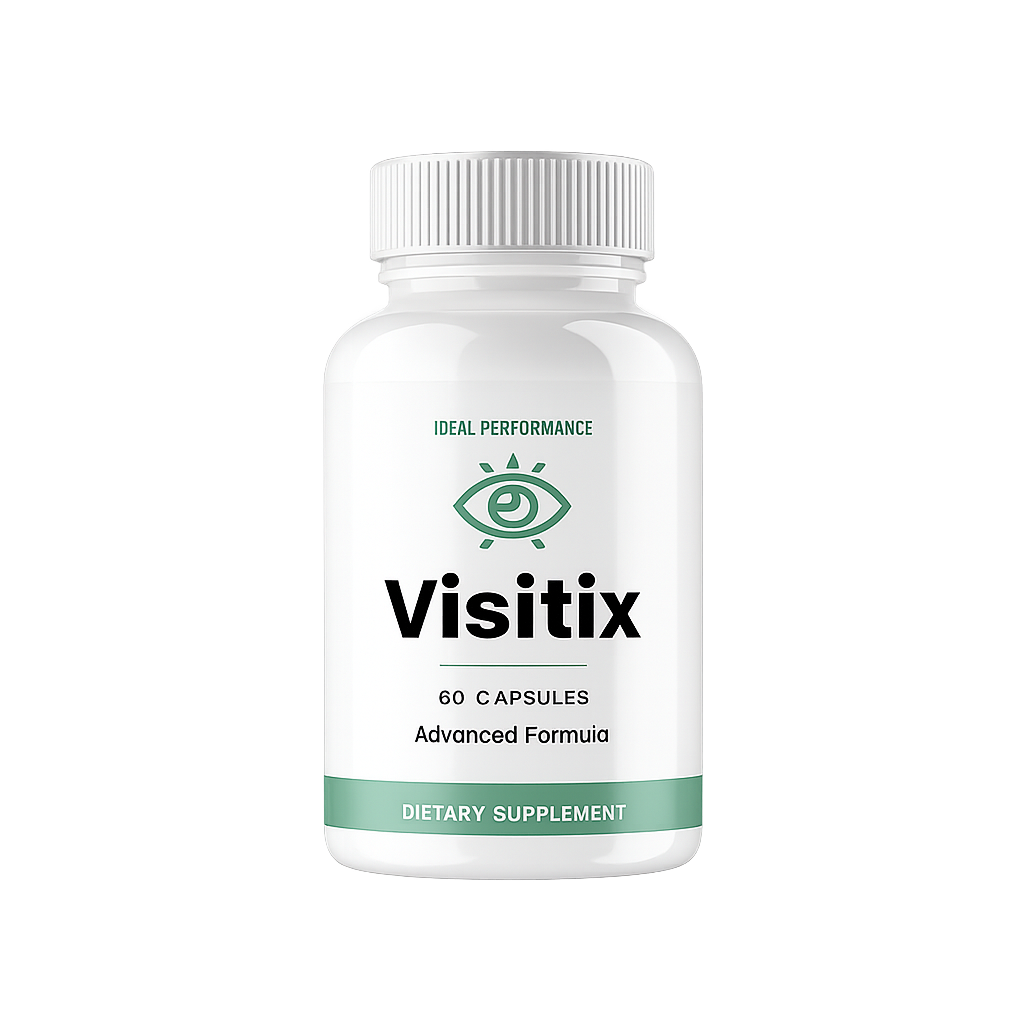
By Jeff, Editor-in-Chief · Updated 28 July 2026 · Research-based safety guide (not personally tested)
Visitix label and safety sources checked on 28 July 2026. Read alongside our complete Visitix review, ingredient and label analysis, dosage guide and price and where-to-buy guide.
Visitix safety at a glance
- Product-specific side-effect rate:
- Not established
- Serious adverse-event rate:
- Not established
- Personally tested by Jeff:
- No
- Formula complexity:
- 23 quantified entries plus capsule material
- Merchant universal-safety claim:
- Not independently confirmed
- Merchant pregnancy warning:
- Supplied FAQ says pregnant people should not use it
- Merchant age warning:
- Supplied FAQ says people under 18 should not use it
- Medicine interactions:
- Possible; several ingredients have known interaction categories
- Laboratory-test issue:
- Biotin-containing supplements can interfere with some assays
- Smoking consideration:
- Gross beta-carotene amount not disclosed on the supplied label
- Main label concern:
- Copper and chromium entries require clarification
- Main conclusion:
- Treat as a complex supplement requiring label-and-medicine review, not as universally equivalent to a basic multivitamin.
JeffsReviews may earn a commission if you purchase Visitix through links on this page, at no additional cost to you. Jeff has not used or safety-tested Visitix. This guide summarises product information and ingredient-level research; it does not determine whether the supplement is suitable for an individual.
The merchant gives several warnings, but also makes an overly broad safety claim
| Merchant statement | Classification | Editorial treatment |
|---|---|---|
| “Visitix is as safe as a daily multivitamin” | Merchant safety claim | Too broad to use as an independent safety conclusion. |
| “It is a natural product safe for healthy men and women” | Merchant positioning and safety claim | “Natural” does not establish universal safety or absence of interactions. |
| “People with a medical condition or taking medication should show the bottle to a doctor or pharmacist” | Merchant precaution | Reasonable general caution, especially given the many-ingredient formula. |
| “Pregnant people should not use it” | Merchant warning | Preserve and do not weaken. |
| “People under 18 should not use it” | Merchant age warning | Preserve and do not infer suitability immediately after age 18. |
“Visitix is as safe as a daily multivitamin”
Merchant safety claim
Too broad to use as an independent safety conclusion.
“It is a natural product safe for healthy men and women”
Merchant positioning and safety claim
“Natural” does not establish universal safety or absence of interactions.
“People with a medical condition or taking medication should show the bottle to a doctor or pharmacist”
Merchant precaution
Reasonable general caution, especially given the many-ingredient formula.
“Pregnant people should not use it”
Merchant warning
Preserve and do not weaken.
“People under 18 should not use it”
Merchant age warning
Preserve and do not infer suitability immediately after age 18.
The warnings deserve more weight than the merchant’s general multivitamin comparison. Preserved merchant precautions do not turn merchant marketing into medical proof.
No reliable Visitix-specific side-effect frequency is established
JeffsReviews has not verified a controlled Visitix safety trial, a representative adverse-event database, a representative discontinuation rate, a representative rate for nausea, headache, allergy or serious event, independent post-market surveillance, or a published finished-product safety review. This means the page cannot state how often Visitix causes a particular effect.
- Absence of a confirmed rate does not prove zero risk.
- Ingredient warnings do not prove Visitix caused a specific event.
- Merchant testimonials do not establish safety.
- A money-back guarantee does not establish safety.
- A long ingredient list does not automatically make a product unsafe.
- A natural ingredient does not automatically make a product safe.
Digestive discomfort is possible, but Visitix-specific rates are unknown
Magnesium oxide — 20 mg magnesium
Higher supplemental magnesium intakes can produce diarrhoea, nausea or abdominal cramping, and magnesium oxide is among the forms associated with laxative effects. Visitix provides much less magnesium than amounts usually involved in magnesium-related adverse-effect discussions, so this evidence does not prove that Visitix will cause diarrhoea.
Vitamin C — 100 mg
High vitamin C intakes can cause gastrointestinal discomfort. The Visitix amount is far below the adult upper intake level cited by NIH sources, so high-dose vitamin C effects should not be presented as expected Visitix effects.
Alpha-lipoic acid — 20 mg
Research and institutional summaries identify headache, heartburn, nausea and vomiting among reported effects in some alpha-lipoic-acid contexts. Studies often use much larger amounts than Visitix, and no product-specific frequency can be assigned.
Niacin — 20 mg as nicotinamide
Nicotinamide is not the same as nicotinic acid, and classic niacin flushing is more strongly associated with nicotinic acid. Flushing at the Visitix amount is not impossible, but high-dose nicotinamide toxicity evidence should not be applied to the 20 mg declared here.
Digestive or intolerance symptoms are possible with any multi-ingredient supplement, but the available evidence does not establish that they are common with Visitix.
See the detailed dose-context explanation
When authoritative sources describe side effects at 250 mg or 500 mg of a nutrient, that evidence does not transfer directly to a product declaring 20 mg or 100 mg of the same nutrient. The Visitix label and the source dose must be compared carefully before any ingredient-level warning is applied.
The main safety issue is the complete intake — not one printed NRV
Visitix contains nutrients that may also appear in multivitamins, eye-health supplements, fortified drinks, fortified foods, hair-skin-nail supplements and antioxidant combinations. Relevant Visitix entries include vitamin C, vitamin E, magnesium, zinc, niacin, copper, biotin, selenium, vitamin B12 and chromium.
- An NRV above 100% is not automatically unsafe.
- NRV is not an upper intake level.
- An NRV below 100% is not proof of safety.
- Total intake from all sources matters.
- Individual health and medicine use matter.
- Label errors make total-intake calculations less certain.
Selenium — 55 μg
Matches 100% of the printed NRV. Additional selenium from other supplements can increase total exposure, but 55 μg does not itself cause selenium toxicity.
Zinc — 10 mg
Below the adult upper level used by NIH. Medicine interactions and duplicate supplement intake remain relevant. 10 mg does not itself cause copper deficiency.
Biotin — 400 μg
Lower than doses in the strongest laboratory-test interference reports. Assay sensitivity varies, so biotin-containing supplement use should still be disclosed before relevant testing.
Botanical and other-compound considerations
Blueberry extract, eyebright powder, grape-seed extract, quercetin, rutin, taurine and alpha-lipoic acid appear on the supplied label without full species, plant-part, extract-ratio or standardisation detail. Missing preparation detail does not prove poor quality; it means the safety profile of each entry cannot be described precisely from the label alone.
Several Visitix ingredients have recognised medicine-interaction categories
| Ingredient | Visitix amount | Interaction categories | Authoritative sources indicate | Visitix-specific conclusion |
|---|---|---|---|---|
| Magnesium | 20 mg |
| NIH Office of Dietary Supplements documents interactions for magnesium supplements, generally at higher doses than 20 mg. | Interaction mechanisms are documented, but this page cannot prescribe a personal spacing schedule. |
| Zinc | 10 mg |
| NIH Office of Dietary Supplements lists absorption and status interactions for zinc supplements. | Professional advice may be needed when these medicines are used. |
| Vitamin E | 10 mg |
| NIH Office of Dietary Supplements notes bleeding-context concerns mainly at larger supplemental amounts than the 10 mg in Visitix. | Do not state that Visitix causes bleeding. Medicine users should still review the whole formula. |
| Chromium (picolinate) | 1.8 μg (label discrepancy) |
| NIH Office of Dietary Supplements describes chromium interaction categories. The Visitix label prints 1.8 μg as 45% NRV; independent arithmetic against the 40 μg EU adult NRV is approximately 4.5%. | Because the intended chromium declaration is unclear, precise interaction interpretation is less certain. |
| Alpha-lipoic acid | 20 mg |
| NCCIH summarises alpha-lipoic-acid research and dose-context concerns, usually at doses far higher than 20 mg. | Do not claim the Visitix amount lowers blood sugar, but people using glucose-lowering medicine should review the complete formula. |
| Vitamin C and vitamin E (combined) | 100 mg + 10 mg |
| NIH Office of Dietary Supplements and NCCIH describe complex antioxidant-and-cancer-treatment evidence. | Do not make a general recommendation for or against use during cancer treatment. Direct the reader to their oncology team. |
| Grape-seed extract and other botanicals | 10 mg (extract, not standardised on the supplied label) |
| NCCIH notes that herbal products can interact with medicines and that preparation detail matters. | The label does not disclose enough preparation detail to assign a precise interaction profile. |
Magnesium
20 mg
Interaction categories
- Some antibiotics
- Oral bisphosphonates
- Medicines affecting magnesium status
NIH Office of Dietary Supplements documents interactions for magnesium supplements, generally at higher doses than 20 mg.
Visitix conclusion: Interaction mechanisms are documented, but this page cannot prescribe a personal spacing schedule.
Zinc
10 mg
Interaction categories
- Quinolone antibiotics
- Tetracycline antibiotics
- Penicillamine
- Some diuretics
NIH Office of Dietary Supplements lists absorption and status interactions for zinc supplements.
Visitix conclusion: Professional advice may be needed when these medicines are used.
Vitamin E
10 mg
Interaction categories
- Anticoagulants
- Antiplatelet medicines
- Some cancer treatments
NIH Office of Dietary Supplements notes bleeding-context concerns mainly at larger supplemental amounts than the 10 mg in Visitix.
Visitix conclusion: Do not state that Visitix causes bleeding. Medicine users should still review the whole formula.
Chromium (picolinate)
1.8 μg (label discrepancy)
Interaction categories
- Insulin
- Metformin and other diabetes medicines
- Levothyroxine
NIH Office of Dietary Supplements describes chromium interaction categories. The Visitix label prints 1.8 μg as 45% NRV; independent arithmetic against the 40 μg EU adult NRV is approximately 4.5%.
Visitix conclusion: Because the intended chromium declaration is unclear, precise interaction interpretation is less certain.
Alpha-lipoic acid
20 mg
Interaction categories
- Blood-glucose management
- Other medicines may interact
NCCIH summarises alpha-lipoic-acid research and dose-context concerns, usually at doses far higher than 20 mg.
Visitix conclusion: Do not claim the Visitix amount lowers blood sugar, but people using glucose-lowering medicine should review the complete formula.
Vitamin C and vitamin E (combined)
100 mg + 10 mg
Interaction categories
- Chemotherapy or radiation-treatment questions
NIH Office of Dietary Supplements and NCCIH describe complex antioxidant-and-cancer-treatment evidence.
Visitix conclusion: Do not make a general recommendation for or against use during cancer treatment. Direct the reader to their oncology team.
Grape-seed extract and other botanicals
10 mg (extract, not standardised on the supplied label)
Interaction categories
- General herb–medicine caution
NCCIH notes that herbal products can interact with medicines and that preparation detail matters.
Visitix conclusion: The label does not disclose enough preparation detail to assign a precise interaction profile.
This page does not provide personal medicine timing, does not instruct anyone to stop a prescribed medicine, and does not certify that any specific combination is safe or dangerous.
Visitix contains biotin, which should be disclosed before laboratory testing
Visitix declares 400 μg biotin (printed NRV 800%). Biotin can interfere with some laboratory assays, and depending on the assay results may appear falsely high or falsely low. Documented severe cases generally involve much larger supplemental doses than 400 μg, and assay susceptibility varies, so the Visitix amount should not automatically be described as dangerous or as interference-free.
Tell the clinician or laboratory team about Visitix and any other biotin-containing supplements before testing. JeffsReviews does not prescribe a universal number of hours or days to stop biotin, does not recommend stopping a supplement without professional guidance and does not interpret personal laboratory results.
Smokers need context, but high-dose beta-carotene evidence should not be misapplied to Visitix
The Visitix label declares beta-carotene as a source providing 50 μg vitamin A per two capsules. The gross beta-carotene amount is not disclosed on the supplied label.
- High-dose beta-carotene formulas increased lung-cancer risk among current or former smokers in large trials.
- The original AREDS formula used 15 mg beta-carotene.
- Other relevant trials used approximately 20\u201330 mg daily.
- Visitix does not disclose an amount that can be directly compared with those doses.
- The declared 50 μg vitamin A contribution is not the same as a gross beta-carotene amount.
- The high-dose trial finding therefore cannot be assigned directly to Visitix.
The supplied Visitix label does not provide enough beta-carotene detail to make a direct risk comparison. Current or former smokers should verify the actual beta-carotene amount and discuss the complete formula with an appropriate healthcare professional.
The merchant advises against use during pregnancy
The supplied merchant FAQ says pregnant people should not use Visitix. JeffsReviews preserves this warning and does not weaken it. Safety of several botanical extracts during pregnancy is insufficiently documented, and grape-seed extract safety during pregnancy and breastfeeding is not well established.
For breastfeeding: the supplied FAQ does not provide enough evidence to establish safety while breastfeeding. Because several botanical preparations are incompletely specified, professional advice is appropriate. JeffsReviews does not claim that Visitix causes birth defects or that it is proven unsafe while breastfeeding.
The merchant says people under 18 should not use Visitix
No child or adolescent safety study was verified. Adult NRVs do not prove suitability for children, and a person becoming 18 does not automatically resolve medicine or health concerns. JeffsReviews does not recommend Visitix to children, does not provide a reduced child dose and does not infer safety for older teenagers.
Certain health conditions make individual review more important
Kidney conditions
Minerals are handled differently when kidney function is impaired. High vitamin C intake can be relevant in certain stone-risk contexts. Chromium case reports have involved kidney effects at much larger or uncertain exposures. Visitix-specific kidney risk is not established.
Liver conditions
Chromium safety data are limited for susceptible people. High-dose niacin and other supplements can affect the liver. Visitix contains nicotinamide at 20 mg — far below pharmacological amounts discussed in toxicity reports. Product-specific liver risk is not established.
Diabetes or glucose-lowering treatment
Chromium, alpha-lipoic acid and magnesium have been researched in glucose-related contexts. That does not prove Visitix lowers blood sugar, but people using insulin or other diabetes medicines should review the complete formula because additive effects are relevant for some ingredients.
JeffsReviews does not adjust medicines or recommend glucose-monitoring schedules.
The label does not provide enough botanical detail for a complete allergy assessment
Blueberry extract, eyebright powder and grape-seed extract appear on the label without species, plant part, extract ratio, standardisation, processing aids or a complete allergen statement. A person with known plant, fruit or supplement allergies should not assume that the absence of a highlighted allergen warning proves suitability.
JeffsReviews does not rewrite blueberry as bilberry and does not identify eyebright as a specific species unless the current physical label confirms it.
Another multivitamin or eye supplement may duplicate several nutrients
Potentially duplicated Visitix ingredients include vitamin C, vitamin E, magnesium, zinc, niacin, copper, biotin, selenium, vitamin B12, lutein, zeaxanthin, beta-carotene and alpha-lipoic acid.
- Duplicate ingredients do not automatically make a combination unsafe.
- Package-front labels may hide duplication.
- Total daily intake matters.
- Different serving sizes matter.
- The copper and chromium uncertainty complicates precise totals.
- Combining products does not establish stronger eye benefits.
Compare complete labels rather than relying on product names such as “multivitamin” or “eye formula”. JeffsReviews does not recommend supplement stacking and does not calculate a personalised combined intake.
Who should review Visitix with a healthcare professional
- People taking prescription medicines
- Anticoagulant or antiplatelet medicine users
- People taking certain antibiotics
- People taking bisphosphonates
- People taking penicillamine
- People using insulin, metformin or other diabetes medicines
- People taking levothyroxine
- People receiving chemotherapy or radiation treatment
- People with kidney disease
- People with liver disease
- People with diabetes
- Current or former smokers
- People preparing for a medical procedure
- People receiving laboratory tests affected by biotin
- People with known botanical or supplement allergies
- People already using a multivitamin or eye supplement
- Pregnant people
- People who are breastfeeding
- People under 18 (whom the merchant says should not use it)
Professional advice does not guarantee safety, and this page does not provide personalised clearance.
Unexpected symptoms should not be used as a self-test of whether Visitix is working
- Do not increase the serving to test the reaction.
- Do not assume discomfort is a detoxification effect.
- Do not treat a reaction as proof that the supplement is working.
- Keep the bottle and ingredient label available.
- Record the amount taken and timing for discussion with a professional.
- Seek appropriate healthcare advice for persistent, concerning or severe symptoms.
- Use emergency services for an emergency.
JeffsReviews does not diagnose reactions, does not name likely causes without evidence and does not recommend restarting a product or treating a reaction at home.
Our Visitix dosage and serving instructions explain the merchant’s two-capsule schedule and why missed or reduced servings should not be invented.
Visitix should not delay an eye examination
Supplements cannot diagnose the cause of visual symptoms, and a supplement label does not determine whether someone has age-related macular degeneration, cataract, glaucoma, retinal disease or another condition. Visitix is not the recognised AREDS2 formula, and AREDS2 itself is relevant only to specific diagnosed groups. New, persistent or worsening vision concerns need appropriate assessment.
What safety details should be checked on the delivered bottle
- Product name matches Visitix
- Bottle contains 60 capsules
- Serving basis remains two capsules
- Complete ingredient list matches the reviewed formula
- Warning text is present and readable
- Pregnancy warning is checked
- Age warning is checked
- Medicine-warning wording is checked
- Copper amount and percentage are checked
- Chromium amount and percentage are checked
- Beta-carotene amount is clarified if possible
- Allergen information is checked
- Responsible business is identified
- Batch or lot number is present
- Expiration date is present
- Safety seal is intact where applicable
- Formula changes are documented
- Contact details are available for clarification
The physical delivered label should take precedence over an older marketing screenshot when the two conflict.
What makes Visitix easier — and harder — to assess safely
Useful safety information
- Main ingredient amounts are individually disclosed
- Two-capsule serving basis is clear
- Several vitamin and mineral forms are named
- Merchant advises medicine users to seek advice
- Merchant provides a pregnancy warning
- Merchant provides an under-18 warning
- Physical-label comparison is possible
Important safety limitations
- No representative Visitix adverse-event rate
- No verified finished-product safety trial
- Jeff has not tested it
- Two NRV declarations are inconsistent
- Gross beta-carotene amount is not disclosed
- Botanical species and preparations are incomplete
- Complete allergen status is not confirmed
- Merchant’s multivitamin-equivalent claim is too broad
- Medicine interactions cannot be excluded
- Laboratory-test interference cannot be ruled out universally
- Guarantee and testimonials do not prove safety
Visitix safety verdict: no product-specific rate, and the complete formula needs individual review
JeffsReviews could not confirm a reliable Visitix-specific side-effect or serious-adverse-event rate. The available safety information comes mainly from the supplied label, merchant warnings and research on individual ingredients rather than the finished Visitix product.
The merchant’s statement that Visitix is as safe as a daily multivitamin is too broad. Visitix contains 23 quantified entries, including minerals that can affect medicine absorption, chromium and alpha-lipoic acid with glucose-related interaction considerations, vitamin E with anticoagulant context and biotin that may interfere with some laboratory tests.
This does not mean those effects will occur at the Visitix amounts. Several adverse-effect reports involve much larger doses, different preparations or different populations. Ingredient-level evidence cannot be converted into a Visitix side-effect frequency.
The copper and chromium inconsistencies add uncertainty. The source label prints 1 mg copper as 1% NRV and 1.8 μg chromium as 45% NRV, whereas the corresponding EU arithmetic is approximately 100% and 4.5%. JeffsReviews cannot determine which printed fields reflect the intended formula.
Current and former smokers should also note that the label identifies beta-carotene as the vitamin A source without disclosing the gross beta-carotene amount. High-dose beta-carotene findings in smokers cannot be transferred directly to Visitix, but the missing amount should be clarified.
The merchant advises against use during pregnancy and under age 18. People taking medicines, combining supplements, receiving relevant laboratory tests or managing a health condition should review the complete formula with an appropriate healthcare professional.
Visitix should not be used as a reason to delay assessment of a new or worsening eye concern.
Jeff has not purchased, used or safety-tested Visitix.
The complete Visitix review covers the broader buying decision, while our complete Visitix ingredient and label analysis documents every amount and the two printed NRV discrepancies. Individual suitability is not established here.
The current product page is the place to compare the latest ingredient list, warning text and serving instructions with this safety analysis.
Check the current Visitix label and warningsOur Visitix research
Formula and Use
Buying
Frequently asked questions
Sources
Visitix label and merchant material
- Genuine supplied Visitix ingredient label. Used for formula identity, ingredient amounts, copper and chromium declarations, biotin amount, beta-carotene wording, capsule count and serving basis. Checked 28 July 2026.
- Supplied Visitix merchant FAQ and warning screenshots. Used for the multivitamin-equivalent safety claim, natural-product statement, medicine precaution, pregnancy warning, under-18 warning and usage information. Classified as merchant statements rather than independent safety evidence. Checked 28 July 2026.
Authoritative nutrient safety references
- NIH Office of Dietary Supplements — Magnesium Fact Sheet for Health Professionals. Used for digestive effects at higher supplemental amounts, magnesium oxide context, antibiotic and bisphosphonate interactions. View source
- NIH Office of Dietary Supplements — Zinc Fact Sheet for Health Professionals. Used for antibiotic and penicillamine interactions, diuretic context and adult upper-intake context. View source
- NIH Office of Dietary Supplements — Vitamin E Fact Sheet for Health Professionals. Used for anticoagulant and antiplatelet context, bleeding concern at larger amounts and cancer-treatment context. View source
- NIH Office of Dietary Supplements — Chromium Fact Sheet for Health Professionals. Used for insulin, metformin and levothyroxine interaction context and limited chromium-safety evidence. View source
- NIH Office of Dietary Supplements — Biotin Fact Sheet for Health Professionals. Used for laboratory-test interference context and dose-context qualifications. View source
- FDA — Biotin Interference With Troponin Lab Tests. Used for the general seriousness of assay interference and the need to disclose supplement use before testing. View source
- NIH Office of Dietary Supplements — Niacin Fact Sheet for Health Professionals. Used for the nicotinamide vs nicotinic-acid distinction and flushing context. View source
- NIH Office of Dietary Supplements — Vitamin C Fact Sheet for Health Professionals. Used for gastrointestinal effects at high amounts, kidney-stone context and cancer-treatment interaction uncertainty. View source
- NIH Office of Dietary Supplements — Selenium Fact Sheet for Health Professionals. Used for total selenium intake and chronic-excess context. View source
Botanical, beta-carotene and general safety references
- NCCIH — Diabetes and Dietary Supplements: What You Need to Know. Used for alpha-lipoic-acid side-effect context and dose-and-study differences. View source
- NCCIH — Grape Seed Extract: Usefulness and Safety. Used for general tolerability, medicine-interaction caution and pregnancy/breastfeeding uncertainty. View source
- European Medicines Agency — Euphrasiae Herba. Used for eyebright identity context and the fact that no EU herbal monograph was adopted. View source
- National Eye Institute — AREDS/AREDS2 Frequently Asked Questions. Used for high-dose beta-carotene and smoking context and AREDS amounts. View source
- National Eye Institute — About AREDS and AREDS2. Used for current and former smokers avoiding the original high-dose beta-carotene formula and the difference between Visitix and AREDS. View source
- NCCIH — Safe Use of Complementary Health Products and Practices. Used for general interaction and contamination context and the reason for disclosing all supplement use. View source