Visitix Ingredients: What the Two-Capsule Label Actually Contains
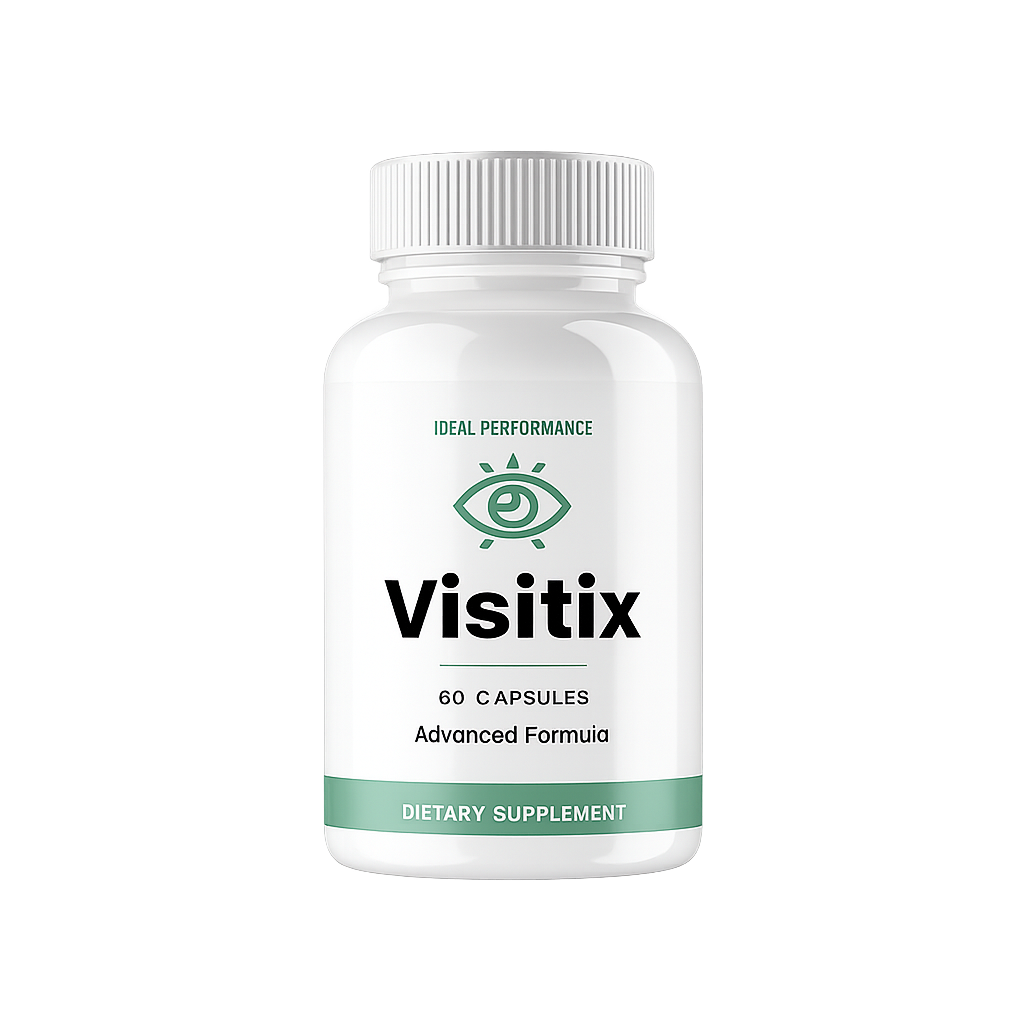
The supplied Visitix label lists 23 quantified nutrients, carotenoids, botanicals and other compounds per two capsules, plus a hypromellose capsule shell. The amounts are individually disclosed, so this is not a hidden proprietary blend, but several ingredient forms, botanical species and extract standardisations are missing.
The most important label concern involves two printed percentages. One milligram of copper is shown as 1% NRV, while 1.8 μg chromium is shown as 45% NRV. Those entries do not appear arithmetically consistent with the corresponding EU adult reference values.
Visitix is not the recognised AREDS2 formula, and the ingredient list does not prove that the complete product improves eyesight.
Jeff has not purchased, opened or laboratory-tested Visitix.
By Jeff, Editor-in-Chief · Updated 27 July 2026 · Research-based label and composition analysis (not personally tested)
Visitix label and supplied merchant materials checked on 27 July 2026. For the broader evidence, safety and buying assessment, see our complete Visitix review.
Visitix formula at a glance
- Serving basis:
- Two capsules
- Bottle size:
- 60 capsules
- Approximate servings:
- 30
- Quantified formula entries:
- 23
- Proprietary blend:
- No — the principal amounts are listed separately
- Lutein:
- 50 mg
- Zeaxanthin:
- 20 mg
- Main transparency strength:
- Individual amounts are disclosed
- Main transparency limitation:
- Several forms, botanical identities and standardisations are missing
- Main label concern:
- Copper and chromium percentages require clarification
- AREDS2 formula:
- No
- Tested by Jeff:
- No
JeffsReviews may earn a commission if you purchase Visitix through links on this page, at no additional cost to you. Jeff has not purchased, opened or laboratory-tested Visitix. Formula details can change, so compare this analysis with the current product label before ordering.
The label separates source compounds from declared nutrients
On a supplement label, the source compound is what the manufacturer added (for example magnesium oxide), and the declared nutrient is the amount of the element the compound provides (for example 20 mg magnesium). The gross compound weight is usually larger than the declared nutrient amount.
Source compound → declared nutrient → printed amount → printed NRV
- Magnesium oxide → magnesium → 20 mg → 5%
- Zinc bisglycinate → zinc → 10 mg → 100%
- Copper bisglycinate → copper → 1 mg → 1% (see clarification below)
- Sodium selenite → selenium → 55 μg → 100%
- Chromium picolinate → chromium → 1.8 μg → 45% (see clarification below)
- Beta-carotene → vitamin A → 50 μg → 6%
Do not treat the declared nutrient amount as the total gross weight of its source compound unless the label explicitly says so.
Complete Visitix ingredient inventory
Every entry below appears on the supplied Visitix label. Amounts are per two capsules. Disclosure status reflects what the label does or does not establish; it is not a quality rating. For the merchant’s daily serving, food, water and timing directions, see our Visitix dosage and how-to-take analysis. For GBP package prices and the checkout terms tied to this formula, see our Visitix price and where-to-buy guide.
| Ingredient | Source or form | Amount / 2 caps | Printed NRV | Independent comparison | Disclosure |
|---|---|---|---|---|---|
| Lutein | Not disclosed | 50 mg | — | No applicable NRV | Source not disclosed |
| Zeaxanthin | Not disclosed | 20 mg | — | No applicable NRV | Source not disclosed |
| Lycopene | Not disclosed | 10 mg | — | No applicable NRV | Source not disclosed |
| Vitamin A | Beta-carotene | 50 μg | 6% | ≈ 6.25% | Partially disclosed |
| Vitamin C | Ascorbic acid | 100 mg | 125% | 125% | Clearly disclosed |
| Magnesium | Magnesium oxide | 20 mg | 5% | ≈ 5.3% | Clearly disclosed |
| Vitamin E | Tocopherol acetate | 10 mg | 83% | ≈ 83.3% | Partially disclosed |
| Zinc | Zinc bisglycinate | 10 mg | 100% | 100% | Clearly disclosed |
| Niacin | Nicotinamide | 20 mg | 125% | 125% | Clearly disclosed |
| Vitamin B1 | Thiamine HCl | 4 mg | 364% | ≈ 363.6% | Clearly disclosed |
| Vitamin B2 | Riboflavin | 4 mg | 286% | ≈ 285.7% | Clearly disclosed |
| Copper | Copper bisglycinate | 1 mg | 1% | 100% | Printed percentage inconsistent |
| Biotin | Not disclosed | 400 μg | 800% | 800% | Partially disclosed |
| Selenium | Sodium selenite | 55 μg | 100% | 100% | Clearly disclosed |
| Vitamin B12 | Methylcobalamin | 13.5 μg | 540% | 540% | Clearly disclosed |
| Chromium | Chromium picolinate | 1.8 μg | 45% | 4.5% | Printed percentage inconsistent |
| Blueberry extract | Not disclosed | 50 mg | — | No applicable NRV | Species not disclosed |
| Alpha-lipoic acid | Not disclosed | 20 mg | — | No applicable NRV | Partially disclosed |
| Eyebright | Powder | 20 mg | — | No applicable NRV | Species not disclosed |
| Quercetin | Not disclosed | 20 mg | — | No applicable NRV | Partially disclosed |
| Rutin | Not disclosed | 10 mg | — | No applicable NRV | Source not disclosed |
| Taurine | Not disclosed | 10 mg | — | No applicable NRV | Source not disclosed |
| Grape-seed extract | Not disclosed | 10 mg | — | No applicable NRV | Standardisation not disclosed |
| Hydroxypropyl methylcellulose | Capsule shell | Amount not disclosed | — | Not an active nutrient | Amount not disclosed |
Carotenoids
Lutein
50 mg
Source not disclosed
See label details
Source organism, free-or-ester form and carrier are missing
Zeaxanthin
20 mg
Source not disclosed
See label details
Stereoisomer / meso-zeaxanthin presence not established
Lycopene
10 mg
Source not disclosed
See label details
Origin and form are not established
Vitamin A
50 μg
Printed: 6% NRV
Partially disclosed
See label details
Source / form: Beta-carotene
Independent NRV: ≈ 6.25%
Gross beta-carotene amount not disclosed
Vitamins
Vitamin C
100 mg
Printed: 125% NRV
Clearly disclosed
See label details
Source / form: Ascorbic acid
Independent NRV: 125%
Consistent with EU adult NRV of 80 mg
Vitamin E
10 mg
Printed: 83% NRV
Partially disclosed
See label details
Source / form: Tocopherol acetate
Independent NRV: ≈ 83.3%
D-alpha vs DL-alpha stereoisomer not established
Niacin
20 mg
Printed: 125% NRV
Clearly disclosed
See label details
Source / form: Nicotinamide
Independent NRV: 125%
Nicotinamide form, not nicotinic acid
Vitamin B1
4 mg
Printed: 364% NRV
Clearly disclosed
See label details
Source / form: Thiamine HCl
Independent NRV: ≈ 363.6%
Consistent with EU adult NRV of 1.1 mg
Vitamin B2
4 mg
Printed: 286% NRV
Clearly disclosed
See label details
Source / form: Riboflavin
Independent NRV: ≈ 285.7%
Consistent with EU adult NRV of 1.4 mg
Biotin
400 μg
Printed: 800% NRV
Partially disclosed
See label details
Independent NRV: 800%
Consistent with EU adult NRV of 50 μg
Vitamin B12
13.5 μg
Printed: 540% NRV
Clearly disclosed
See label details
Source / form: Methylcobalamin
Independent NRV: 540%
Consistent with EU adult NRV of 2.5 μg
Minerals
Magnesium
20 mg
Printed: 5% NRV
Clearly disclosed
See label details
Source / form: Magnesium oxide
Independent NRV: ≈ 5.3%
20 mg refers to declared magnesium, not compound weight
Zinc
10 mg
Printed: 100% NRV
Clearly disclosed
See label details
Source / form: Zinc bisglycinate
Independent NRV: 100%
10 mg refers to declared zinc, not compound weight
Copper
1 mg
Printed: 1% NRV
Printed percentage inconsistent
Amount would equal ≈ 100%, not 1% — clarification required
Selenium
55 μg
Printed: 100% NRV
Clearly disclosed
See label details
Source / form: Sodium selenite
Independent NRV: 100%
55 μg refers to declared selenium, not compound weight
Chromium
1.8 μg
Printed: 45% NRV
Printed percentage inconsistent
Amount would equal ≈ 4.5%, not 45% — clarification required
Botanicals
Blueberry extract
50 mg
Species not disclosed
See label details
Species, plant part, ratio and standardisation missing
Eyebright
20 mg
Species not disclosed
See label details
Source / form: Powder
Label says powder, not a standardised extract
Grape-seed extract
10 mg
Standardisation not disclosed
See label details
Species, ratio and OPC percentage missing
Quercetin
20 mg
Partially disclosed
See label details
Form / hydration / delivery system not established
Rutin
10 mg
Source not disclosed
See label details
Source and form not established
Other compounds
Alpha-lipoic acid
20 mg
Partially disclosed
See label details
Isomer (R vs racemic) and salt form not established
Taurine
10 mg
Source not disclosed
See label details
Amino-sulfonic compound; source not disclosed
Capsule material
Hydroxypropyl methylcellulose
Amount not disclosed
Amount not disclosed
See label details
Source / form: Capsule shell
Hypromellose capsule material — not counted as an active
See every source-compound distinction
Magnesium oxide, zinc bisglycinate, copper bisglycinate and sodium selenite are the mineral source compounds. The mg or μg figures shown for magnesium, zinc, copper and selenium refer to the elemental nutrient, not the full weight of the source salt. The same principle applies to nicotinamide (niacin), thiamine HCl (vitamin B1), tocopherol acetate (vitamin E) and methylcobalamin (vitamin B12).
Visitix lists four carotenoid-related entries, but their sources are mostly unspecified
Lutein
Amount: 50 mg
Not disclosed: Source organism, free-or-ester form, purity, carrier
Zeaxanthin
Amount: 20 mg
Not disclosed: Source, stereoisomer, meso-zeaxanthin presence, purity, carrier
Lycopene
Amount: 10 mg
Not disclosed: Source, form, carrier, isomer profile
Beta-carotene / Vitamin A
Amount: 50 μg vitamin A
Not disclosed: Gross beta-carotene amount, source, natural or synthetic origin
The carotenoid amounts are useful, but the missing source and form details prevent a precise product-to-study match.
The vitamin and mineral forms are partly disclosed
Named source compounds on the supplied label include ascorbic acid, magnesium oxide, tocopherol acetate, zinc bisglycinate, nicotinamide, thiamine HCl, riboflavin, copper bisglycinate, beta-carotene, sodium selenite, methylcobalamin and chromium picolinate.
- A named source improves identification.
- It does not prove purity, absorption or manufacturing quality.
- It does not prove clinical effectiveness or personal suitability of the amount.
JeffsReviews does not rank these forms as universally best or worst and makes no product-specific bioavailability claim.
Several botanicals are quantified without enough preparation detail
Blueberry extract
Amount: 50 mg
Not disclosed: Species, plant part, extract ratio, solvent, anthocyanin and polyphenol percentages
Eyebright powder
Amount: 20 mg
Not disclosed: Species, plant part, origin, preparation detail
Grape-seed extract
Amount: 10 mg
Not disclosed: Species, extract ratio, proanthocyanidin and polyphenol percentages, solvent
Alpha-lipoic acid
Amount: 20 mg
Not disclosed: Isomer, salt form, stabilisation
Quercetin
Amount: 20 mg
Not disclosed: Form, hydration state, delivery system
Rutin
Amount: 10 mg
Not disclosed: Source, form
Taurine
Amount: 10 mg
Not disclosed: Source, manufacturing information
Blueberry should not automatically be rewritten as bilberry. Eyebright is listed as powder, not as a standardised extract. The label tells buyers how much of each entry is present, but not enough to judge whether these preparations match those used in specific research.
Ingredient forms at a glance
Disclosed forms
Ascorbic acid, magnesium oxide, tocopherol acetate, zinc bisglycinate, nicotinamide, thiamine HCl, riboflavin, copper bisglycinate, beta-carotene, sodium selenite, methylcobalamin, chromium picolinate, hydroxypropyl methylcellulose capsule shell.
Missing on the supplied label
Lutein source and form; zeaxanthin source and stereoisomer; lycopene source; blueberry species, plant part and standardisation; grape-seed species, ratio and OPC percentage; eyebright species and plant part; alpha-lipoic-acid isomer; quercetin hydration state; rutin source; taurine source; vitamin E stereoisomer; gross beta-carotene amount.
What the Visitix label does not disclose
Missing information does not prove that an ingredient is absent or poor quality. It means the supplied label is not detailed enough to verify that characteristic.
Carotenoid details
- Lutein source and form
- Zeaxanthin source and stereoisomer
- Lycopene source and form
- Gross beta-carotene amount
Botanical details
- Blueberry species, plant part and standardisation
- Grape species, extraction ratio and standardisation
- Eyebright species and plant part
Other compound details
- Alpha-lipoic-acid isomer
- Quercetin form
- Taurine source
Quality documentation
- Batch certificate
- Independent ingredient testing
- Heavy-metal result
- Microbiological result
- Pesticide result
Dietary and manufacturing information
- Complete allergen statement
- Gluten-free confirmation
- Whole-product vegan or vegetarian confirmation
- GMO status
- Manufacturing country
- Raw-material origin
Because formulas and labels can change, compare the current merchant information with the two-capsule formula documented here.
Check the current Visitix labelNRV is a labelling reference — not an effectiveness or safety score
NRV stands for Nutrient Reference Value — a standard EU reference used for comparing the declared amount of a vitamin or mineral on a label. It is not proof of effectiveness, a personalised requirement, a clinical dose or a safety upper limit. A value above 100% NRV does not automatically mean an ingredient is unsafe; a value below 100% does not automatically mean it is ineffective.
Most printed percentages align with EU reference values; two do not
| Nutrient | Visitix amount | EU adult NRV | Calculated % | Printed % | Status |
|---|---|---|---|---|---|
| Vitamin C | 100 mg | 80 mg | 125% | 125% | Consistent |
| Magnesium | 20 mg | 375 mg | ≈ 5.3% | 5% | Consistent after rounding |
| Vitamin E | 10 mg | 12 mg | ≈ 83.3% | 83% | Consistent after rounding |
| Zinc | 10 mg | 10 mg | 100% | 100% | Consistent |
| Niacin | 20 mg | 16 mg | 125% | 125% | Consistent |
| Vitamin B1 | 4 mg | 1.1 mg | ≈ 363.6% | 364% | Consistent after rounding |
| Vitamin B2 | 4 mg | 1.4 mg | ≈ 285.7% | 286% | Consistent after rounding |
| Copper | 1 mg | 1 mg | 100% | 1% | Inconsistent |
| Vitamin A | 50 μg | 800 μg | ≈ 6.25% | 6% | Consistent after rounding |
| Biotin | 400 μg | 50 μg | 800% | 800% | Consistent |
| Selenium | 55 μg | 55 μg | 100% | 100% | Consistent |
| Vitamin B12 | 13.5 μg | 2.5 μg | 540% | 540% | Consistent |
| Chromium | 1.8 μg | 40 μg | 4.5% | 45% | Inconsistent |
Most printed percentages align with the EU reference values after normal rounding. Copper and chromium are the two exceptions and are analysed in the sections below.
- Vitamin CConsistent
- MagnesiumConsistent (rounded)
- Vitamin EConsistent (rounded)
- ZincConsistent
- NiacinConsistent
- Vitamin B1Consistent (rounded)
- Vitamin B2Consistent (rounded)
- CopperRequires clarification
- Vitamin AConsistent (rounded)
- BiotinConsistent
- SeleniumConsistent
- Vitamin B12Consistent
- ChromiumRequires clarification
See the complete NRV arithmetic
Vitamin C
- Amount
- 100 mg
- EU NRV
- 80 mg
- Calculated
- 125%
- Printed
- 125%
Magnesium
- Amount
- 20 mg
- EU NRV
- 375 mg
- Calculated
- ≈ 5.3%
- Printed
- 5%
Vitamin E
- Amount
- 10 mg
- EU NRV
- 12 mg
- Calculated
- ≈ 83.3%
- Printed
- 83%
Zinc
- Amount
- 10 mg
- EU NRV
- 10 mg
- Calculated
- 100%
- Printed
- 100%
Niacin
- Amount
- 20 mg
- EU NRV
- 16 mg
- Calculated
- 125%
- Printed
- 125%
Vitamin B1
- Amount
- 4 mg
- EU NRV
- 1.1 mg
- Calculated
- ≈ 363.6%
- Printed
- 364%
Vitamin B2
- Amount
- 4 mg
- EU NRV
- 1.4 mg
- Calculated
- ≈ 285.7%
- Printed
- 286%
Copper
- Amount
- 1 mg
- EU NRV
- 1 mg
- Calculated
- 100%
- Printed
- 1%
Vitamin A
- Amount
- 50 μg
- EU NRV
- 800 μg
- Calculated
- ≈ 6.25%
- Printed
- 6%
Biotin
- Amount
- 400 μg
- EU NRV
- 50 μg
- Calculated
- 800%
- Printed
- 800%
Selenium
- Amount
- 55 μg
- EU NRV
- 55 μg
- Calculated
- 100%
- Printed
- 100%
Vitamin B12
- Amount
- 13.5 μg
- EU NRV
- 2.5 μg
- Calculated
- 540%
- Printed
- 540%
Chromium
- Amount
- 1.8 μg
- EU NRV
- 40 μg
- Calculated
- 4.5%
- Printed
- 45%
No NRV is displayed for lutein, zeaxanthin, lycopene, blueberry, alpha-lipoic acid, eyebright, quercetin, rutin, taurine or grape-seed extract because no applicable EU adult NRV is established on the supplied label.
The copper amount and printed percentage do not agree
- Supplied label:
- 1 mg copper — 1% NRV
- EU adult NRV:
- 1 mg
- Arithmetic:
- 1 mg ÷ 1 mg × 100 = 100%
The declared 1 mg copper amount would correspond to 100% of the EU adult NRV, not 1%. The percentage appears inconsistent with the amount.
JeffsReviews cannot determine from the supplied image whether the percentage is a printing error, a transcription error or evidence that another part of the entry needs clarification. Check the physical bottle and request clarification from the responsible seller before relying on this entry.
The chromium entry appears to contain a tenfold discrepancy
- Supplied label:
- 1.8 μg chromium — 45% NRV
- EU adult NRV:
- 40 μg
- Arithmetic:
- 1.8 μg ÷ 40 μg × 100 = 4.5%
The declared 1.8 μg amount corresponds to approximately 4.5% of the EU adult NRV, not 45%. The printed figures would align more closely if the amount were 18 μg or the percentage were 4.5%, but JeffsReviews cannot determine which entry — if either — reflects the intended formula.
Check the physical bottle delivered and request clarification from the responsible seller before relying on the chromium declaration.
Visitix contains some AREDS2-related nutrients, but it is not AREDS2
| Nutrient | Visitix per 2 caps | Recognised AREDS2 | Same? |
|---|---|---|---|
| Lutein | 50 mg | 10 mg | No |
| Zeaxanthin | 20 mg | 2 mg | No |
| Vitamin C | 100 mg | 500 mg | No |
| Vitamin E | 10 mg | 400 IU | No |
| Zinc | 10 mg | 80 mg (recognised formula) | No |
| Copper | 1 mg | 2 mg | No |
Lutein
Visitix: 50 mg
AREDS2: 10 mg
Same: No
Zeaxanthin
Visitix: 20 mg
AREDS2: 2 mg
Same: No
Vitamin C
Visitix: 100 mg
AREDS2: 500 mg
Same: No
Vitamin E
Visitix: 10 mg
AREDS2: 400 IU
Same: No
Zinc
Visitix: 10 mg
AREDS2: 80 mg (recognised formula)
Same: No
Copper
Visitix: 1 mg
AREDS2: 2 mg
Same: No
Visitix also contains many ingredients that are not part of the recognised AREDS2 formula. Ingredient overlap does not make Visitix an AREDS2 formula, and larger amounts of lutein or zeaxanthin do not automatically establish a stronger clinical effect.
AREDS2 evidence applies to specific groups with particular stages of age-related macular degeneration. It should not be transferred to Visitix or to every adult seeking general eye support.
The merchant highlights four ingredients, while the label lists a much broader formula
The supplied merchant graphic highlights blueberry extract, grape-seed extract, vitamin C and zinc. These are only selected examples. Lutein, zeaxanthin, most vitamins and minerals, several botanicals and other compounds are omitted from that graphic.
The “over four ingredients” graphic is technically broad enough to be true, but it does not communicate the complexity of the complete two-capsule formula. The complete label should take precedence over any selective marketing graphic. The merchant’s four-ingredient graphic shows selected ingredients, whereas the full label lists a much broader formula.
A detailed ingredient list does not prove that Visitix works
The label establishes
- Ingredient names
- Declared amounts
- Some source compounds
- The two-capsule serving basis
The label does not establish
- Clinical effectiveness
- Improved visual acuity or night vision
- Prevention or treatment of eye disease
- Absorption, ingredient synergy or purity
- Batch consistency
- Safety for every person
- Superiority to AREDS2 or a simpler formula
Ingredient presence is the starting point for evidence analysis — not the final proof. Total intake from food and other supplements still matters, and another multivitamin or eye supplement may duplicate nutrients. Exceeding 100% NRV does not automatically mean unsafe.
The capsule material appears non-gelatin, but complete dietary-status claims — including vegan, vegetarian, gluten-free and allergen-free — require confirmation from the responsible seller or current packaging.
What to check if a Visitix bottle arrives
- Product name matches Visitix
- Bottle contains 60 capsules
- Serving basis states two capsules
- Ingredient list matches the supplied label
- Lutein remains 50 mg
- Zeaxanthin remains 20 mg
- Vitamin C remains 100 mg
- Blueberry extract remains 50 mg
- Copper amount and percentage are checked
- Chromium amount and percentage are checked
- Batch or lot number is present
- Best-before or expiration date is present
- Responsible business or distributor is identified
- Contact information is present
- Safety seal is intact where applicable
- Warning text is readable
- Allergen information is reviewed
- Any formula changes are documented
A current physical label should take precedence over an older marketing graphic when the two conflict.
Visitix formula strengths and limitations
Potential strengths
- Principal ingredient amounts are disclosed
- Formula is not hidden in one proprietary total
- Lutein and zeaxanthin are quantified
- Several source compounds are named
- Botanical ingredient amounts are shown
- Bottle and serving basis are clear
- Most printed NRV percentages are internally consistent
- Formula supports meaningful comparison with other labels
Important limitations
- Two NRV entries require clarification
- Several botanical species are absent
- Extract ratios and standardisations are absent
- Carotenoid sources are absent
- Several ingredient forms are incomplete
- No independent batch testing or certificate was supplied
- Complete dietary status is unresolved
- Ingredient presence does not prove finished-product results
- Formula does not match recognised AREDS2 amounts
- Jeff has not physically inspected or tested the product
Visitix ingredient verdict: unusually detailed amounts, but incomplete specifications and two label discrepancies remain
The supplied Visitix label is more informative than a proprietary blend. It lists 23 quantified nutrient, carotenoid, botanical and other entries for a two-capsule serving, including 50 mg lutein, 20 mg zeaxanthin, 100 mg vitamin C and 50 mg blueberry extract.
The main advantage is amount transparency. A buyer can see how much of each listed entry is declared rather than relying on one undisclosed blend total. The main limitation is preparation transparency: the label does not identify the source or form of several carotenoids, the species and standardisation of important botanicals, the alpha-lipoic-acid isomer or the exact form of several other compounds.
The copper and chromium declarations also require clarification. One milligram of copper would correspond to 100% of the EU adult NRV rather than the printed 1%, while 1.8 μg chromium would correspond to approximately 4.5% rather than the printed 45%. JeffsReviews cannot determine whether these differences arise from printing, transcription or intended-formula errors. The current physical label should be checked before relying on either entry.
Visitix is not the recognised AREDS2 formula. Although several nutrient names overlap, the amounts and broader composition are materially different. For the full Visitix-versus-AREDS2 comparison, the exact-product literature search and the merchant claim-verification matrix, see our Does Visitix work? clinical-evidence investigation.
A detailed label can support a more informed purchase decision, but it does not establish clinical effectiveness, product purity, absorption, safety for every person or superiority to another eye supplement. For medicine interactions, smoking, pregnancy, laboratory-test and combined-supplement considerations, see our Visitix safety and interaction analysis.
Jeff has not purchased, opened or laboratory-tested Visitix.
For the broader evidence, safety, merchant, pricing and legitimacy assessment, read our complete Visitix review.
The current product page is the place to confirm whether the ingredient list, serving basis, bottle count and label percentages still match this analysis.
Verify the current Visitix formula and offerOur Visitix research
Formula and Use
Buying
Frequently asked questions
Sources
Visitix label and merchant material
- Genuine supplied Visitix ingredient label. Used for product identity, 60-capsule count, two-capsule serving basis, ingredient names, amounts, source compounds, printed NRVs and capsule material. Checked 27 July 2026.
- Supplied Visitix merchant materials. Used only for the selective four-ingredient marketing graphic and merchant ingredient descriptions, and for comparison with the complete label. Checked 27 July 2026.
EU labelling and NRV references
- Regulation (EU) No 1169/2011, Annex XIII. Consolidated version used for adult EU NRVs applied in the complete NRV audit, including the copper and chromium reference values. View source
- European Commission — Food Supplements. Used for general food-supplement classification and the regulatory distinction between food supplements and medicines. View source
Food-supplement and health-claim context
- European Commission — Nutrition and Health Claims. Used for the difference between authorised nutrient wording and product-level clinical proof. View source
- EU Register of Nutrition and Health Claims. Used only for authorised wording relevant to Visitix’s declared vitamins and minerals. View source
AREDS2 formula context
- National Eye Institute — AREDS2 Supplements for Age-Related Macular Degeneration. Used for the recognised AREDS2 amounts, population-specific context and the explanation that Visitix is not the recognised formula. View source
- National Eye Institute — AREDS/AREDS2 Frequently Asked Questions. Used for population context and the limits of transferring AREDS2 findings. View source
Authoritative nutrient references
- NIH Office of Dietary Supplements — nutrient fact sheets. Used for nutrient identity and general source terminology for vitamin A, vitamin C, vitamin E, magnesium, zinc, copper, selenium, chromium, niacin, thiamine, riboflavin, biotin and vitamin B12. Not used as proof that Visitix works. View source