Sensivion Side Effects: Risks, Warnings and Interactions
Sensivion's supplied label does not provide a product-specific list or frequency of side effects. It instructs adults to take one capsule daily and excludes people under 18 and pregnant or nursing users. It also tells people taking medication, living with a medical condition or under medical supervision to consult a physician before use.
Ingredient-level sources describe possible digestive effects and medicine interactions for some Sensivion ingredients. They do not prove that Sensivion itself causes a particular effect or establish how often one occurs.
Alpha-lipoic acid also has a rare autoimmune safety concern identified by EFSA for genetically susceptible individuals. The risk cannot be translated into a reliable Sensivion frequency or ruled out solely from the labelled amount.
Jeff has not used Sensivion or monitored adverse reactions.
This is a general educational safety review. It does not diagnose a condition, determine personal suitability, approve a medicine combination or replace advice from a physician or pharmacist. Independent regulatory and scientific sources are grouped in Sources.
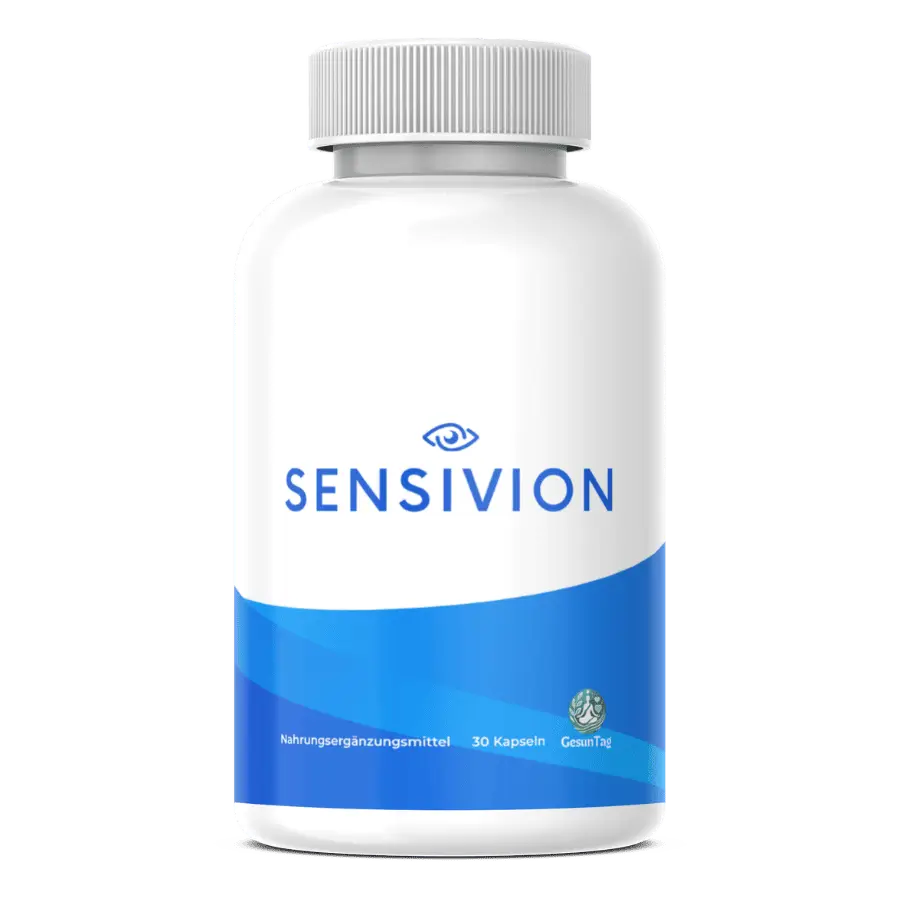
Sensivion safety at a glance
- Product-specific side-effect frequency:
- Not established
- Finished-product safety trial:
- Not identified for the exact Sensivion formula
- Labelled serving:
- One capsule daily for adults
- Under 18:
- Label says not to use
- Pregnancy:
- Label says not to use
- Breastfeeding:
- Label says not to use
- Taking medication:
- Consult a physician before use
- Medical condition:
- Consult a physician before use
- Medical supervision:
- Consult a physician before use
- Known allergy status:
- Not fully established by the supplied label
- Tested by Jeff:
- No
Main ingredient-level concerns
- Digestive effects
- Medicine absorption or interaction
- Glucose-related safety context
- Kidney-function considerations
- Formulation-dependent turmeric cautions
The label contains meaningful restrictions, and several ingredients have recognised safety or interaction considerations. The absence of a published product-specific side-effect rate should not be interpreted as proof that Sensivion is free from unwanted effects.
For the broader pre-purchase decision, see the complete Sensivion review. For every quantified amount, form and missing preparation detail, see the ingredients and label analysis.
JeffsReviews may earn a commission if you purchase Sensivion through links on this page, at no additional cost to you. Jeff has not used Sensivion, and this guide cannot determine individual medical suitability or replace advice from a physician or pharmacist.
What warnings appear on the Sensivion label?
The supplied label carries a specific set of restrictions and precautions. These are the exact statements that govern who the manufacturer is directing the product to — and who it is not.
Adult use
The suggested use is for adults taking one capsule daily.
Under 18
The label says the product is not for people under 18.
Pregnancy
The label says the product is not for pregnant users.
Breastfeeding
The label says the product is not for nursing users.
Medication
The label says to consult a physician before use, especially when taking medication.
Medical condition
The label says to consult a physician before use when living with a medical condition.
Medical supervision
The label says to consult a physician before use when under medical supervision.
Recommended dose
Do not exceed the recommended dose.
Child safety
Keep out of reach of children.
Safety seal
Do not use when the safety seal is damaged or missing.
Storage
Store in a cool, dry place below 30 °C or 86 °F.
Food-supplement limitation
Food supplements are not a substitute for a balanced, varied diet and a healthy lifestyle.
These are the warnings visible on the supplied label. They should not be treated as a complete list of every possible individual concern.
Are Sensivion side effects documented?
No reliable product-specific frequency was identified from the materials reviewed. It helps to separate what the different evidence categories can and cannot establish.
Label warnings
Establish: the groups excluded by the product label, circumstances where professional consultation is requested, and dose, seal and storage precautions.
Do not establish: which adverse events actually occurred, how often they occurred, or whether every possible interaction is listed.
Ingredient safety evidence
May establish: possible unwanted effects associated with an ingredient or preparation, medicine-interaction categories, and situations requiring caution.
Does not establish: that Sensivion caused the same effect, that Sensivion uses the same preparation or exposure, or a finished-product frequency.
Merchant testimonials
Selected testimonials should not be used to estimate safety.
Absence of public reports
An absence of easily located public reports does not establish that no unwanted effects occur.
Magnesium: digestive effects, medicine absorption and kidney context
Sensivion provides 80 mg of magnesium per capsule at 21% NRV. The nutrition panel names the source as magnesium glycinate; the complete ingredients list uses the term magnesium-bisglycinate. The label declares one quantified magnesium amount only.
Authoritative magnesium references describe diarrhoea, nausea and abdominal cramping — particularly at higher supplemental exposure. This does not establish that Sensivion's 80 mg amount causes those effects, nor does it guarantee their absence.
Magnesium-containing supplements can affect absorption or interact with some medicines, including certain oral antibiotics and oral bisphosphonates. Certain diuretics and proton-pump inhibitors can also affect magnesium status. A physician or pharmacist can advise on whether timing separation is needed for a specific medicine.
Healthy kidneys normally help remove excess magnesium. Impaired kidney function can increase susceptibility to magnesium accumulation. This ingredient-level principle does not establish a Sensivion-specific toxicity risk, and the product label already directs people with medical conditions to consult a physician.
Sensivion provides a relatively modest labelled magnesium quantity, but amount alone cannot determine individual suitability, particularly when medicines, kidney function or other magnesium sources are involved.
Alpha-lipoic acid: general trial safety and a rare autoimmune concern
Sensivion provides 100 mg of alpha-lipoic acid per capsule. The label does not specify the isomer (R- versus racemic), a stabilised salt or a delivery system.
A systematic review and meta-analysis of randomised placebo-controlled studies did not find an overall increase in treatment-emergent adverse events with alpha-lipoic-acid supplementation across the included studies. Those studies used different preparations, amounts and populations. The review did not test Sensivion, and an overall trial result does not exclude rare reactions.
EFSA insulin autoimmune syndrome assessment
EFSA concluded that alpha-lipoic acid added to foods, including supplements, is likely to increase the risk of insulin autoimmune syndrome in people with certain genetic susceptibilities. Susceptible individuals cannot be readily identified without genetic testing, and available evidence did not allow EFSA to identify a dose below which this risk is not expected. The risk could not be quantified precisely.
This is a rare autoimmune condition associated with episodes of abnormally low blood glucose. It should not be confused with an ordinary temporary digestive side effect.
Anyone using insulin or other glucose-related treatment should obtain individual professional advice before combining it with a supplement containing alpha-lipoic acid.
The available evidence is reassuring for common trial-reported events overall, but EFSA's rare autoimmune concern prevents a blanket "side-effect-free" conclusion.
Butcher's broom: preparation-specific evidence does not establish Sensivion safety
Sensivion provides 50 mg of butcher's-broom (Ruscus aculeatus) root extract. The label does not disclose the extract ratio, extraction solvent, standardisation or ruscogenin content.
The EMA material on rusci rhizoma concerns specified Ruscus aculeatus root or rhizome herbal preparations. At the time of the cited assessment, no side effects had been reported for those assessed medicines. That does not prove zero risk, does not assess Sensivion, and cannot be matched precisely to Sensivion's 50 mg extract without the missing preparation details.
The available monograph provides limited preparation-specific context, not a product-specific safety guarantee.
L-carnitine: high-dose effects are not directly transferable to the 10 mg label entry
Sensivion provides 10 mg of L-carnitine per capsule. No salt or specialised form (L-tartrate, acetyl-, propionyl-) is identified.
Carnitine references describe possible unwanted effects around substantially higher supplemental intakes — including nausea, vomiting, abdominal cramping, diarrhoea and fishy body odour. They also identify particular concerns in some people with seizure disorders or severe kidney-related circumstances. Medicine context may include certain pivalate-conjugated antibiotics and anticonvulsants such as valproic acid.
Sensivion provides 10 mg, not gram-level carnitine amounts. The high-dose evidence does not prove that Sensivion causes these effects, and the lower labelled amount does not independently establish safety for every individual. The product's L-carnitine form remains unspecified.
The carnitine amount is far below amounts commonly discussed in high-dose safety references, but that comparison cannot replace individual medicine and medical-condition review.
Turmeric: digestive effects and formulation-dependent cautions
Sensivion provides 10 mg of turmeric rhizome extract standardised to 95% curcuminoids. The label does not disclose piperine, black-pepper extract, a phospholipid complex, a micellar system, a nanoparticle system or another enhanced-bioavailability technology.
Authoritative turmeric sources describe possible oral effects such as stomach upset, nausea, acid reflux, diarrhoea and constipation. This does not state that Sensivion causes these effects.
Turmeric and curcumin products vary substantially. Highly bioavailable preparations are not equivalent to ordinary formulations. Liver-injury reports associated with some enhanced-bioavailability formulations should not be transferred automatically to Sensivion. Sensivion does not disclose an enhanced-bioavailability system, but the absence of such disclosure does not prove that every manufacturing detail is known.
The supplied label already says pregnant users should not use the product; no separate pregnancy dosing advice belongs here. The main credible concerns are ingredient-level digestive effects and formulation uncertainty — not proof that Sensivion causes liver injury.
Coenzyme Q10: mild reported effects and important interaction categories
Sensivion provides 5 mg of Coenzyme Q10 as ubiquinone per capsule. The delivery system is not disclosed.
CoQ10 sources describe possible mild effects such as digestive upset and insomnia. They also identify possible interaction concerns involving warfarin, insulin and some cancer treatments. These sources do not assess Sensivion. The 5 mg Sensivion amount and undisclosed delivery system mean the lower amount cannot, by itself, rule out personal interaction concerns.
People using anticoagulants, insulin or receiving cancer treatment should obtain individual advice before adding a CoQ10-containing supplement.
CoQ10's interaction categories matter more here than claims about common product-specific side effects, because no Sensivion adverse-event rate is available.
Which medicine categories deserve particular attention?
The categories below reflect ingredient-level literature. None of them approves or forbids a combination for a specific person. Ask a physician or pharmacist to review the specific medicine and product label.
| Ingredient | Medicine or treatment category | Nature of concern | Sensivion-specific evidence? | Next step |
|---|---|---|---|---|
| Magnesium (80 mg) |
| Absorption interaction or altered magnesium status depending on the medicine. | No Sensivion-specific evidence. | Ask a physician or pharmacist to review the specific medicine and product label. |
| Alpha-lipoic acid (100 mg) |
| Individual glucose context and a rare EFSA-identified autoimmune concern require review. | No Sensivion-specific evidence. | Ask a physician or pharmacist to review the specific medicine and product label. |
| L-carnitine (10 mg) |
| Some medicines can alter carnitine status or create relevant clinical context. | No Sensivion-specific evidence. | Ask a physician or pharmacist to review the specific medicine and product label. |
| Coenzyme Q10 (5 mg) |
| Potential interaction or treatment-compatibility concern reported for CoQ10 generally. | No Sensivion-specific evidence. | Ask a physician or pharmacist to review the specific medicine and product label. |
| Turmeric (10 mg, 95% curcuminoids) |
| Formulation-dependent interaction and tolerability questions. | No Sensivion-specific evidence; delivery system not disclosed. | Ask a physician or pharmacist to review the specific medicine and product label. |
Magnesium (80 mg)
Categories
- Certain oral antibiotics
- Oral bisphosphonates
- Diuretics
- Proton-pump inhibitors
Nature: Absorption interaction or altered magnesium status depending on the medicine.
Sensivion-specific evidence: No Sensivion-specific evidence.
Next step: Ask a physician or pharmacist to review the specific medicine and product label.
Alpha-lipoic acid (100 mg)
Categories
- Insulin
- Other glucose-related treatment
Nature: Individual glucose context and a rare EFSA-identified autoimmune concern require review.
Sensivion-specific evidence: No Sensivion-specific evidence.
Next step: Ask a physician or pharmacist to review the specific medicine and product label.
L-carnitine (10 mg)
Categories
- Certain pivalate-conjugated antibiotics
- Some anticonvulsants (e.g. valproic acid)
Nature: Some medicines can alter carnitine status or create relevant clinical context.
Sensivion-specific evidence: No Sensivion-specific evidence.
Next step: Ask a physician or pharmacist to review the specific medicine and product label.
Coenzyme Q10 (5 mg)
Categories
- Warfarin
- Insulin
- Some cancer treatments
Nature: Potential interaction or treatment-compatibility concern reported for CoQ10 generally.
Sensivion-specific evidence: No Sensivion-specific evidence.
Next step: Ask a physician or pharmacist to review the specific medicine and product label.
Turmeric (10 mg, 95% curcuminoids)
Categories
- General medication review where clinically relevant
Nature: Formulation-dependent interaction and tolerability questions.
Sensivion-specific evidence: No Sensivion-specific evidence; delivery system not disclosed.
Next step: Ask a physician or pharmacist to review the specific medicine and product label.
Do kidney or liver conditions change the safety decision?
Kidney context
- Kidney function matters when assessing magnesium accumulation.
- Some high-dose carnitine cautions also relate to serious kidney circumstances.
- Sensivion's label instructs people living with a medical condition to consult a physician.
- This page cannot determine suitability from a diagnosis name alone.
Liver context
- Some turmeric or curcumin formulations with enhanced bioavailability have been associated with liver-injury reports.
- Sensivion does not disclose such an enhanced system.
- This does not establish that Sensivion causes liver injury.
- People with liver-related conditions or treatment should follow the label's professional-consultation warning.
Can Sensivion be used during pregnancy or breastfeeding?
The supplied label says no.
- Pregnancy: not for pregnant users.
- Breastfeeding: not for nursing users.
Ingredient-level pregnancy evidence does not override the product label, and no alternative smaller serving should be created. The turmeric source also notes uncertainty and potential concern for supplement-level use during pregnancy.
Can children or teenagers take Sensivion?
The label says the product is not for people under 18. No child, teenager, weight-based or reduced-capsule serving belongs in this article.
Can Sensivion be combined with other supplements?
Not automatically. Overlapping products may increase total exposure to magnesium, alpha-lipoic acid, turmeric or curcuminoids, Coenzyme Q10 and carnitine.
Safe label-comparison framework
- List every supplement being used.
- Compare the complete ingredient lists.
- Identify repeated ingredients.
- Record the displayed daily amounts.
- Check medicine and medical-condition warnings.
- Ask a physician or pharmacist where overlap or uncertainty remains.
Overlapping labels should be reviewed as a combined exposure, not as unrelated products.
Does the label rule out allergy or dietary concerns?
Confirmed on the supplied label
- The capsule shell is described as vegetable hypromellose.
- The complete ingredients list identifies the listed ingredients and excipients.
Not disclosed on the supplied label
- Full vegan certification
- Gluten-free status
- Dairy-free status
- Soy-free status
- Allergen-free status
- GMO-free status
- Cross-contamination controls
- Manufacturing-aid status
- Batch-specific contamination testing
A vegetable capsule shell does not by itself confirm the dietary status of every ingredient or manufacturing aid.
What should someone do after an unexpected reaction?
- Do not take an additional capsule to test whether the reaction happens again.
- Keep the bottle, label, batch information and order details available.
- Contact an appropriate healthcare professional for concerning or persistent symptoms.
- Seek urgent medical help for severe or rapidly worsening symptoms.
- Follow local adverse-event reporting procedures where applicable.
- Contact the seller separately for commercial questions such as returns or refunds.
A temporal association does not by itself prove that Sensivion caused the reaction.
Who should seek professional advice before considering Sensivion?
- Take prescription medicine
- Regularly use over-the-counter medicine
- Use insulin or other glucose-related treatment
- Use warfarin or another anticoagulant
- Use certain antibiotics
- Use oral bisphosphonates
- Receive cancer treatment
- Use anticonvulsants
- Live with kidney-related conditions
- Live with liver-related conditions
- Have a seizure disorder
- Use several overlapping supplements
- Have a history of serious supplement reactions
- Have a known allergy concern
- Live with another medical condition
- Are under medical supervision
Separately: people under 18 should not use it according to the label, and pregnant or nursing users should not use it according to the label. This list is not exhaustive; the absence of a category from it does not confirm suitability.
What should be checked before using Sensivion?
- Product name is Sensivion
- Bottle and safety seal are intact
- Expiry date is readable
- Batch information is present where supplied
- Directions still say one capsule daily for adults
- Under-18 restriction is visible
- Pregnancy and nursing restriction is visible
- Medication warning is visible
- Medical-condition warning is visible
- Ingredient list matches the reviewed version
- Magnesium remains 80 mg at 21% NRV
- Alpha-lipoic acid remains 100 mg
- Butcher's-broom extract remains 50 mg
- L-carnitine remains 10 mg
- Turmeric extract remains 10 mg at 95% curcuminoids
- CoQ10 remains 5 mg as ubiquinone
- Other supplements have been checked for ingredient overlap
- Relevant medicine questions have been reviewed professionally
- Dietary and allergen requirements have been clarified
- Storage instructions can be followed
The physical label supplied with the purchased bottle should take priority when online information differs.
Sensivion safety-information strengths and limitations
Safety-information strengths
- Adults-only direction is clear
- Under-18 exclusion is explicit
- Pregnancy exclusion is explicit
- Nursing exclusion is explicit
- Medication warning is explicit
- Medical-condition warning is explicit
- Medical-supervision warning is explicit
- Recommended-dose limit is explicit
- Child-safety warning is explicit
- Safety-seal warning is explicit
- Storage direction is visible
- Principal ingredient amounts are displayed
- Complete ingredients list is available
Important limitations
- No reliable Sensivion-specific side-effect frequency is provided
- No complete-product safety trial is established by the label
- Ingredient evidence is not product-specific
- Alpha-lipoic-acid form is not specified
- Butcher's-broom extract specification is incomplete
- L-carnitine form is not specified
- Turmeric delivery system is not disclosed
- CoQ10 delivery system is not disclosed
- Full allergen status is not confirmed
- Batch-testing documents were not supplied
- Medicine-interaction suitability requires individual review
- Absence of reports does not prove absence of risk
- Jeff did not use or test the product
Sensivion safety verdict: clear label restrictions, but no product-specific side-effect rate
Sensivion's supplied label provides several meaningful safety restrictions. It is intended for adults taking one capsule daily, is not for people under 18 or pregnant or nursing users, and tells people taking medication, living with a medical condition or under medical supervision to consult a physician before use.
No reliable product-specific side-effect frequency was identified from the materials reviewed. Ingredient-level sources describe possible digestive effects, medicine interactions, kidney-related considerations and formulation-specific concerns, but they do not establish that Sensivion causes a particular effect or how often one occurs.
Alpha-lipoic acid deserves particular attention because EFSA identified a rare autoimmune safety concern in genetically susceptible people and could not determine a universally risk-free supplemental amount. That finding cannot be converted into a Sensivion incidence rate, but it prevents a blanket claim that the formula is side-effect-free.
Magnesium and CoQ10 also have relevant medicine-interaction categories, while turmeric safety depends partly on the formulation. Sensivion's lower labelled amounts do not by themselves determine personal suitability.
The safest editorial conclusion is therefore conditional: an adult who is not excluded by the label may still need individual medicine, medical-condition, allergy or overlapping-supplement review. Sensivion should not be treated as universally safe or used as a replacement for appropriate care.
Jeff has not used Sensivion or monitored adverse reactions.
Read the complete Sensivion review
Review every Sensivion ingredient and amount
See the complete Sensivion dosage and directions guide
Review Sensivion prices, seller and 60-day guarantee terms
See whether product-specific Sensivion side-effect complaints were located
JeffsReviews may earn a commission if you purchase Sensivion through this link, at no additional cost to you. Jeff has not used Sensivion, and this page cannot determine individual medical suitability.
Product labels and warnings can change, so verify the current merchant information and physical packaging before making a purchase decision.
Our Sensivion research
Decision
Formula and Use
Buying
Frequently asked questions
Sources
Sensivion label and safety sources checked on 28 July 2026. External source links do not fire an affiliate event.
Sensivion label and official product information
JeffsReviews. "Supplied English Sensivion label." 2026. Supports the complete label-warning inventory used throughout this page.
Sensivion (Digistore24 MSLW Limited). "Official Sensivion product page." View source. Supports current merchant positioning and label presentation. Not used as independent safety evidence.
Authoritative nutrient and botanical safety references
NIH Office of Dietary Supplements. "Magnesium — Fact Sheet for Health Professionals." Supports digestive effects, kidney context, antibiotic and bisphosphonate interactions, diuretic and PPI context. View source
NIH Office of Dietary Supplements. "Carnitine — Fact Sheet for Health Professionals." Supports high-dose unwanted effects, seizure and kidney context, pivalate-antibiotic and anticonvulsant context, differences among carnitine forms. View source
National Center for Complementary and Integrative Health. "Turmeric — Usefulness and Safety." Supports digestive effects, variation among formulations, enhanced-bioavailability liver-injury reports, pregnancy uncertainty. View source
National Center for Complementary and Integrative Health. "Coenzyme Q10." Supports mild reported effects, warfarin interaction, insulin interaction, cancer-treatment compatibility concerns. View source
National Center for Complementary and Integrative Health. "Safe Use of Complementary Health Products and Practices." Supports general medicine-interaction and product-quality context. View source
Regulatory safety assessment
European Food Safety Authority (EFSA). "Scientific opinion on the relationship between intake of alpha-lipoic acid and the risk of insulin autoimmune syndrome." EFSA Journal, 2021. Supports the relationship between supplemental alpha-lipoic acid and insulin autoimmune syndrome, genetic susceptibility, inability to identify a risk-free dose. View source
European Medicines Agency (EMA). "Rusci rhizoma." Supports preparation-specific herbal context, assessment limitations, need to avoid direct application to Sensivion. View source
Independent scientific safety research
Fogacci F, et al. "Safety Evaluation of Alpha-Lipoic Acid Supplementation: A Systematic Review and Meta-Analysis of Randomized Placebo-Controlled Clinical Studies." Antioxidants, 2020. Supports overall randomised-trial adverse-event context and limits of generalising to Sensivion. View source