Does Sensivion Work? Clinical Evidence, Ingredient Research and Our Verdict
Based on the evidence we located, Sensivion is not clinically proven to improve tinnitus, restore hearing or produce another medical outcome. JeffsReviews found no clearly matching registered or published human trial of the finished Sensivion formula during the searches performed.
Some individual ingredients have been studied in tinnitus or hearing-related settings, but the amounts, preparations, combinations and study designs do not closely match Sensivion. Those studies cannot establish that the finished product produces the same outcome.
This does not prove that no individual could notice a change. It means there is not enough matching evidence for a dependable product-level effectiveness claim, success rate or result timeline.
A 2026 systematic review found that randomised evidence for oral over-the-counter tinnitus products remains inconsistent and limited, with no firm conclusion that any OTC therapy provides symptomatic benefit. Sensivion was not tested in that review.
Jeff has not used Sensivion or measured any outcome.
This is a research-based exact-product and ingredient-level evidence analysis. It is not personal use, clinical advice, a diagnosis or proof that an ingredient study applies to the finished Sensivion formula.
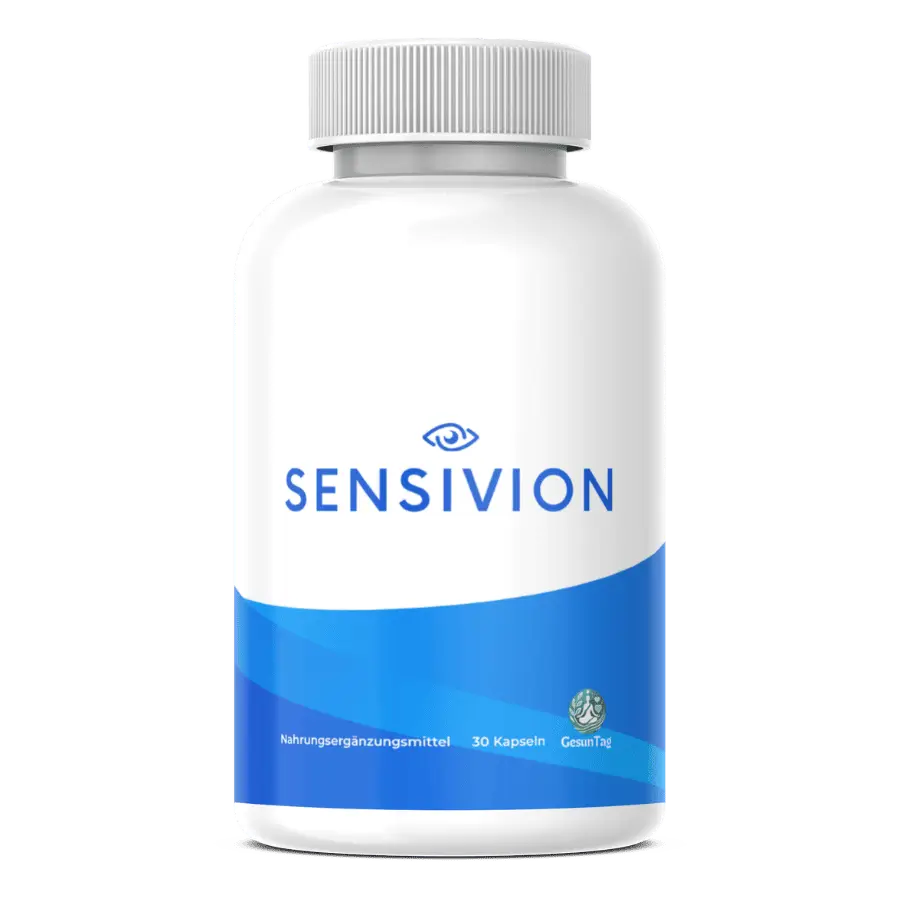
Sensivion evidence at a glance
- Bottom line:
- Not clinically proven as a finished product
- Finished-product human trial:
- No clearly matching record located in the searches performed
- Randomised placebo-controlled Sensivion trial:
- No clearly matching record located
- Current wider OTC tinnitus evidence:
- Inconsistent and limited
- Ingredient research:
- Available for some ingredients, but indirect
- Amount and preparation match:
- Generally weak
- Success rate:
- Not established
- Result timeline:
- Not established
- Official claim:
- Magnesium contributes to normal functioning of the nervous system
- Does that prove tinnitus or hearing improvement?:
- No
- Tested by Jeff?:
- No
Main conclusion: there is ingredient-level rationale and limited indirect research, but not enough matching finished-product evidence to conclude reliably that Sensivion works for tinnitus, hearing loss or another medical outcome.
Already comparing the offer?
Review Sensivion's current package totals, seller, checkout and commercial guarantee before deciding whether the evidence is sufficient for you.
Sensivion price, seller and checkout investigationThe official claim is narrower than the marketing question
The current official Sensivion page presents Sensivion as a food supplement with magnesium, states that magnesium contributes to the normal functioning of the nervous system, describes one capsule daily as a simple routine, provides ingredient and nutritional information and confirms that Sensivion is not intended to diagnose, treat, cure or prevent disease.
The magnesium wording is classified as authorised nutrient-function wording. It concerns magnesium, not the finished Sensivion formula. It is not a clinical trial of Sensivion, does not establish a tinnitus, hearing, nerve-repair, vision or circulation outcome, does not establish that a deficient or non-deficient person will notice a change, and does not establish the complete formula's added benefit.
An authorised nutrient claim and proof that a finished supplement changes a symptom are different types of evidence.
Do stronger Sensivion marketing claims have supporting evidence?
Sensivion marketing and long-form promotional pages may present stronger implications about hearing, nerves, circulation or vision than the current official page's restrained magnesium wording. Any stronger implication is a marketing claim, not a clinical proof.
- Tinnitus relief claims — not established by a matching Sensivion trial
- Hearing restoration claims — not established by a matching Sensivion trial
- Nerve repair claims — not established by a matching Sensivion trial
- Eyesight improvement claims — not established by a matching Sensivion trial
- Blood-vessel cleansing claims — not established by a matching Sensivion trial
- Circulation improvement claims — not established by a matching Sensivion trial
- Success-rate claims — no representative product-specific data located
No matching finished-product trial was located
We ran exact-product searches for "Sensivion" combined with "clinical trial", "randomized trial", "placebo", "tinnitus", "hearing", "supplement study", "magnesium trial", "sensivion.com clinical study", "Sensivion PubMed" and "Sensivion ClinicalTrials.gov" across PubMed, ClinicalTrials.gov, WHO ICTRP, EU Clinical Trials Information System where searchable, general scholarly discovery search, Crossref and relevant journal databases.
A study was counted as exact-product only when it clearly identified Sensivion as the finished intervention, matched the relevant food-supplement formula, involved human participants where claiming human outcomes, and appeared in a publicly accessible registration or publication with a study design and outcome.
Search result on 28 July 2026:
JeffsReviews did not identify a clearly matching registered or published human trial of the finished Sensivion formula during the searches completed on 28 July 2026.
This describes the search result — not proof that no unpublished or unindexed research exists.
See the full exact-product search record
PubMed — exact product query for "Sensivion" combined with clinical-trial, tinnitus and hearing terms. No clearly matching finished-product Sensivion record was located in the query performed on 28 July 2026. Sensorion, SENS-401, SENS-501, SENS-601, Sensivision, Sensirion, unrelated medicines, eye products and individual-ingredient studies were reviewed and excluded.
ClinicalTrials.gov — exact product-name query for "Sensivion". No clearly matching finished-product Sensivion record was located in the query performed on 28 July 2026. Similar-name and unrelated hearing-study records reviewed and excluded.
WHO ICTRP — exact product-name query for "Sensivion" across affiliated registries. No clearly matching finished-product Sensivion record was located in the query performed on 28 July 2026.
Crossref / scholarly search — exact product name in supplement context. No clearly matching finished-product Sensivion publication was located in the query performed on 28 July 2026. Marketing pages, affiliate articles and merchant blogs are not counted as published clinical research.
Database searches cannot prove that no unpublished, private, unregistered or unindexed research exists. A database homepage alone is not treated as proof of a negative result — each entry describes the specific query performed on the check date.
See every false search match
Sensorion — unrelated biotechnology company.
SENS-401 / SENS-501 / SENS-601 — unrelated investigational medicines and gene-therapy programmes.
Sensivision and similarly named eye products — unrelated products.
Sensirion — unrelated sensor manufacturer.
Unrelated medicines and unrelated biotechnology programmes were excluded because they are not the Sensivion food supplement reviewed here.
Similarly named results are not Sensivion evidence
Searches for Sensivion can surface similarly named medicines, biotechnology programmes and eye products. These were excluded because they are not the Sensivion food supplement reviewed here.
Sensorion
Unrelated biotechnology company
SENS-401
Unrelated investigational hearing-loss medicine
SENS-501 / SENS-601
Unrelated gene-therapy programmes
Sensivision and similar eye products
Unrelated products
A hearing-loss trial is not relevant merely because its name begins with "SENS".
How Sensivion evidence ranks in a standard hierarchy
1. Matching finished-product randomised placebo-controlled trial
Not located
2. Matching finished-product non-randomised human trial
Not located
3. Matching finished-product systematic review
Not located
4. Ingredient-level randomised trial in target population
Available for some ingredients, indirect
5. Ingredient-level non-randomised or open-label study
Available; often small and different amounts
6. Case study or case series
Available for at least one ingredient
7. Mechanistic, laboratory or animal research
Available; not human outcome proof
8. Authorised nutrient-function wording
Magnesium; nervous-system function only
9. Merchant testimonials and ratings
Advertising material, not clinical evidence
Current OTC tinnitus evidence is inconsistent and limited
A 2026 systematic review of over-the-counter tinnitus treatments (Menon and colleagues, Laryngoscope Investigative Otolaryngology) concluded that randomised evidence for oral OTC tinnitus therapies remains inconsistent and limited, with heterogeneous products, doses and designs, and no firm conclusion that any OTC therapy provides reliable symptomatic benefit.
Sensivion is one such oral OTC food supplement. That context is not proof of Sensivion ineffectiveness, but it means the wider category does not currently support a strong finished-product claim for any oral OTC product — Sensivion included.
The magnesium study used 6.65 times the labelled amount
Sensivion label fact: magnesium 80 mg per capsule, equivalent to 21% NRV. The nutrition panel names the source as magnesium glycinate and the ingredient list uses the term magnesium-bisglycinate. The label declares one quantified magnesium amount.
Relevant study: Cevette and colleagues (2011) — a small open-label tinnitus study using approximately 532 mg magnesium daily for approximately three months, without a placebo group.
Amount relationship: 532 ÷ 80 ≈ 6.65× Sensivion's per-capsule amount.
An uncontrolled open-label design in a small sample cannot establish a reliable clinical outcome. The study used a very different amount, a different magnesium context and no placebo comparison, so it does not prove that Sensivion's 80 mg reduces tinnitus. Readers should not attempt to reproduce 532 mg on their own.
The ALA evidence uses a different amount and weaker design
Sensivion label fact: alpha-lipoic acid 100 mg per capsule, form unspecified.
Relevant study: Sacchetto and colleagues (2023) — chronic subjective tinnitus study using approximately 600 mg alpha-lipoic acid daily for about two months with a specified preparation.
Amount relationship: 600 ÷ 100 = 6× Sensivion's per-capsule amount.
The 2023 study used six times Sensivion's labelled amount and lacked a placebo group. Its result cannot establish a finished-product Sensivion effect, and it should not be described as randomised, blinded or placebo-controlled. Readers should not increase their own alpha-lipoic-acid intake based on this comparison.
Any separately reported randomised trial of an antioxidant combination is a different multi-ingredient formula. Its ingredients, amounts, forms and delivery differ from Sensivion, so its result is not attributed to Sensivion and is kept clearly separate from the 2023 ALA-only discussion above.
Butcher's-broom evidence does not address tinnitus or hearing
Sensivion label fact: butcher's-broom root extract 50 mg per capsule. The label does not specify the extract ratio, solvent or standardised marker in a way that maps cleanly to published preparations.
Butcher's broom has been studied mainly in venous contexts. Preparation-specific European Medicines Agency material on Rusci rhizoma confirms that extract identity matters. A vascular rationale is not a hearing rationale, and no clearly matching tinnitus or hearing trial of Sensivion's 50 mg root extract was located.
Butcher's broom is not clinically established for tinnitus, and there is no evidence that this dose repairs auditory nerves, restores hearing or cleanses inner-ear blood vessels.
L-carnitine evidence is a single case study using a different form
Sensivion label fact: L-carnitine 10 mg per capsule, form unspecified.
Coelho and colleagues published a single tinnitus case study using acetyl-L-carnitine. A case study cannot establish a general result. Sensivion does not disclose that its L-carnitine is acetyl-L-carnitine, so the form and amount do not clearly match.
The L-carnitine evidence does not establish that Sensivion produces the case-study outcome.
Turmeric offers a mechanism, not a matching outcome trial
Sensivion label fact: turmeric rhizome extract 10 mg per capsule, standardised to 95% curcuminoids.
Curcumin research typically uses substantially different amounts or specialised delivery systems and often examines general inflammation or laboratory endpoints — not Sensivion outcomes. Standardisation does not establish absorption, and it does not establish a tinnitus benefit.
Turmeric contributes a plausible mechanistic narrative, but not direct clinical proof that Sensivion works.
The CoQ10 pilot found no overall tinnitus-score effect
Sensivion label fact: coenzyme Q10 5 mg per capsule, as ubiquinone.
Relevant study: Khan and colleagues (2007), Otolaryngology–Head and Neck Surgery — a pilot clinical trial in approximately 20 participants with chronic tinnitus, prospective and nonrandomised, using approximately 300 mg CoQ10 daily for 16 weeks. No overall effect on the tinnitus score. A possible signal was reported in a small subgroup with low initial plasma CoQ10.
Amount relationship: 300 ÷ 5 = 60× Sensivion's per-capsule amount.
A small nonrandomised pilot cannot establish a general result, and a subgroup finding requires caution. The delivery system may differ, Sensivion does not disclose its ubiquinone carrier, and the amount is far below the study's approximate 300 mg daily. We do not recommend increasing CoQ10, and we do not claim Sensivion cannot work solely because its amount is lower — only that this study does not provide direct support.
Ingredient presence does not prove formula effectiveness
Not in a clearly matching published human trial located during the search. The complete formula combines magnesium, alpha-lipoic acid, butcher's-broom root extract, L-carnitine, turmeric extract and coenzyme Q10.
- Evidence for one ingredient does not prove the combination
- Effects are not automatically additive
- A larger ingredient list is not automatically more effective
- Lower amounts cannot be assumed to work synergistically
- Synergy requires evidence, and none was located for this formula
- A combination could differ from every isolated-ingredient study
- The label does not establish absorption or a clinical outcome
Ingredient presence is evidence of composition — not evidence of effectiveness.
How closely does the research match the Sensivion label?
| Sensivion ingredient | Sensivion amount | Research example | Research amount or form | Study design | Match quality | Direct Sensivion proof? |
|---|---|---|---|---|---|---|
| Magnesium | 80 mg | Open-label tinnitus study | 532 mg daily | Small, uncontrolled, before-and-after | Weak | No |
| Alpha-lipoic acid | 100 mg, form unspecified | Tinnitus study | 600 mg daily, preparation-specific | Non-identical population and preparation | Weak | No |
| Butcher's broom | 50 mg root extract, incomplete specification | Venous or monograph context | Preparations not matched to the label | Not a Sensivion tinnitus trial | Very weak for target outcome | No |
| L-carnitine | 10 mg, unspecified form | Acetyl-L-carnitine case study | Acetyl-L-carnitine | Single case | Very weak | No |
| Turmeric | 10 mg, 95% curcuminoids | Mechanistic or non-identical formulation evidence | Often substantially different amounts | Not a Sensivion outcome trial | Very weak | No |
| Coenzyme Q10 | 5 mg ubiquinone | Small tinnitus pilot | Approximately 300 mg daily | Nonrandomised; no overall score effect | Very weak | No |
Magnesium
Sensivion amount: 80 mg
Research amount/preparation: 532 mg daily
Study design: Small, uncontrolled, before-and-after
Match: Weak
Direct Sensivion proof: No
Alpha-lipoic acid
Sensivion amount: 100 mg, form unspecified
Research amount/preparation: 600 mg daily, preparation-specific
Study design: Non-identical population and preparation
Match: Weak
Direct Sensivion proof: No
Butcher's broom
Sensivion amount: 50 mg root extract, incomplete specification
Research amount/preparation: Preparations not matched to the label
Study design: Not a Sensivion tinnitus trial
Match: Very weak for target outcome
Direct Sensivion proof: No
L-carnitine
Sensivion amount: 10 mg, unspecified form
Research amount/preparation: Acetyl-L-carnitine
Study design: Single case
Match: Very weak
Direct Sensivion proof: No
Turmeric
Sensivion amount: 10 mg, 95% curcuminoids
Research amount/preparation: Often substantially different amounts
Study design: Not a Sensivion outcome trial
Match: Very weak
Direct Sensivion proof: No
Coenzyme Q10
Sensivion amount: 5 mg ubiquinone
Research amount/preparation: Approximately 300 mg daily
Study design: Nonrandomised; no overall score effect
Match: Very weak
Direct Sensivion proof: No
A plausible mechanism is not the same as a demonstrated result
- Normal nervous-system function: a recognised nutrient function does not prove symptom improvement.
- Antioxidant activity: a laboratory or biochemical property does not establish that a buyer experiences a meaningful change.
- Circulation: a theoretical or ingredient-level vascular effect does not prove improved inner-ear or eye outcomes.
- Mitochondrial function: the biological role of CoQ10 does not prove a tinnitus benefit from 5 mg in Sensivion.
- Curcuminoids: standardisation does not prove absorption or effectiveness.
- Ingredient synergy: a combination rationale does not prove that the combination outperforms its ingredients or placebo.
Biological rationale ≠ matching clinical trial ≠ proven Sensivion result
Mechanisms can justify research, but cannot replace outcome evidence.
No reliable success rate or timeline can be calculated
No reliable product-specific percentage can be calculated. No representative Sensivion trial was located, no independently verified customer-outcome registry was located, merchant testimonial counts are not clinical outcomes, star ratings are not symptom-response rates, review counts do not show how many people improved, a guarantee-request rate is not an effectiveness rate, ingredient-study response rates cannot be transferred to Sensivion, and small subgroups cannot establish a general percentage.
For complete review-evidence context, see Sensivion complaints and customer-review evidence.
How long would Sensivion take to work?
No representative Sensivion result timeline is established. The label provides serving instructions, not an outcome timeline. One bottle contains approximately 30 labelled servings, which does not establish 30-day results. A 60-day commercial guarantee does not establish 60-day results. Three or six bottles do not establish a three-month or six-month treatment. Ingredient studies used different durations, individual conditions differ, and Jeff has not tested the routine.
See the complete Sensivion dosage and bottle-duration guide.
Can testimonials prove that Sensivion works?
No. Testimonials are individual claims. Merchant-controlled testimonials are advertising material. Identity may not be independently confirmed, purchase verification may not be disclosed, outcome measurement is not standardised, negative outcomes may not be visible, selection methods may not be disclosed, and a testimonial does not provide a placebo comparison. A review rating is not a hearing or tinnitus measurement, and a customer count is not a clinical sample.
See Sensivion complaints and customer-review evidence for the complete review-evidence analysis.
How Sensivion fits into recognised tinnitus guidance
The 2014 AAO-HNS clinical guideline advises clinicians not to recommend dietary supplements as treatment for persistent, bothersome tinnitus. The NICE NG155 guideline, published in 2020, covers tinnitus assessment, investigation, referral and management in the United Kingdom. Neither guideline evaluated Sensivion directly.
Recognised clinical guidance does not support presenting an OTC supplement as an established replacement for tinnitus assessment or evidence-based management. This does not prove that every individual ingredient has no biological effect — only that Sensivion should not be presented as a substitute for appropriate evaluation. Anyone with new, sudden or concerning hearing-related symptoms should not rely on a supplement page to determine the cause.
What can and cannot be concluded?
The evidence can establish
- Sensivion contains the listed ingredients and amounts according to the supplied label
- Magnesium has an authorised normal nervous-system function claim
- Some ingredients have been studied in tinnitus or hearing-related contexts
- The ingredient evidence varies in quality
- Relevant studies often use materially different amounts or forms
- Wider OTC tinnitus evidence is inconsistent and limited
- No representative Sensivion outcome rate was identified
The evidence cannot establish
- That Sensivion treats tinnitus
- That Sensivion restores hearing
- That Sensivion repairs nerves
- That Sensivion improves eyesight
- That Sensivion cleanses blood vessels
- That Sensivion prevents age-related decline
- That the ingredients act synergistically
- That the complete formula outperforms placebo
- That most buyers improve
- That one bottle is sufficient
- That a larger package is more effective
- That a 60-day guarantee predicts effectiveness
- That merchant testimonials are representative
- That no one will notice a benefit
- That no unpublished research exists
The evidence is insufficient for a reliable positive product claim, not sufficient for an absolute claim that no individual could perceive any change.
Who may find the current evidence acceptable — or insufficient?
Potentially acceptable to
- Adults who understand it is a food supplement
- Buyers seeking a formula with disclosed principal amounts
- People who accept ingredient-level, indirect evidence
- Buyers who do not expect a guaranteed tinnitus or hearing result
- People willing to verify the label and warnings
- Buyers who understand that a commercial guarantee is not clinical proof
Likely insufficient for
- Anyone seeking a clinically demonstrated tinnitus treatment
- Anyone expecting restored hearing
- Anyone expecting nerve repair
- Anyone seeking a documented success rate
- Anyone requiring a placebo-controlled finished-product trial
- Anyone relying on testimonials as medical evidence
- Anyone planning to delay professional assessment
- Anyone interpreting a larger package as a treatment requirement
Sensivion evidence strengths and limitations
Evidence strengths
- Complete principal ingredient amounts are displayed
- Magnesium amount and NRV are visible
- Botanical identities and plant parts are partly disclosed
- Turmeric standardisation is disclosed
- CoQ10 is identified as ubiquinone
- Ingredient-level human research exists for some topics
- Current systematic-review evidence can be assessed
- Official claim wording is relatively restrained
- Exact-product searches can be documented
- Merchant claims can be separated from clinical evidence
- Jeff's lack of use is disclosed
Important limitations
- No clearly matching finished-product trial was located
- No matching randomised placebo-controlled Sensivion trial was located
- No product-specific success rate is established
- No product-specific result timeline is established
- Magnesium research used a much larger amount and weak study design
- Alpha-lipoic-acid research used a different amount and preparation
- Butcher's-broom evidence does not directly address the target outcomes
- L-carnitine evidence includes a non-matching case study
- Turmeric evidence is mainly indirect for this purpose
- CoQ10 pilot used a much larger amount and found no overall score effect
- Complete-formula synergy is not established
- Ingredient forms and delivery systems are incompletely disclosed
- Merchant testimonials are not clinical trials
- Jeff has not tested the product
"No exact trial found" is not treated on this page as proof of fraud.
Sensivion effectiveness verdict: indirect ingredient rationale, but no reliable finished-product proof
JeffsReviews did not identify a clearly matching published or registered human trial of the finished Sensivion formula during the exact-product searches completed on 28 July 2026.
The current official page makes a restrained magnesium claim concerning normal nervous-system function. That authorised nutrient wording does not demonstrate that Sensivion reduces tinnitus, restores hearing, repairs nerves, improves eyesight or produces another medical outcome.
Some individual ingredients have relevant research, but the matches are weak. The tinnitus magnesium study used 532 mg daily in a small uncontrolled design, compared with Sensivion's 80 mg. Alpha-lipoic-acid research has used around 600 mg daily, compared with Sensivion's 100 mg and unspecified form. The small CoQ10 tinnitus pilot used approximately 300 mg daily and found no overall tinnitus-score effect, compared with Sensivion's 5 mg ubiquinone.
Butcher's broom, L-carnitine and turmeric contribute biological or ingredient-level rationales, but the evidence located does not show that Sensivion's specific preparations and amounts improve the target outcomes.
A 2026 systematic review concluded that randomised evidence for oral OTC tinnitus treatments remains inconsistent and limited. No reliable Sensivion success rate, failure rate or result timeline can therefore be calculated.
This does not prove that no individual could perceive a change. It means the evidence does not support a dependable product-level promise or treating Sensivion as an established tinnitus, hearing, nerve or vision treatment.
The most defensible conclusion is that Sensivion is a label-disclosed food supplement with indirect ingredient rationale, not a clinically demonstrated finished-product therapy.
Jeff has not used Sensivion or measured any outcome.
Continue your Sensivion research
Product claims and supporting information can change, so compare this evidence review with the current merchant page, label and warnings before making a purchase decision.
JeffsReviews may earn a commission if you purchase Sensivion through this link, at no additional cost to you. Jeff has not used Sensivion, and the available ingredient research does not prove a finished-product result.
Check the current Sensivion claims and labelFrequently asked questions
Our Sensivion research
Decision
Formula and Use
Buying
Sources
Sources are grouped by role. JeffsReviews is not listed as an external numbered source, and the affiliate destination is not cited as an editorial source.
Sensivion label and current official claims
1. Sensivion. "Genuine supplied Sensivion English label." Sensivion, 2026.
Product formula, ingredient amounts and forms, magnesium NRV, serving and warnings.
2. Sensivion. "Current official Sensivion English page." Sensivion, 2026.
Current official product positioning, magnesium normal-function wording, one-capsule daily wording and current public marketing claims. Not used as independent effectiveness evidence.
Exact-product trial and publication searches
3. US National Library of Medicine. "PubMed." National Center for Biotechnology Information.
Exact-product searches for 'Sensivion' combined with clinical trial, tinnitus and hearing terms. No clearly matching finished-product publication located during the search.
4. US National Library of Medicine. "ClinicalTrials.gov." US NIH.
Exact-product searches for 'Sensivion' as a registered intervention. No clearly matching finished-product registration located during the search.
5. World Health Organization. "International Clinical Trials Registry Platform (ICTRP)." WHO.
Exact-product searches for 'Sensivion' across affiliated registries. No clearly matching finished-product record located during the search.
6. Crossref. "Crossref search." Crossref.
Cross-database publication search for 'Sensivion'. No clearly matching finished-product publication located during the search.
Current systematic reviews
7. Menon R, Ziner J, Tolordava A, et al.. "Effectiveness of Over-The-Counter Treatments for Tinnitus Symptom Relief: A Systematic Review." Laryngoscope Investigative Otolaryngology, 2026.
Current OTC tinnitus evidence, inconsistency and limitations, heterogeneity of products, doses and designs, and absence of firm conclusions.
Ingredient-level human research
8. Cevette MJ, Barrs DM, Patel A, et al.. "Phase 2 study examining magnesium-dependent tinnitus." International Tinnitus Journal, 2011.
532 mg daily magnesium amount, small sample, open-label design, no placebo group, three-month duration. Not a Sensivion trial.
9. US National Library of Medicine. "Magnesium tinnitus study registration (NCT01273883)." ClinicalTrials.gov.
Registry entry supporting the study-design context above.
10. Sacchetto L, Monzani D, Apa E, et al.. "The Effect of Alpha-Lipoic Acid in the Treatment of Chronic Subjective Tinnitus through the Tinnitus Handicap Inventory Scores." Audiology Research, 2023.
600 mg daily amount, two-month duration, preparation and population context and study limitations.
11. Coelho C, Tyler R, Ji H, et al.. "Efficacy of carnitine in treatment of tinnitus: evidence from audiological and MRI measures — a case study." PubMed, 2015.
Case-study classification, acetyl-L-carnitine form and inability to establish a general result. Form mismatch with Sensivion.
12. Khan M, Gross J, Haupt H, et al.. "A pilot clinical trial of the effects of coenzyme Q10 on chronic tinnitus aurium." Otolaryngology–Head and Neck Surgery, 2007.
Approximately 20 participants, prospective nonrandomised design, approximately 300 mg daily, no overall tinnitus-score effect, small low-baseline-CoQ10 subgroup observation.
Botanical and formulation references
13. European Medicines Agency. "Rusci rhizoma (butcher's broom)." EMA herbal monograph.
Preparation-specific botanical context, why extract matching matters and the difference between venous-health context and tinnitus evidence.
14. National Center for Complementary and Integrative Health. "Turmeric." NCCIH, US National Institutes of Health.
Preparation, absorption and formulation context. Not used as tinnitus outcome proof.
Clinical-guideline context
15. American Academy of Otolaryngology–Head and Neck Surgery Foundation. "Clinical Practice Guideline: Tinnitus." AAO-HNSF.
Dietary-supplement recommendation context for persistent, bothersome tinnitus management.
16. National Institute for Health and Care Excellence. "Tinnitus: assessment and management (NG155)." NICE, United Kingdom.
Assessment and management context, hearing-loss referral context and the importance of not replacing assessment with supplement claims.
Regulatory health-claim context
17. European Commission. "Nutrition and Health Claims." European Commission.
Authorised nutrient wording context and difference between nutrient-function claims and whole-product proof.
18. European Commission. "EU Register of Health Claims." European Commission.
Authorised magnesium nervous-system function wording used on the current Sensivion page.
Sensivion evidence searches checked on 28 July 2026.