Affiliate and evidence disclosure: Jeff's Reviews may receive a commission if you order Emma through links on this page, at no additional cost to you. This analysis distinguishes product-specific evidence, ingredient research, testimonials and advertising claims. No completed-product Emma clinical trial was supplied for review.
Complete Emma Review · Ingredient Analysis · Side Effects and Interactions · Price and Packages · Dosage and Directions · Alternatives and Comparisons · Affiliate Disclosure · How I Review · Editorial Standards · Corrections
Independent claims and evidence analysis
Emma Gut Health Relief Scientific Evidence: What Research Actually Supports
We did not receive a completed-product clinical trial testing the exact Emma formula. Some individual ingredients have been researched, but ingredient studies do not automatically prove that Emma produces the advertised outcomes.
- Finished-product trial
- Not supplied
- Placebo-controlled Emma study
- Not supplied
- Head-to-head Emma study
- Not supplied
- Listed dietary ingredients
- 19
- Exact active amounts
- Disclosed
- Typical effectiveness
- Not established
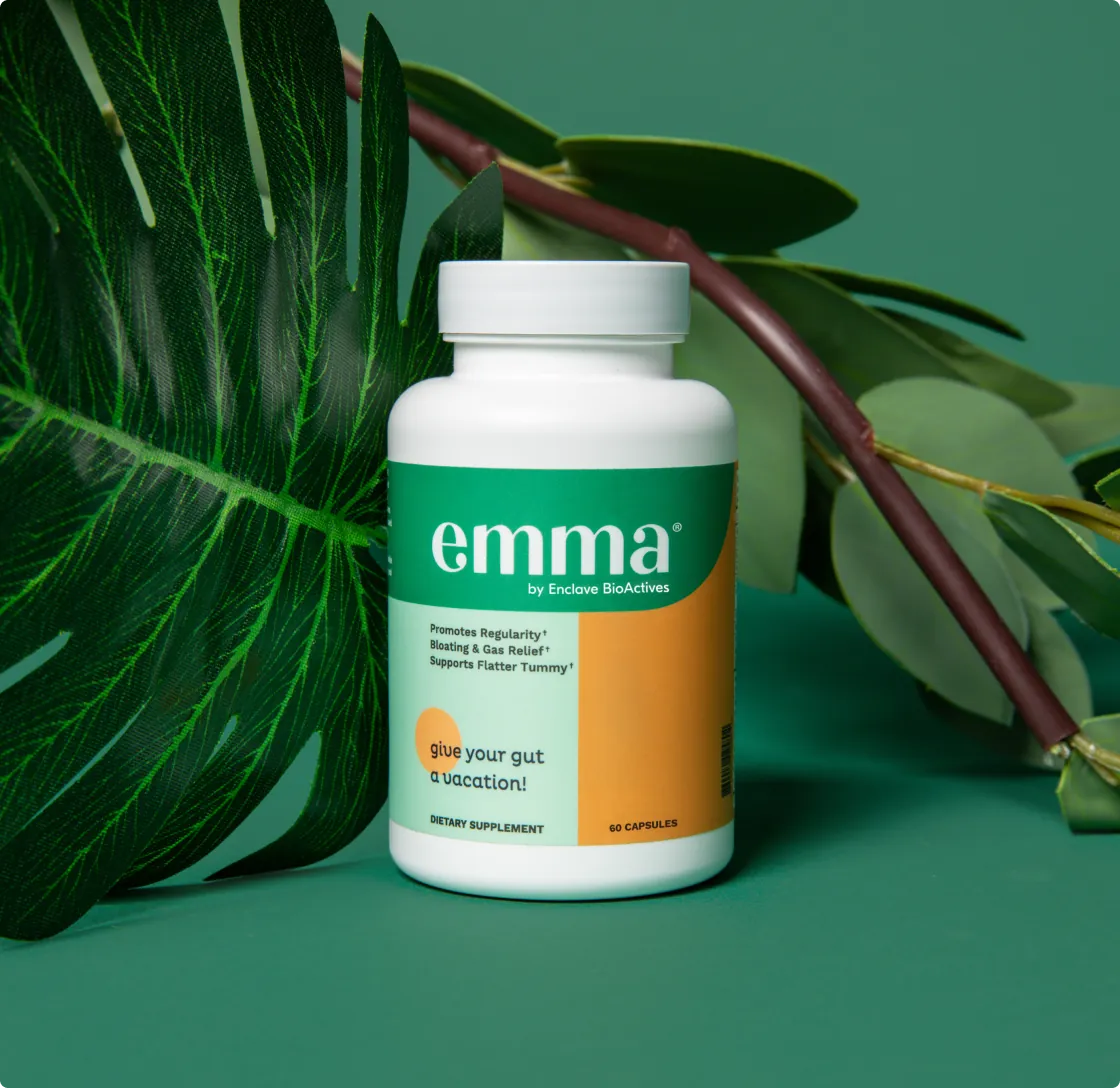
What is known
- Product name
- Serving size
- Listed ingredients
- Active amounts
Not established
- Finished-product effectiveness
- Typical response rate
- Results timeline
- Superiority over alternatives
Emma Evidence Verdict in 30 Seconds
- Finished-product Emma clinical trialNot supplied
- Exact formula and active amountsDocumented
- Ingredient-level scientific researchAvailable for selected ingredients
- Typical Emma effectivenessNot established
- Proven Emma results timelineNot established
- Advertiser testimonialsReported experiences, not clinical proof
Emma is a documented multi-ingredient supplement with scientifically researched ingredients. However, the complete product cannot currently be described as clinically proven from the reviewed materials.
The absence of a supplied trial does not prove that Emma cannot help an individual. It means typical effectiveness, response rate and expected results cannot be confirmed.
Is Emma Gut Health Relief Scientifically Proven?
No completed-product Emma clinical trial was supplied, so we cannot describe the exact Emma formula as clinically proven.
Some listed ingredients have scientific research behind them, but those studies vary by ingredient, dose, chemical form, population and intended outcome.
This does not prove Emma cannot help an individual. It means the reviewed evidence does not establish how often the complete product works, how large the effect is, how quickly it appears or which users are most likely to benefit.
What Evidence Was Supplied for Emma?
Supplied
- Supplement Facts panel
- Product images
- Directions image
- Advertiser sales materials
- Advertiser package information
- Advertiser testimonials
- Informal family-and-friend observations reported to Jeff's Reviews
Not supplied
- Randomized Emma clinical trial
- Placebo-controlled Emma trial
- Peer-reviewed finished-product trial
- Emma dose-ranging trial
- Emma bioavailability study
- Emma long-term safety study
- Emma head-to-head comparison
- Independent certificate of effectiveness
- Verified typical-results data
- Independently verified testimonial database
Product documentation confirms what is displayed or claimed. It does not independently prove effectiveness.
How We Rank Different Types of Emma Evidence
- 1
Finished-product human trials
Highest relevance to Emma when the exact formula and serving are tested.
Emma status: Not supplied
- 2
Matched human ingredient studies
Useful only when ingredient, form, dose and outcome are sufficiently similar.
Emma status: Varies
- 3
General human ingredient research
Provides context but may not match Emma's amount or purpose.
Emma status: Available for selected ingredients
- 4
Laboratory, animal or mechanistic research
Can suggest biological plausibility but does not prove customer outcomes.
Emma status: Indirect evidence only
- 5
Testimonials and informal feedback
May identify possible experiences, complaints or questions.
Emma status: Cannot establish typical results or causation
- 6
Advertising claims
Commercial statements requiring independent substantiation.
Emma status: Not treated as proof
The lower levels may generate hypotheses, but they cannot replace a well-designed finished-product human trial.
Emma Claim-by-Claim Evidence Summary
| Claim category | Finished-product Emma evidence | Ingredient-level relevance | Editorial conclusion |
|---|---|---|---|
| Digestive regularity | Not supplied | Some formula components may be relevant to digestion or bowel function generally | Emma-specific frequency and effect are not established |
| Constipation | Not supplied | Some ingredients have digestive or metabolic research, but Emma is not proven as a constipation treatment | Treatment claim not established |
| Bloating | Not supplied | Ingredients can affect digestion differently and may increase or reduce symptoms depending on the person | Reliable Emma-specific benefit not established |
| Parasites / cleanse | Not supplied | No evidence supplied that the finished product eliminates human parasites or cleanses the colon | Claim not established |
| Gut lining | Not supplied | Mechanistic or ingredient research cannot prove Emma repairs intestinal tissue | Repair claim not established |
| Microbiome | Not supplied | Emma contains fiber-related ingredients but no listed probiotic strains | Microbiome-restoration claim not established |
| Weight or metabolism | Not supplied | Some ingredients have metabolic research in other contexts | Emma-specific weight-loss outcome not established |
| Energy / general wellness | Not supplied | B vitamins participate in normal metabolism, but high Daily Value amounts do not prove a noticeable energy effect | Typical Emma-specific benefit not established |
Digestive regularity
- Emma-specific evidence
- Not supplied
- Ingredient context
- Some formula components may be relevant to digestion or bowel function generally
- Editorial verdict
- Emma-specific frequency and effect are not established
Constipation
- Emma-specific evidence
- Not supplied
- Ingredient context
- Some ingredients have digestive or metabolic research, but Emma is not proven as a constipation treatment
- Editorial verdict
- Treatment claim not established
Bloating
- Emma-specific evidence
- Not supplied
- Ingredient context
- Ingredients can affect digestion differently and may increase or reduce symptoms depending on the person
- Editorial verdict
- Reliable Emma-specific benefit not established
Parasites / cleanse
- Emma-specific evidence
- Not supplied
- Ingredient context
- No evidence supplied that the finished product eliminates human parasites or cleanses the colon
- Editorial verdict
- Claim not established
Gut lining
- Emma-specific evidence
- Not supplied
- Ingredient context
- Mechanistic or ingredient research cannot prove Emma repairs intestinal tissue
- Editorial verdict
- Repair claim not established
Microbiome
- Emma-specific evidence
- Not supplied
- Ingredient context
- Emma contains fiber-related ingredients but no listed probiotic strains
- Editorial verdict
- Microbiome-restoration claim not established
Weight or metabolism
- Emma-specific evidence
- Not supplied
- Ingredient context
- Some ingredients have metabolic research in other contexts
- Editorial verdict
- Emma-specific weight-loss outcome not established
Energy / general wellness
- Emma-specific evidence
- Not supplied
- Ingredient context
- B vitamins participate in normal metabolism, but high Daily Value amounts do not prove a noticeable energy effect
- Editorial verdict
- Typical Emma-specific benefit not established
Understand the evidence limitations and still considering Emma? View current Emma packages and terms. Affiliate-supported; we may receive a commission.
Does Emma Gut Health Relief Have Clinical Trials?
We did not receive a published clinical trial testing the exact Emma formula. A study involving only one Emma ingredient would not be a clinical trial of Emma.
An applicable Emma clinical trial would need to include:
- The exact finished Emma product
- The same two-capsule daily serving
- An identified study population
- An appropriate control or placebo
- Predefined outcomes
- An adequate sample size
- Sufficient duration
- Adverse-event reporting
- Statistical analysis
- Funding and conflict disclosures
- Peer review or complete public reporting
The absence of a supplied trial does not prove fraud. It means product-specific effectiveness claims cannot be confirmed from the reviewed evidence.
What Evidence Supports Emma's Digestive-Regularity Claims?
No completed-product evidence was supplied establishing how many Emma users experience more regular bowel movements, how large the change is or how long it takes.
- Regularity is not defined identically for every person
- Testimonials cannot establish a typical response
- Formula ingredients may affect people differently
- A bowel change may be caused by diet, fluid intake, medicines, illness or another factor
- An immediate bowel response does not prove long-term digestive benefit
Is Emma Proven to Treat Constipation?
No. We did not receive evidence establishing Emma as a treatment for constipation.
- Constipation has multiple possible causes
- A supplement testimonial cannot identify the cause
- Emma's formula is not equivalent to a clinically evaluated constipation treatment
- Ingredient-level digestive research does not establish an Emma treatment effect
- Persistent constipation may require appropriate assessment
Is Emma Proven to Remove Parasites or Cleanse the Colon?
No evidence was supplied showing that the finished Emma product diagnoses or eliminates human parasites or cleanses the colon.
- Advertising language is not diagnostic evidence
- Digestive symptoms do not prove parasitic infection
- Laboratory or animal research cannot establish parasite removal in Emma users
- A supplement should not replace appropriate testing or treatment
- "Cleanse" is often an imprecise marketing term
Do not interpret ordinary digestive symptoms as proof of parasites based on advertising content.
What Does Ingredient-Level Research Tell Us?
| Ingredient | Research type | Emma limitation |
|---|---|---|
| Berberine | Human and mechanistic studies exist in several health contexts | Emma-specific outcome and complete-formula interaction are not established |
| Resveratrol | Human, animal and laboratory research exists | Results vary substantially by dose, population and outcome |
| Quercetin | Human and mechanistic research exists | Research does not automatically establish digestive benefit from Emma |
| Garlic | Human and mechanistic research exists | Potential interactions and formula context remain relevant |
| Chicory inulin | Fiber and prebiotic research exists | The listed Emma amount must be compared with applicable studied amounts |
| Magnesium | Extensive nutrient research exists | Chemical form, amount and intended outcome matter |
| B vitamins | Established nutrient functions and deficiency-related evidence | Providing high Daily Values does not prove noticeable benefits in well-nourished users |
Berberine
Research: Human and mechanistic studies exist in several health contexts
Emma limitation: Emma-specific outcome and complete-formula interaction are not established
Resveratrol
Research: Human, animal and laboratory research exists
Emma limitation: Results vary substantially by dose, population and outcome
Quercetin
Research: Human and mechanistic research exists
Emma limitation: Research does not automatically establish digestive benefit from Emma
Garlic
Research: Human and mechanistic research exists
Emma limitation: Potential interactions and formula context remain relevant
Chicory inulin
Research: Fiber and prebiotic research exists
Emma limitation: The listed Emma amount must be compared with applicable studied amounts
Magnesium
Research: Extensive nutrient research exists
Emma limitation: Chemical form, amount and intended outcome matter
B vitamins
Research: Established nutrient functions and deficiency-related evidence
Emma limitation: Providing high Daily Values does not prove noticeable benefits in well-nourished users
Ingredient evidence can explain why a formula might be plausible. It cannot by itself establish that the finished product works as advertised.
Why Ingredient Studies Do Not Automatically Prove Emma Works
Dose mismatch
A study may use much more or less than Emma provides.
Form mismatch
A study may use another chemical form or extract.
Population mismatch
Participants may have a specific diagnosis, deficiency or demographic profile.
Outcome mismatch
A study may examine a laboratory marker rather than digestive symptoms.
Duration mismatch
Study duration may differ from normal Emma use.
Formula interaction
Nineteen ingredients taken together may behave differently from one ingredient alone.
Product-quality differences
Purity, manufacturing, storage and bioavailability may differ.
A list of studies concerning several ingredients is not equivalent to a clinical trial of the complete product.
What Can Emma Testimonials Actually Tell Us?
Testimonials may help identify
- Experiences some users report
- Common expectations
- Questions buyers have
- Possible complaints
- Tolerance patterns worth investigating
Testimonials cannot establish
- Typical effectiveness
- Cause and effect
- Response rate
- Average benefit
- Safety for all users
- Long-term outcomes
- Superiority over alternatives
- Whether other diet or medicine changes caused the result
- Selection bias — happy customers are more likely to be featured
- Placebo effects — expectation can influence subjective symptoms
- Natural symptom variation — digestion fluctuates without any product
- Concurrent lifestyle changes — diet, fluids or activity may shift too
- Incentivized reviews — discounts or free product can bias reporting
- Advertising selection — negative experiences may not be published
- Incomplete negative-result reporting — refunds are rarely featured
Additional Claim Analyses
No reliable Emma-specific trial establishing a reduction in bloating was supplied.
- Bloating can have many causes
- Chicory inulin and fermentable ingredients can affect tolerance
- Some users may report improvement, others may experience gas
- Testimonials cannot determine the typical response
- Personal tolerance is not proof of broader effectiveness
No completed-product evidence was supplied showing that Emma repairs or heals the intestinal lining.
- "Gut-lining" terminology is often used broadly in advertising
- Mechanistic research does not prove tissue repair in product users
- Ingredient evidence must match the form, amount, population and outcome
- Subjective improvement does not prove structural repair
- Digestive-tract conditions require appropriate assessment
No Emma-specific microbiome study was supplied. The panel does not list probiotic strains.
- Emma includes chicory-root inulin and larch arabinogalactan
- Their listed amounts must be considered against studied amounts
- Fiber-related ingredients are not the same as live probiotics
- No stool-microbiome analysis was supplied
- "Balance" and "restore" require clear definitions and measurements
No Emma-specific weight-loss trial was supplied.
- Berberine and other ingredients have been studied in metabolic contexts
- Evidence from another formula or dose cannot automatically prove Emma results
- Weight change is influenced by diet, activity, medicines and illness
- A change in bowel contents is not equivalent to fat loss
- Testimonials do not establish expected weight loss
Emma provides several B vitamins, but no finished-product trial established a noticeable energy or wellness effect.
- Nutrients have established biological functions
- Daily Value percentages do not predict a noticeable subjective benefit
- Greater nutrient quantities are not automatically better
- Existing nutritional status matters
- Fatigue can have many possible causes
- Persistent fatigue should not automatically be attributed to digestion
Emma has been informally tried by consenting adult family members and friends known to Jeff's Reviews. Their experiences may help identify practical questions, but they do not constitute a clinical study.
We cannot claim:
- Informal use proves effectiveness
- The results are representative
- The experiences establish safety
- Family-and-friend feedback is independent clinical evidence
We do not have a controlled, standardized dataset suitable for drawing an effectiveness conclusion. See the main review for the complete testing-status disclosure.
- The exact commercially sold Emma product
- Randomized design
- Suitable placebo or comparison
- Adequate sample size
- Pre-registered protocol
- Defined participant criteria
- Clearly defined digestive outcome
- Validated symptom measures
- Bowel-frequency and consistency measures where relevant
- Adverse-event recording
- Medicine-use documentation
- Sufficient follow-up
- Complete statistical reporting
- Funding disclosure
- Independent replication
- Public or peer-reviewed reporting
One study would improve the evidence base, but independent replication would provide stronger confidence.
What Should Buyers Conclude From the Current Evidence?
Reasonably documented
- Formula and ingredient amounts
- Serving size
- Product directions
- Package information
- Advertiser claims and testimonials
Plausible but not proven for Emma
- Certain ingredients could influence digestive experiences
- Some users may report benefits
- The multi-ingredient formula may appeal for convenience
Not established
- Typical effectiveness
- Constipation treatment
- Parasite removal
- Colon cleansing
- Gut-lining repair
- Microbiome restoration
- Guaranteed regularity
- Predictable weight loss
- Specific results timeline
- Superiority over alternatives
The evidence is sufficient to understand what Emma contains and why it is marketed for digestive support. It is not sufficient to describe the complete product as clinically proven.
Before Buying Emma Based on Its Claims
Emma may still be worth considering when you:
- Understand that no finished-product clinical trial was supplied
- Prefer its disclosed multi-ingredient formula
- Have reviewed all ingredient amounts
- Have checked medicine interactions
- Accept that individual results are uncertain
- Are comfortable with the price and return policy
- Do not expect Emma to diagnose or treat a medical condition
Emma may not be a good fit when you:
- Require a clinically proven finished product
- Expect guaranteed constipation relief
- Expect parasite removal or colon cleansing
- Want a dedicated probiotic
- Want a substantial measured fiber product
- Prefer a single-ingredient formula
- Use medicines that require professional interaction review
- Have persistent or concerning digestive symptoms requiring assessment
The decision should be based on the disclosed formula and evidence limitations — not dramatic advertising promises.
Compare Emma with alternative supplement categories. Confirm the current label, seller, checkout total and return terms before purchasing. We may receive a commission.
Our Verdict on Emma's Scientific Evidence
What is well documented
- Nineteen listed dietary ingredients
- Exact active amounts
- Two-capsule serving
- Advertiser directions
- Current advertised package structure
What is not documented
- Completed-product clinical effectiveness
- Typical response rate
- Proven results timeline
- Long-term outcomes
- Head-to-head superiority
What ingredient research adds
Ingredient research can establish biological plausibility and identify potential uses, limitations and interactions.
What ingredient research cannot add
It cannot establish that the complete Emma product works as advertised unless the exact formula is adequately tested.
Emma contains several ingredients with legitimate scientific research behind them. However, the research varies by ingredient, amount, form and intended outcome.
We did not receive a completed-product Emma clinical trial. Therefore, claims concerning regularity, constipation, bloating, parasites, gut repair, microbiome restoration or weight loss cannot be treated as proven outcomes of the finished product.
Our conclusion: Emma is a documented multi-ingredient supplement with a plausible formula, not a clinically proven treatment. It may still appeal to an informed buyer who understands the limitations, reviews the complete formula and accepts that individual results are uncertain.
Current product details, availability and seller terms may change. We may receive a commission.
Emma Evidence FAQ
Is Emma Gut Health Relief scientifically proven?
Does Emma have clinical trials?
Has the exact Emma formula been studied?
Does ingredient research prove Emma works?
Is Emma proven to treat constipation?
Is Emma proven to reduce bloating?
Is Emma proven to remove parasites?
Is Emma proven to repair the gut lining?
Is Emma proven to restore the microbiome?
Is Emma proven to cause weight loss?
Are Emma testimonials reliable scientific evidence?
Where can the complete Emma review and current prices be found?
How We Evaluated Emma's Claims and Evidence
The analysis considered
- Supplied Supplement Facts panel
- Product directions
- Advertiser product images
- Advertiser sales-page claims
- Advertiser testimonials
- Current offer materials
- Ingredient forms and amounts
- Emma-specific published research searches
- Ingredient-level human studies
- Systematic reviews
- Safety references
- Regulatory guidance for supplement and health claims
- Evidence-transfer limitations
What was not done
- No randomized Emma clinical trial
- No placebo-controlled Emma trial
- No head-to-head product trial
- No independent laboratory effectiveness test
- No diagnosis or treatment assessment
- No attempt to verify every testimonial
- No assumption that ingredient evidence proves the finished formula
- No universal effectiveness score
What We Could Verify About Emma's Evidence
| Product identity | Documented |
|---|---|
| Supplement Facts | Documented from supplied panel |
| Serving size | 2 capsules |
| Listed dietary ingredients | 19 |
| Exact active amounts | Documented |
| Advertiser claims | Reviewed where supplied |
| Advertiser testimonials | Observed |
| Published finished-product Emma trial | Not supplied |
| Randomized Emma trial | Not supplied |
| Placebo-controlled Emma trial | Not supplied |
| Emma head-to-head trial | Not supplied |
| Emma dose-ranging trial | Not supplied |
| Emma long-term outcome study | Not supplied |
| Independent effectiveness certificate | Not supplied |
| Ingredient-level research | Available for selected ingredients |
| Typical Emma response rate | Not established |
| Typical Emma results timeline | Not established |
| Date reviewed | July 2026 |
This verification record distinguishes available documentation from proof of clinical effectiveness.
Update History
- July 2026Published the independent Emma claims and scientific-evidence analysis using the supplied Supplement Facts panel, directions, advertiser materials, testimonial content and authoritative ingredient references. Documented the absence of a supplied finished-product clinical trial and evaluated major advertised claim categories.
Sources
Emma product and claim materials
- Supplied Emma Supplement Facts panel
- Supplied product images
- Supplied directions image
- Advertiser sales-page materials
- Advertiser testimonial materials
- Current package and offer information
Commercial material supplied by the advertiser.
Regulatory and claim-substantiation guidance
- U.S. Food and Drug Administration — Dietary Supplements consumer and industry information, and Structure/Function Claims guidance (accessed July 2026). Framework for supplement claims and disease-claim limits.
- U.S. Federal Trade Commission — Health Products Compliance Guidance and Endorsement Guides (accessed July 2026). Substantiation standards for health claims and testimonial disclosures.
- U.S. National Institutes of Health, Office of Dietary Supplements — health professional fact sheets for Magnesium, Zinc, Vitamin B6, Vitamin B12, Folate and other Emma nutrients (accessed July 2026). Nutrient intake, forms and interaction context.
- U.S. National Center for Complementary and Integrative Health — summaries for Berberine, Garlic, Licorice Root and Probiotics (accessed July 2026). General evidence status for botanical and category ingredients.
- U.S. National Library of Medicine — MedlinePlus supplement and drug-interaction entries (accessed July 2026). Consumer-level context on ingredient use.
Ingredient and category research
- Peer-reviewed systematic reviews and meta-analyses indexed via PubMed concerning berberine, resveratrol, quercetin, garlic, chicory inulin, arabinogalactan and licorice-root extracts (accessed July 2026). Cited only for ingredient context, not as evidence of Emma's finished-product effect.
- Cochrane Library reviews on fiber, probiotics and functional gastrointestinal symptoms (accessed July 2026). Category-level evidence for comparison; not Emma-specific.
More About Emma Gut Health Relief
Complete Review
Advertised benefits, informal feedback, formula and final verdict.
Ingredient Analysis
Every listed ingredient, amount and formula limitation.
Side Effects and Interactions
Possible effects, medicine interactions and suitability.
Price and Packages
One-, three- and six-bottle prices, shipping and guarantee.
Dosage and Directions
Two-capsule serving, meal direction and usage limitations.
Alternatives and Comparisons
How Emma differs from probiotics, fiber, magnesium and enzymes.
Editorial: How I Review · Editorial Standards · Affiliate Disclosure · Corrections