Affiliate and medical-information disclosure: Jeff's Reviews may receive a commission if you order Emma through links on this page, at no additional cost to you. This page provides general educational information and is not personalized medical advice. Potential effects and interactions are based mainly on Emma's listed ingredients and authoritative supplement guidance; no completed-product Emma adverse-event study was supplied.
Complete Emma Review · Ingredient Analysis · Affiliate Disclosure · How I Review · Editorial Standards · Corrections
Independent supplement-safety analysis
Emma Gut Health Relief Side Effects, Warnings and Medication Interactions
Emma contains a broad combination of vitamins, minerals, berberine, garlic, plant compounds and fiber-related ingredients. Potential concerns include digestive discomfort, allergic reactions, duplicate nutrient intake, medicine interactions and special risks for certain users. No Emma-specific clinical safety study was supplied.
- Serving size
- 2 capsules
- Active formula
- 19 listed dietary ingredients
- Emma safety study
- Not supplied
- Medicine interactions
- Possible
- Pregnancy or breastfeeding
- Professional review required; berberine raises particular concern
- Side-effect rates
- Not established for Emma
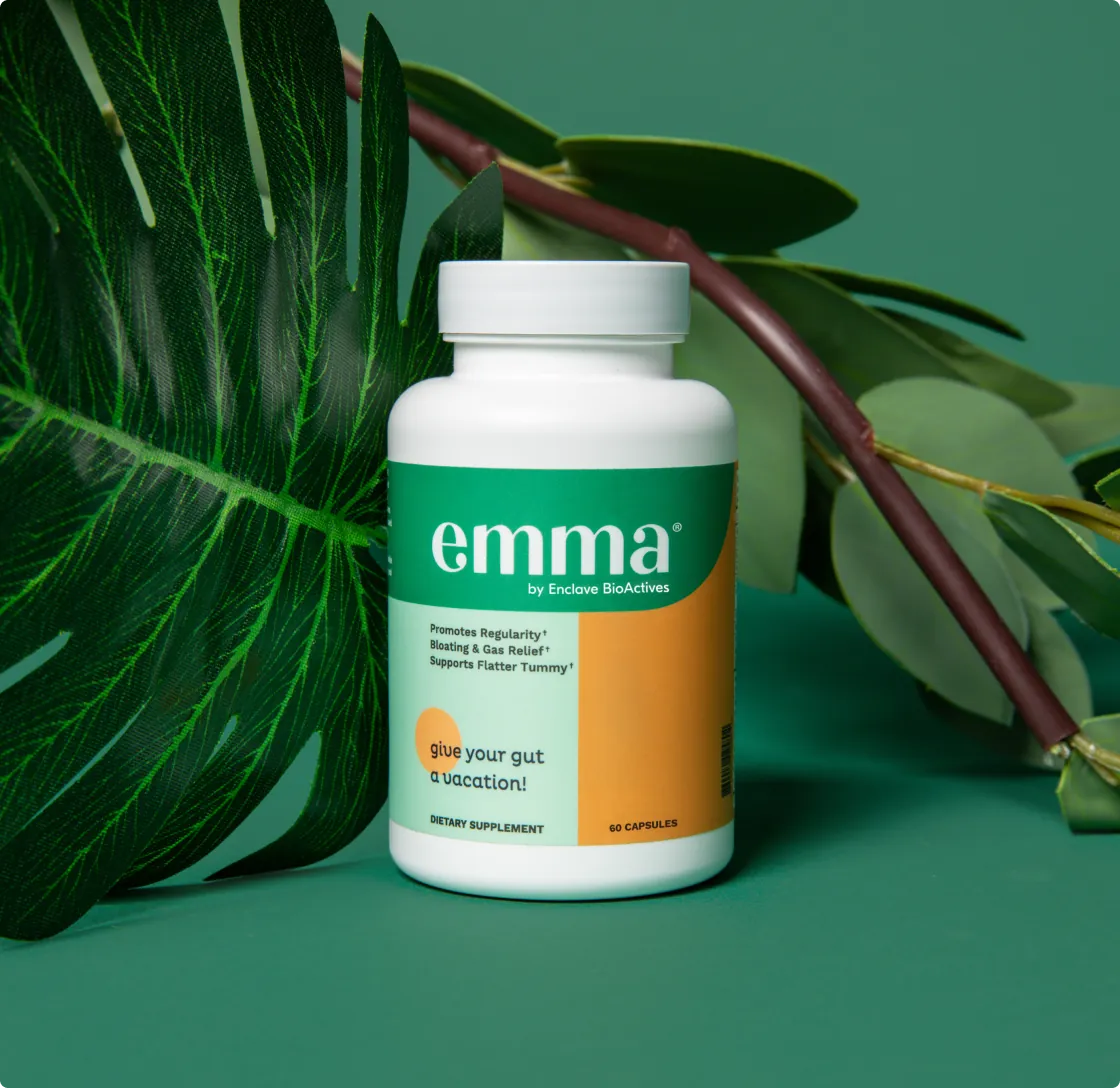
Is Emma Gut Health Relief Safe?
We cannot confirm that Emma is safe for every person.
The formula contains ingredients that may cause digestive effects, interact with medicines or require extra caution during pregnancy, breastfeeding, surgery or certain medical situations. No finished-product Emma safety trial was supplied.
Many adults may use dietary supplements without a serious reaction, but that general fact does not establish that Emma is appropriate for a particular individual. Safety depends on:
- Medication use
- Other supplements taken
- Pregnancy or breastfeeding status
- Medical history
- Allergies and individual digestive tolerance
A transparent Supplement Facts panel helps identify potential risk but does not prove safety.
Check Before Considering Emma
Use this list before deciding whether Emma is appropriate for you. It is a screening prompt, not personalized medical advice.
Professional review is especially important when you
- Take prescription medicine
- Use an anticoagulant or antiplatelet medicine
- Take diabetes medicine
- Use certain antibiotics
- Use transplant medication
- Are pregnant or breastfeeding
- Are preparing for surgery or a major dental procedure
- Have liver or kidney disease
- Already use vitamin B6, zinc, magnesium, biotin or a multivitamin
- Have persistent or severe digestive symptoms
Emma may be a poor fit when you
- Want a side-effect-free supplement
- Expect treatment for a diagnosed condition
- Prefer a single-ingredient product
- Have reacted to broad botanical formulas
- Cannot verify potential medicine interactions
- Are purchasing for a child or teenager
- Expect the product to replace medical assessment
Review the Medication Interaction Table · See Who Should Ask First
Possible Emma Side Effects at a Glance
These are potential ingredient-level concerns, not side-effect rates measured in an Emma clinical trial.
Possible digestive effects
- Nausea
- Abdominal discomfort
- Cramping
- Gas
- Bloating
- Diarrhea
- Constipation
- Vomiting
- Heartburn
- Changes in stool pattern
Other possible effects
- Headache
- Garlic-related breath or body odor
- Skin rash
- Allergic reaction
- Changes related to duplicate vitamin or mineral intake
Important interaction concerns
- Berberine and medicines
- Garlic and bleeding-related medicines
- Magnesium and certain antibiotics or osteoporosis medicines
- Zinc and certain antibiotics or penicillamine
- Vitamin B6 and total long-term supplement intake
- Biotin and some laboratory tests
Not every listed effect is equally likely. Reactions depend on the individual, other supplements, medications and health status.
What Safety Evidence Exists for Emma Itself?
| Supplement Facts panel | Available |
|---|---|
| Ingredient amounts | Available |
| Label directions | Available |
| Complete Other Ingredients list | Not visible in reviewed panel |
| Allergen cross-contact documentation | Not supplied |
| Certificate of analysis | Not supplied |
| Batch safety testing | Not independently verified |
| Finished-product clinical safety study | Not supplied |
| Standardized adverse-event data | Not supplied |
| Long-term Emma safety data | Not supplied |
| Pregnancy study | Not supplied |
| Child safety study | Not supplied |
The label gives enough information to identify several potential concerns, but it does not provide a complete safety profile for the finished supplement.
Informal-use note: Some family members and friends tried Emma and shared positive experiences. This was not a controlled safety study, and the observations cannot establish how frequently side effects occur or whether the formula is suitable for another person.
Which Emma Ingredients Matter Most for Safety?
| Ingredient | Label amount | Potential concern | Who should pay particular attention |
|---|---|---|---|
| Berberine hydrochloride | 200 mg | Potential digestive effects and medicine interactions. | People using medication, pregnant or breastfeeding people, and organ-transplant recipients. |
| Garlic bulb | 100 mg | Digestive discomfort, allergy and possible bleeding considerations. | People using anticoagulants, antiplatelet medicine or preparing for surgery. |
| Magnesium (as magnesium oxide) | 90 mg | Digestive tolerance and absorption interactions with some medicines. | People using certain antibiotics or oral bisphosphonates. |
| Zinc (as zinc oxide) | 15 mg | Medicine-absorption interactions and duplicate zinc intake. | People using certain antibiotics, penicillamine, or additional zinc products. |
| Vitamin B6 (as pyridoxine HCl) | 15 mg | Long-term total intake and regional upper-intake differences. | People using other B-complex, energy or multivitamin products. |
| Biotin | 500 mcg | Potential laboratory-test consideration. | People scheduled for laboratory testing. |
| DGL licorice | 50 mg | DGL differs from ordinary licorice, but product-specific long-term data remain limited. | People with complex medical histories or interacting medicines. |
| Chicory-root inulin | 50 mg | Individual digestive tolerance. | People sensitive to fermentable fiber ingredients. |
Berberine hydrochloride
200 mgConcern: Potential digestive effects and medicine interactions.
Pay attention if: People using medication, pregnant or breastfeeding people, and organ-transplant recipients.
Garlic bulb
100 mgConcern: Digestive discomfort, allergy and possible bleeding considerations.
Pay attention if: People using anticoagulants, antiplatelet medicine or preparing for surgery.
Magnesium (as magnesium oxide)
90 mgConcern: Digestive tolerance and absorption interactions with some medicines.
Pay attention if: People using certain antibiotics or oral bisphosphonates.
Zinc (as zinc oxide)
15 mgConcern: Medicine-absorption interactions and duplicate zinc intake.
Pay attention if: People using certain antibiotics, penicillamine, or additional zinc products.
Vitamin B6 (as pyridoxine HCl)
15 mgConcern: Long-term total intake and regional upper-intake differences.
Pay attention if: People using other B-complex, energy or multivitamin products.
Biotin
500 mcgConcern: Potential laboratory-test consideration.
Pay attention if: People scheduled for laboratory testing.
DGL licorice
50 mgConcern: DGL differs from ordinary licorice, but product-specific long-term data remain limited.
Pay attention if: People with complex medical histories or interacting medicines.
Chicory-root inulin
50 mgConcern: Individual digestive tolerance.
Pay attention if: People sensitive to fermentable fiber ingredients.
A concern listed here is a reason to review the formula individually — not proof that a reaction will occur.
Ingredient-Level Safety Detail
Emma provides 200 mg of berberine hydrochloride per two-capsule serving.
Authoritative guidance reports possible berberine effects including abdominal discomfort, constipation, diarrhea, nausea, vomiting and bloating.
- Berberine can interact with medicines.
- Cyclosporine is a specifically documented interaction concern.
- People using prescription medication should have the formula reviewed by a pharmacist.
- Pregnancy and breastfeeding require particular caution; berberine should not be given to infants.
- The 200 mg amount does not eliminate interaction concerns.
- Research involving other berberine doses is not Emma-specific evidence.
A lower amount than that used in another study does not automatically establish either safety or ineffectiveness.
Garlic supplements can be relevant to bleeding risk, particularly for people using medicines that affect bleeding or those preparing for surgery. Emma provides 100 mg of garlic bulb per serving.
Possible garlic-related effects may include breath or body odor, abdominal discomfort, gas, nausea and allergic reaction.
Particular caution is appropriate with anticoagulants, antiplatelet medicines, aspirin, bleeding disorders, and upcoming surgery or dental procedures.
A physician, surgeon, dentist or pharmacist should provide individualized guidance about supplements before a procedure. Do not stop prescribed medication.
Magnesium (90 mg as magnesium oxide) — magnesium-containing supplements can affect absorption of tetracycline antibiotics, quinolone antibiotics and oral bisphosphonate medicines.
Zinc (15 mg as zinc oxide) — zinc can interact with quinolone antibiotics, tetracycline antibiotics and penicillamine.
Timing requirements differ by medicine. Follow the medicine label and ask a pharmacist how to separate the products where necessary.
Diuretics can affect magnesium or zinc status; long-term proton-pump-inhibitor use can affect magnesium status. This does not mean Emma corrects a deficiency — blood testing and professional assessment may be needed.
Emma provides 15 mg vitamin B6 as pyridoxine hydrochloride (882% Daily Value). The Daily Value percentage is not an effectiveness rating; total intake from all supplements matters.
U.S. Food and Nutrition Board adult upper limit: 100 mg/day
European Food Safety Authority adult upper limit (2023): 12 mg/day
Emma label amount: 15 mg per serving
Emma's 15 mg serving is below the current U.S. adult upper limit but above the EFSA adult upper limit. This is regulatory context — not proof that Emma is universally safe or unsafe.
Long-term high supplemental intake of B6 can be relevant to nerve-related safety concerns. Add up total vitamin B6 from all products.
Emma provides 500 mcg biotin. Biotin supplements can interfere with some laboratory assays. Published serious examples often involve substantially higher biotin intakes than Emma's label amount, so the Emma dose should not be claimed to definitely cause interference.
Potentially affected tests may include certain thyroid tests, hormone tests, cardiac-marker tests and vitamin D assays.
Do not stop a supplement or delay medical testing based solely on this page. Ask the ordering clinician or laboratory what they require.
DGL licorice (50 mg) — DGL is different from ordinary licorice containing glycyrrhizin, so strong standard-licorice warnings should not automatically transfer to DGL. NCCIH notes oral DGL products may be safe for limited periods, but this is not Emma-specific long-term evidence. The label does not state the remaining glycyrrhizin concentration.
Star anise seed (100 mg) — traditional use does not prove safety or effectiveness in Emma. Do not claim it kills parasites. Botanical identity and contamination testing were not independently verified.
Resveratrol and quercetin (125 mg each) — biologically active plant compounds. Anyone taking medication should disclose the full formula to a pharmacist. Their presence does not prove that Emma reduces inflammation or treats disease.
Emma contains 50 mg chicory-root inulin and 50 mg larch arabinogalactan. Fiber-related and fermentable ingredients can affect people differently. Some users may report gas, bloating or stool-pattern changes.
No precise Emma-specific side-effect rate is available. The Emma amounts should not be assumed to reproduce results from research using different doses. People with sensitive digestive systems may need additional caution.
See our complete analysis of every Emma ingredient and amount: Emma ingredient analysis.
Emma Medication Interactions: What Should Buyers Check?
| Medicine or situation | Relevant Emma ingredient | Why review is important |
|---|---|---|
| Organ-transplant medicine (e.g., cyclosporine) | Berberine | Documented interaction potential. |
| Anticoagulant or antiplatelet medicine | Garlic and possibly other plant compounds | Bleeding considerations. |
| Regular aspirin use | Garlic | Possible additive bleeding concern. |
| Diabetes medicine | Berberine | Biological activity and possible interaction concern. |
| Tetracycline or quinolone antibiotics | Magnesium and zinc | Possible reduced medicine or mineral absorption. |
| Oral bisphosphonates | Magnesium | Possible absorption interference. |
| Penicillamine | Zinc | Possible reduced medicine absorption. |
| Antiepileptic medicines | Vitamin B6 and biotin status relationships | Professional review of the total formula is appropriate. |
| Diuretics | Magnesium and zinc | Some diuretics can alter mineral status. |
| Proton-pump inhibitors (long-term) | Magnesium | Long-term use can affect magnesium status. |
| Upcoming laboratory tests | Biotin | Potential test interference. |
| Upcoming surgery or dental procedure | Garlic and full botanical formula | Bleeding and perioperative supplement review. |
Organ-transplant medicine (e.g., cyclosporine)
Ingredient: Berberine
Why: Documented interaction potential.
Anticoagulant or antiplatelet medicine
Ingredient: Garlic and possibly other plant compounds
Why: Bleeding considerations.
Regular aspirin use
Ingredient: Garlic
Why: Possible additive bleeding concern.
Diabetes medicine
Ingredient: Berberine
Why: Biological activity and possible interaction concern.
Tetracycline or quinolone antibiotics
Ingredient: Magnesium and zinc
Why: Possible reduced medicine or mineral absorption.
Oral bisphosphonates
Ingredient: Magnesium
Why: Possible absorption interference.
Penicillamine
Ingredient: Zinc
Why: Possible reduced medicine absorption.
Antiepileptic medicines
Ingredient: Vitamin B6 and biotin status relationships
Why: Professional review of the total formula is appropriate.
Diuretics
Ingredient: Magnesium and zinc
Why: Some diuretics can alter mineral status.
Proton-pump inhibitors (long-term)
Ingredient: Magnesium
Why: Long-term use can affect magnesium status.
Upcoming laboratory tests
Ingredient: Biotin
Why: Potential test interference.
Upcoming surgery or dental procedure
Ingredient: Garlic and full botanical formula
Why: Bleeding and perioperative supplement review.
This is a screening list, not a complete interaction database. A pharmacist should review the exact medicine name, dose and timing. Do not alter a prescription without professional advice.
Can Emma Be Used During Pregnancy or Breastfeeding?
Emma should not be presented as suitable during pregnancy or breastfeeding without individualized professional advice. Berberine raises particular concern for fetal and infant exposure.
- Berberine should not be given to infants.
- Berberine is not recommended during pregnancy or breastfeeding in authoritative guidance.
- Garlic amounts greater than normal food use can also require caution.
- The completed Emma formula has not been studied during pregnancy.
- The advertiser's broad safety claims do not establish pregnancy safety.
Minors: Emma should not be recommended to children or teenagers unless a qualified clinician specifically evaluates the product and the individual. Advertiser "all ages" language is not a substitute for that review.
Should Emma Be Reviewed Before Surgery?
Yes. People preparing for surgery or a significant dental procedure should tell the relevant healthcare team about Emma and every other supplement they use.
- Garlic may affect bleeding risk.
- A multi-ingredient formula is harder to assess than a single ingredient.
- The medical team should determine whether and when a supplement should be stopped.
- Do not follow a universal stop date from a review page.
- Do not stop prescribed medicine in order to use Emma.
Keep the bottle or a clear photograph of the Supplement Facts panel available for review.
Who Should Ask a Healthcare Professional Before Taking Emma?
- Pregnant people
- Breastfeeding people
- Children and teenagers
- People taking any prescription medicine
- Organ-transplant recipients
- People using cyclosporine
- People taking diabetes medicine
- People using anticoagulants or antiplatelet medicine
- People taking aspirin regularly
- People using certain antibiotics
- People using oral bisphosphonates
- People using penicillamine
- People preparing for surgery
- People with a bleeding disorder
- People with liver disease
- People with kidney disease
- People with severe or persistent digestive symptoms
- People with known ingredient allergies
- People already taking magnesium, zinc, B6, biotin or a multivitamin
- People scheduled for blood tests
Professional review reduces avoidable risk but does not guarantee safety.
What Symptoms Should Not Be Ignored?
Possible mild or transient
- Mild nausea
- Temporary gas
- Mild bloating
- Changes in stool pattern
- Garlic-related odor
- Mild abdominal discomfort
Even a mild effect should be taken seriously if it persists, worsens or is unusual for the person.
Seek prompt medical assessment
- Hives or widespread rash
- Swelling of the lips, tongue or throat
- Wheezing or difficulty breathing
- Fainting
- Chest pain
- Palpitations or an irregular heartbeat
- Severe or persistent vomiting
- Severe or persistent diarrhea
- Severe abdominal pain
- Blood in stool, urine or vomit
- Unusual or persistent bleeding
- Yellowing of the skin or eyes
- Dark urine
- Markedly reduced urination
What Should Someone Do if Emma Causes a Reaction?
- Stop taking the supplement when a concerning reaction is suspected.
- Seek appropriate medical advice, especially for significant, worsening or persistent symptoms.
- Seek urgent assistance for a severe allergic reaction, breathing difficulty, fainting, major bleeding or another serious symptom.
- Keep the bottle, label, lot number and order information.
- Record when the supplement was taken and what other medicines or supplements were used.
- Contact the seller or company using the current label or order information.
- In the United States, serious suspected supplement reactions can be reported through the FDA safety-reporting system.
Jeff's Reviews does not process medical complaints or adverse-event reports.
How Can Buyers Reduce Avoidable Risk?
- Read the complete current bottle label.
- Compare the formula with every other supplement used.
- Do not exceed the labelled serving of 2 capsules per day.
- Follow the advertiser's direction to take Emma with a meal.
- Sensitive-stomach users may begin with 1 capsule daily and increase only as tolerated.
- Ask a pharmacist about medicine interactions.
- Disclose the product before surgery and laboratory testing.
- Do not assume that "natural" means safe.
- Do not use Emma instead of medical assessment.
- Stop and seek advice for a significant reaction.
Does Starting With One Capsule Remove the Side-Effect Risk?
No. Beginning with one capsule may reduce the initial amount consumed, but it does not eliminate allergy, interaction, pregnancy or medicine-related concerns.
- One capsule is half of the labelled two-capsule serving.
- Lower exposure does not guarantee no reaction.
- Medicine interactions may remain relevant.
- The sensitive-stomach direction is not a safety certification.
- Do not increase the amount if significant symptoms occur.
Is Emma Safe for Long-Term Use?
We cannot confirm Emma's long-term safety because no completed-product long-term clinical study was supplied.
- The six-bottle package represents approximately 180 days at the labelled serving.
- Package duration does not establish safety for that duration.
- Long-term total vitamin B6 intake deserves consideration.
- Duplicate magnesium, zinc and B-vitamin intake should be reviewed.
- DGL safety information is not the same as completed Emma safety evidence.
- Long-term medicine interactions remain relevant.
- Persistent symptoms should not be managed indefinitely through self-treatment.
Should You Consider Emma After Reviewing the Safety Concerns?
Emma may still interest an adult who
- Wants a fully disclosed multi-ingredient formula
- Has checked the ingredients against medicines and supplements
- Is not pregnant or breastfeeding
- Has no known ingredient allergy
- Understands that side-effect rates are unknown
- Is prepared to stop use and seek advice for a concerning reaction
- Has reviewed the current seller and guarantee terms
Emma may not be a good fit for someone who
- Is pregnant or breastfeeding
- Is a child or teenager
- Uses transplant medication
- Uses blood-thinning or antiplatelet medicine without professional review
- Uses medicines with possible mineral interactions
- Has a history of reacting to broad botanical formulas
- Wants a simple single-ingredient product
- Expects Emma to treat a diagnosed condition
- Has persistent red-flag digestive symptoms
Review the current label, total cost, medicine interactions and guarantee terms before ordering.
Our Emma Gut Health Relief Safety Verdict
| Complete active amounts | Disclosed |
|---|---|
| Emma-specific adverse-event study | Not supplied |
| Medicine interaction potential | Yes |
| Pregnancy or breastfeeding | Not recommended without qualified professional guidance |
| Child safety data | Not supplied |
| Long-term product study | Not supplied |
| Allergen cross-contact record | Not supplied |
| Certificate of analysis | Not supplied |
Emma's detailed Supplement Facts panel makes its potential safety concerns easier to identify than an undisclosed proprietary blend. The exact amounts of berberine, garlic, magnesium, zinc, vitamin B6, biotin and the other listed ingredients are available for review.
That transparency does not make the product appropriate for everyone. Berberine may cause digestive symptoms, interact with medicines and presents particular concerns during pregnancy and breastfeeding. Garlic can be relevant to bleeding risk, while magnesium and zinc can interfere with absorption of certain medicines. Emma also supplies 15 mg of vitamin B6, making total long-term intake from other products worth reviewing.
No completed-product clinical safety study or standardized adverse-event record was supplied. We therefore cannot establish how often Emma causes side effects or confirm that it is safe for long-term use.
Our conclusion: Emma may be considered by an appropriately informed adult who has reviewed the complete formula and checked potential interactions. It should not be presented as side-effect free, suitable for all ages or automatically safe with medication, pregnancy, breastfeeding or surgery.
Confirm the current label, pricing, seller details and return conditions before ordering. We may receive a commission.
Emma Safety FAQ
What are the possible Emma Gut Health Relief side effects?
Can Emma cause diarrhea, constipation, gas or bloating?
Can Emma interact with medication?
Can Emma be taken with blood thinners or aspirin?
Can Emma be taken with diabetes medicine?
Can Emma be taken with antibiotics?
Is Emma safe during pregnancy or breastfeeding?
Can children or teenagers take Emma?
Should Emma be stopped before surgery?
Can Emma interfere with laboratory tests?
Is the vitamin B6 amount safe?
Does starting with one capsule prevent side effects?
Is Emma safe for long-term use?
What should someone do after a serious reaction?
Our analysis considered:
- Supplied Supplement Facts panel
- Supplied directions
- Supplied product materials
- Current advertiser documentation
- FDA supplement-safety guidance
- FDA adverse-event reporting guidance
- NIH Office of Dietary Supplements fact sheets
- NCCIH ingredient-safety resources
- Peer-reviewed safety literature
- Informal family-and-friend feedback
What we did not do:
- No clinical safety trial
- No laboratory testing
- No adverse-event surveillance study
- No standardized tester monitoring
- No medicine-interaction experiment
- No pregnancy study
- No child study
- No long-term follow-up study
- No personalized medical assessment
- No certificate-of-analysis verification
| Product name | Documented |
|---|---|
| Serving size | 2 capsules |
| Capsules per bottle | 60 |
| Active amounts | Documented |
| Directions | Documented |
| Sensitive-stomach instruction | Documented |
| Complete Other Ingredients list | Not visible in reviewed panel |
| Emma-specific safety study | Not supplied |
| Adverse-event rates | Not supplied |
| Medicine interactions | Potential identified from ingredients |
| Pregnancy safety | Not established |
| Breastfeeding safety | Not established |
| Child safety | Not established |
| Long-term safety | Not established |
| Allergen cross-contact testing | Not supplied |
| Certificate of analysis | Not supplied |
| Independent laboratory testing | Not performed |
| Date reviewed | July 2026 |
This is an editorial verification record, not a medical safety certification.
Update history
July 2026 — Published the independent Emma side-effects and interaction analysis using the supplied Supplement Facts panel, directions, advertiser materials and current authoritative ingredient-safety guidance. Documented possible digestive effects, medicine interactions, pregnancy concerns, laboratory-test considerations and major evidence limitations.
Product and label materials
- Supplied Supplement Facts panel — commercial material supplied by the advertiser
- Supplied directions image — commercial material supplied by the advertiser
- Supplied product images — commercial material supplied by the advertiser
- Advertiser documentation and current offer materials
Regulatory safety guidance
- U.S. FDA — Dietary supplements: consumer information
- U.S. FDA — How to report a problem with a dietary supplement
- U.S. FTC — Health products compliance guidance
Ingredient safety references
- NCCIH — Berberine and berberine-containing plants
- NCCIH — Garlic
- NCCIH — Licorice root (including DGL)
- NIH Office of Dietary Supplements — Magnesium fact sheet for health professionals
- NIH Office of Dietary Supplements — Zinc fact sheet for health professionals
- NIH Office of Dietary Supplements — Vitamin B6 fact sheet for health professionals
- NIH Office of Dietary Supplements — Biotin fact sheet for health professionals
- EFSA — Scientific opinion on the tolerable upper intake level for vitamin B6 (2023)
Sources describe ingredient-level guidance. They do not independently verify Emma's finished-product safety. Access dates: July 2026.
More About Emma Gut Health Relief
Complete review
Emma Gut Health Relief Review
See our complete analysis of Emma's formula, advertised benefits, informal feedback, price, guarantee and final verdict.
Ingredient analysis
Emma Gut Health Relief Ingredients
See every listed ingredient, amount, nutrient form and formula limitation.
How I Review · Editorial Standards · Affiliate Disclosure · Corrections