TheraICE Migraine Relief Cap review: 90 days of using it for actual migraines
An honest assessment of a hot-and-cold therapy cap, including what it actually does, what it doesn't, and who it's wrong for.
9.0/10KEEPERQuick VerdictShow / Hide
I've used the TheraICE Migraine Relief Cap for more than 90 days. I get migraines occasionally and tension headaches more often, and this is the first product I've reviewed on this site because it's the first one I've personally lived with long enough — under both kinds of conditions — to have a real opinion about it.
The 90-day rating: 4.5 stars out of 5. The half star I withheld is for very specific reasons covered toward the end of this review. The 4.5 stars is because, against my actual expectations, this is a piece of gear I genuinely reach for on bad-headache days, and not just because I bought it.
Below: what it actually is, what it actually does, what it doesn't do, who shouldn't buy it, and what 90 days of using a $40 hot-and-cold therapy cap looks like in practice — including the moments when I wished I'd bought two.
The verdict, at the top.
For people who don't want to scroll: the TheraICE Migraine Relief Cap is a 360-degree gel-filled cap that you freeze (or microwave) and slip onto your head when a headache hits. It works on tension headaches reliably, on migraines partially, and on severe migraines not at all. At its retail price of $30-50 depending on where you buy it, it's a well-priced piece of non-pharmaceutical headache gear that earned its place in my freezer. It's not a miracle product. It's a good tool for a specific problem, with specific limits.
Who I am, and why I tested this for 90 days.
I get migraines a few times a month. Mine come with light sensitivity, occasional nausea, and the kind of behind-the-eye throbbing that makes the idea of looking at a screen feel like a bad decision. I get tension headaches more often than that — the tight-band-around-the-head kind, usually after long focused workdays or stress. I've tried OTC pain relievers, ice packs wrapped in towels, hot showers, dark rooms, and various levels of giving up and going to bed early.
I bought the TheraICE Migraine Relief Cap in late January 2026 because the product was being recommended in migraine support communities and on Reddit threads, and because the price point ($39.99 at the time) made it a low-stakes experiment. I started using it the week it arrived and have been using it intermittently — when headaches happen — ever since. By the time I'm writing this in early May, I've used it dozens of times across both migraine and tension-headache contexts.
Per the methodology established in the testing window article, this is a 30-day-minimum category (small electronics / personal-use gear). I tested it for 90+ days because I wanted to make sure the cooling gel didn't degrade after dozens of freeze cycles, and because I wanted to test it across multiple migraine episodes rather than just one.
What the TheraICE Migraine Relief Cap actually is.
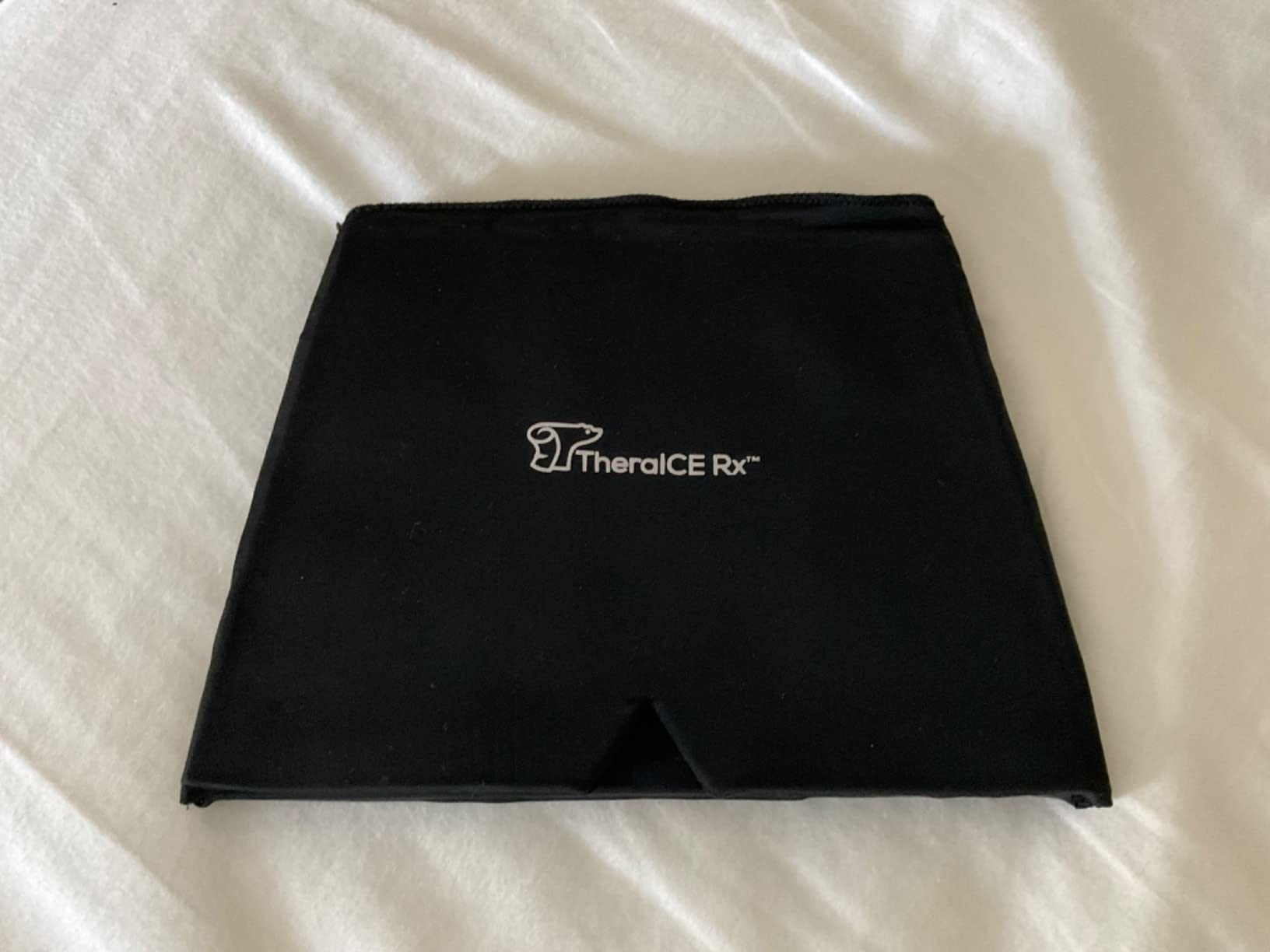
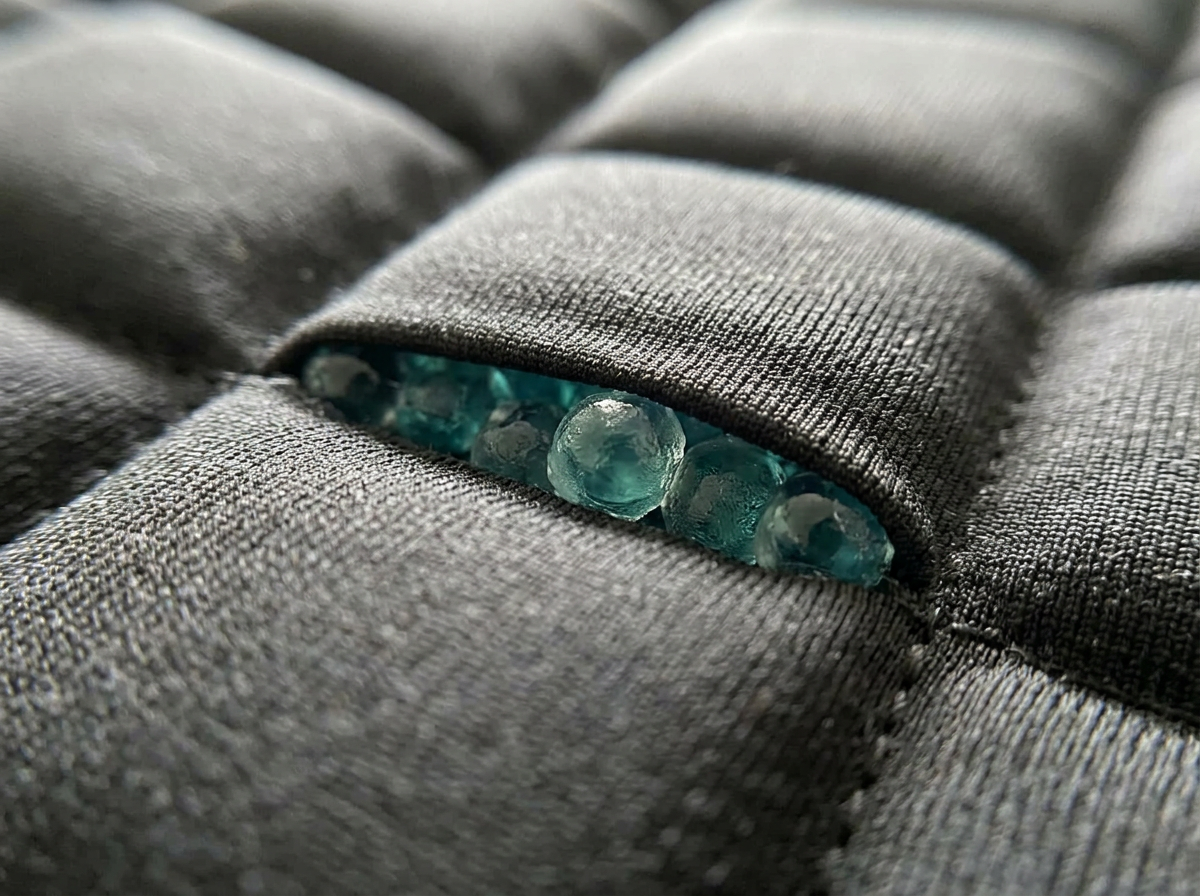
Stripping away the marketing copy: it's a stretchy fabric cap, shaped like a beanie, filled with cooling gel in segmented compartments. The gel covers the front (forehead and over the eyes), the sides (temples), and the back of the head. It's roughly one-size-fits-most, intended to stretch onto an adult head and apply gentle pressure while delivering cold or heat.
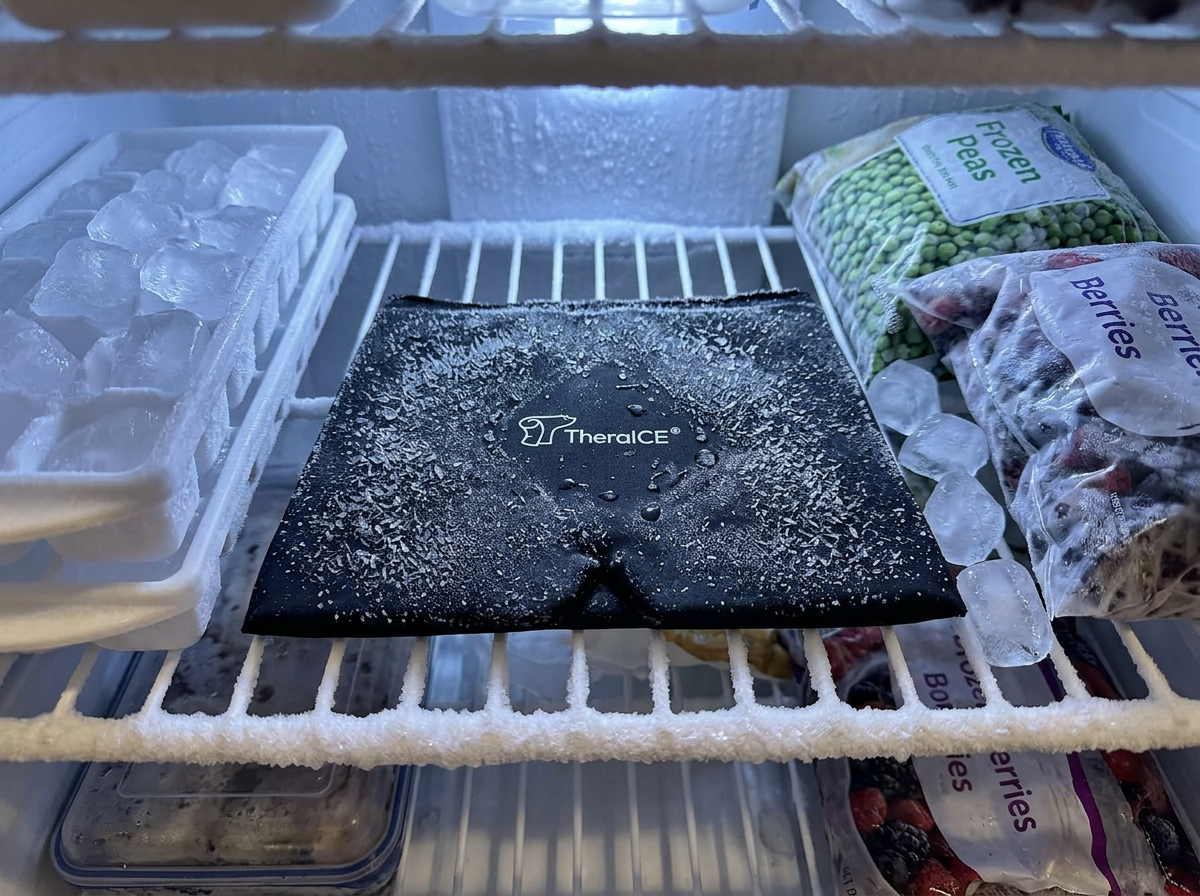
You freeze it (the manufacturer recommends 2+ hours, and they're correct — anything less and the gel isn't fully solidified and the cold doesn't last). Or you microwave it for about 20 seconds, which warms the gel for hot therapy. You wear it. The gel transfers temperature to your head. After 18-22 minutes (cold) or 10-15 minutes (hot), the temperature equalizes with your body and the therapeutic effect fades.
That's the whole product. There's no Bluetooth, no app, no rechargeable battery, no electronics. This is a fabric-and-gel object that works because of basic thermodynamics: cold constricts blood vessels and reduces inflammation; heat relaxes muscles. Both have decades of medical literature supporting their use for headache symptoms — with the well-known caveat that this is symptomatic relief, not a cure, and that the FDA has not evaluated this specific product as a medical device.
It's a fabric-and-gel object that works because of basic thermodynamics. The simplicity is part of why it works.
How I tested it across 90+ days.
I didn't run a controlled study. This is a personal-use review, which is what the methodology section of this site calls "lived-in testing" — using a product in the way an actual buyer would use it, across enough time to know whether it integrates into a routine or gets pushed to the back of a drawer.
Specifically:
- I kept the cap permanently in my freezer between uses. This is the only practical way to own this product. The 2-hour freeze time means you can't decide to use it when a headache starts — it has to be ready.
- I tracked roughly when I used it (date and which kind of headache) for the first 60 days. I stopped tracking after that because patterns had stabilized.
- I used it for migraines on cold mode, tension headaches on either cold or hot depending on what felt right that day, and a couple of times for general post-workout head pressure.
- I used it both as a primary intervention (when I caught a headache early) and as a secondary intervention (alongside an OTC pain reliever for migraines).
- I noted everything that surprised me, everything that disappointed me, and the moments where it was clearly working or clearly not working.
This isn't laboratory-grade testing. It's how a real buyer would actually use the product, which is the testing context that matters for a purchase decision.
Cold therapy: what it's actually like.
Cold mode is what the product is famous for, and what most users buy it for. Here's the realistic experience:
You pull the cap out of the freezer. It is genuinely cold — colder than a refrigerated gel pack but not painfully so. The first 20-30 seconds of putting it on can be mildly intense if you're sensitive to cold; this passes. The cap stretches over your head, the gel makes contact with your forehead, temples, the back of your skull, and the section over your eyes blocks essentially all light. The sensation is significant enough to be distracting from a headache, in a way that an ice pack on your forehead alone is not.
For the next 18-22 minutes, the cold is therapeutic. You feel the temperature of your head dropping in the areas under the gel. The compression — gentle, even, all the way around — adds a second layer of effect: there's something about even pressure on your skull that, by itself, eases tension. After about 20 minutes, the gel has equalized with body temperature and the cold is gone. The cap still functions as a slightly snug, lightly cool wrap, but the therapeutic window has closed.
For migraines specifically: this works on the mild-to-moderate ones. When I catch a migraine in its early phase — when there's pressure but the visual symptoms haven't fully landed — the cap can sometimes interrupt the progression. It's not a guarantee. Maybe 60% of the time, used early enough, the migraine doesn't fully develop. The rest of the time, it reduces severity even when it doesn't prevent the full episode. I want to be clear about this: this is consistent with what I'd expect from cold therapy generally, not some special property of the TheraICE specifically. A bag of frozen peas wrapped in a towel would have a similar therapeutic mechanism. What the TheraICE provides over a bag of peas is full-head coverage, light blocking, and the ability to lie down and not have to hold something to your face.
For severe migraines — the kind where I'm in bed in the dark and can't function — the cap helps a little. It doesn't fix anything. I still need OTC pain medication, time, and sleep. The cap reduces the perceived severity of the pain in the moment but doesn't shorten the migraine. I am not going to claim otherwise. If you have severe chronic migraines that interfere with your life, this product is not your solution. See a neurologist.
Hot therapy: when I actually use it warm.
The hot mode is less famous but, for me, has turned out to be the more frequently-used feature. When I have a tension headache — the stress-related, tight-band kind — heat works better than cold. The cap microwaves to a comfortable warm temperature in about 20 seconds (10-second increments to avoid overheating). The gel holds the heat for 10-15 minutes.
Warm mode is gentler than cold mode. It's less of a shock to the system, more of a "wrap your head in a warm hug" experience. For tension headaches caused by muscle tightness in the neck and forehead, the heat does what heat is supposed to do: it relaxes the muscles. After 10-15 minutes, my tension headaches are usually meaningfully better.
I want to flag a use case that surprised me: stress-related, end-of-day, "my head is just tired" moments — not technically headaches but the precursor to them. The warm cap, used proactively in those moments, often prevents the tension headache from developing into a full headache. This isn't medical and I'm not making medical claims; it's just been a useful pattern in my routine.
What this product doesn't do, and what the marketing overpromises.
The TheraICE marketing copy uses words like "miracle," "instant relief," "naturally relieve headaches in minutes," and "works wonders on most headaches." These are commercial-grade claims, and they're the language pattern that triggered my skepticism when I first encountered the product.
Here's what 90+ days of use tells me about those claims:
- "Instant relief" is wrong. There's a 20-30 second initial cold shock, then a gradual easing of symptoms over the next 5-10 minutes. The word "instant" is marketing language, not a description of physical reality. Manage your expectations: this is gradual relief, not magic.
- "Miracle" is wrong, period. Cold therapy and heat therapy have known mechanisms and known limits. This is a competently engineered delivery mechanism for both of those, and not a miracle.
- "Works on all headaches" is overstatement. Severe migraines, cold-triggered headaches, and headaches caused by underlying medical conditions are all categories where this product doesn't help — and in the case of cold-triggered headaches, the cold mode could actively make things worse.
- "100% natural / drug-free" is technically true but rhetorically misleading — it's true the same way a pillow is "drug-free." Marketing this fact suggests an implied comparison to "harmful medications," which oversimplifies. OTC pain relievers used as directed are not equivalent to "harmful drugs."
- "Doctor recommended" appears on the page without specifying which doctors or what they recommend. The independent reviews I researched (NBC's Today, Reviewed, Apartment Therapy) cite individual neurologists who say cold therapy generally is recommended for some headache types — not that those neurologists specifically recommend this product. Worth knowing.
None of this is unique to TheraICE. Most direct-to-consumer wellness products use this language register. But since this site is specifically committed to flagging the gap between marketing and reality, I'm flagging it. The product still works. The marketing is just oversold.
How it compares to a regular ice pack in a towel.
The honest comparison most TheraICE buyers should be running: is this $40 product meaningfully better than a frozen gel pack from a drugstore wrapped in a thin towel?
Real answer: meaningfully better, but not transformatively better.
Where a wrapped ice pack wins:
- Cost. A drugstore gel pack is $5-10. The TheraICE is $30-50.
- Already in your house. Most households have a frozen something in the freezer right now.
- You can target a specific spot. If your headache is concentrated in one area, a small ice pack lets you put cold exactly there.
Where the TheraICE wins:
- Full-head coverage. The 360-degree gel distribution means cold or heat is reaching the temples, forehead, eyes, and back of the head simultaneously. For migraines that involve multiple referred-pain zones, this matters.
- Light blocking. The over-eyes section blocks 100% of light. For light-sensitive migraine episodes, this is genuinely useful — you can lie down and have darkness without needing a separate eye mask.
- Compression. The cap applies even, gentle pressure to the head. This compression effect is therapeutic in itself for tension headaches; an ice pack provides cold without compression.
- Lying down hands-free. You can put the TheraICE on and then lie down without holding anything. An ice pack requires either holding it or balancing it on your forehead, and shifts when you move.
- Hot mode. A frozen gel pack doesn't switch to heat mode. The TheraICE's microwave function makes it useful for tension headaches where heat works better.
For severe-headache sufferers, the upgrade is worth it. For occasional-headache sufferers, the wrapped-ice-pack approach is probably sufficient and cheaper. I'd describe the TheraICE as a quality-of-life upgrade rather than a category leap.
My honest read on this comparison: if you have severe headaches that benefit from compression, TheraICE's tighter fit is the differentiator — none of the alternatives I researched match it on this attribute. If you primarily want long cold duration over compression, Magic Gel's published user reports of 30-45 minute cold cycles suggest it lasts longer than TheraICE in actual use. If your headaches extend to neck and shoulder tension, OnlyCare's neck wrap addresses something the others don't.
Important caveat: I have not personally tested Magic Gel, Headache Hat Halo, or OnlyCare. The data above is sourced from manufacturer specifications, aggregate published reviews, and verified user reports — not from 90-day testing under this site's methodology. When I do test alternatives in future reviews, this comparison table will be updated to reflect firsthand data. Until then, treat the alternative-product columns as research starting points rather than verdicts. For more detail on each alternative including buying recommendations, see the full migraine cap buying guide.
Who should buy the TheraICE Migraine Relief Cap.
If you want to compare the TheraICE against alternatives, see the buying guide for migraine caps. The clearest yes-buy cases for TheraICE specifically, in my opinion:
- You get tension headaches frequently (multiple times a month) and want a non-pharmaceutical option that works most of the time.
- You get mild-to-moderate migraines and have found that cold therapy helps when caught early, but you've been making do with awkward ice packs.
- You're a light-sensitive headache sufferer who has been using a separate eye mask plus ice; the TheraICE consolidates both functions.
- You want a hot-and-cold tool that doesn't require buying two separate products (heating pad + ice pack).
- You want to add a non-medication option to a routine that already includes OTC pain relievers, so you can sometimes skip the pills.
At its current price (typically $30-50), it earns its place in a freezer for any of the above use cases.
Who shouldn't buy it.
Equally important — and rarely covered in affiliate reviews — is who this product is wrong for:
- People with severe chronic migraines. If your migraines are debilitating, multi-day, or interfere with your work and life regularly, you need a neurologist and probably prescription medication. A $40 cooling cap is not your primary intervention. It can be a complementary tool, but if you're searching for a replacement for medical care, you're in the wrong product category.
- People whose headaches are triggered by cold. A small but real subset of headache sufferers experience cold stimulation as a trigger. If you've ever had ice cream make your head pound, this product on cold mode could make things worse for you. Use hot mode only, or buy something else.
- People with cold-sensitive skin or Raynaud's. The cap gets cold. If your hands or face go numb in mildly cool conditions, the direct gel-on-skin contact may be unpleasant or contraindicated.
- People expecting a miracle product. If you've read the marketing and you're expecting "instant" relief that "naturally" cures headaches, you'll be disappointed. This is a useful tool that takes the edge off, not a cure.
- People who get headaches once a year. The economics don't work. A $5 ice pack and a dark room is fine for occasional use. Save your $40.
Why 4.5 stars and not 5, and not 4.
The half-star I withheld is for two specific reasons:
First, the marketing language. As covered above, the gap between what the product does and what the website claims is real. A 5-star rating from me would reward the product for what it actually does, but I'm choosing to take half a star off as a small protest against the "miracle" and "instant relief" framing. If TheraICE updates their marketing to more accurately describe the product as "a cap that delivers cold or hot therapy effectively for many headache types, with some limits," I'd update this review to 5 stars.
Second, the single-unit limitation. After 90 days of using this, I've genuinely wished I had a second unit on more than one occasion — when a headache lasted longer than a single freeze cycle and I wanted to switch to a fresh cold cap rather than waiting four hours. The product would benefit from being sold in pairs at a discount, or from having a faster-freezing companion. As-is, you're locked into one therapy session per multi-hour window unless you buy two caps separately.
Why not 4 stars? Because despite both of those issues, the cap genuinely earns its place in my routine. I reach for it. It works. It's affordable. It's simple. It has no batteries to die, no electronics to break, and a 30-day money-back guarantee from the manufacturer if it doesn't work for you. For a $40 piece of non-pharmaceutical headache gear, the bar for "is this worth what I paid for it" is met decisively. 4 stars would imply some real reservation I have about whether to recommend the product. I don't have that reservation. I do recommend it, with the limits described above.
Where to buy it.
Per the disclosure at the top of this review, I earn a commission if you buy this through my affiliate link. The price is the same either way. If you don't want to use my affiliate link, the product is also available on Amazon, Walmart, and the manufacturer's direct site at theraice.com — none of which require my link. Buy it however feels right.
If you do use my affiliate link, the commission goes toward funding more reviews like this one — products tested for 90+ days before publishing, with explicit cons sections, and with explicit "who shouldn't buy this" advice. That's the model this site is trying to prove can work. Whether you support it or not, the review above is the same review.
For methodology context, the testing window for this category and how I score products is documented at /how-i-review. The full editorial standards including my rating-band system are at /editorial-standards.
If you find an error in this review or believe I've misrepresented the product, email jeff@jeffsreviews.com — I log corrections publicly at /corrections, including substantive ones.
And if you want to see what the next review looks like when it drops, the newsletter block above is the fastest way.
Related Reviews
Hose Hawk Pro Pressure Washer Review: Better Than the Reviews Suggest?
I used Hose Hawk Pro and found it does the job for light cleaning, but only if you judge it as a hose attachment, not a real pressure washer. It works for rinsing cars, patio furniture, bikes, garden tools, and muddy shoes. It won't blast deep concrete stains or mold. The negative reviews mostly come from buyers expecting pressure-washer power from a hose attachment.
Read the review →