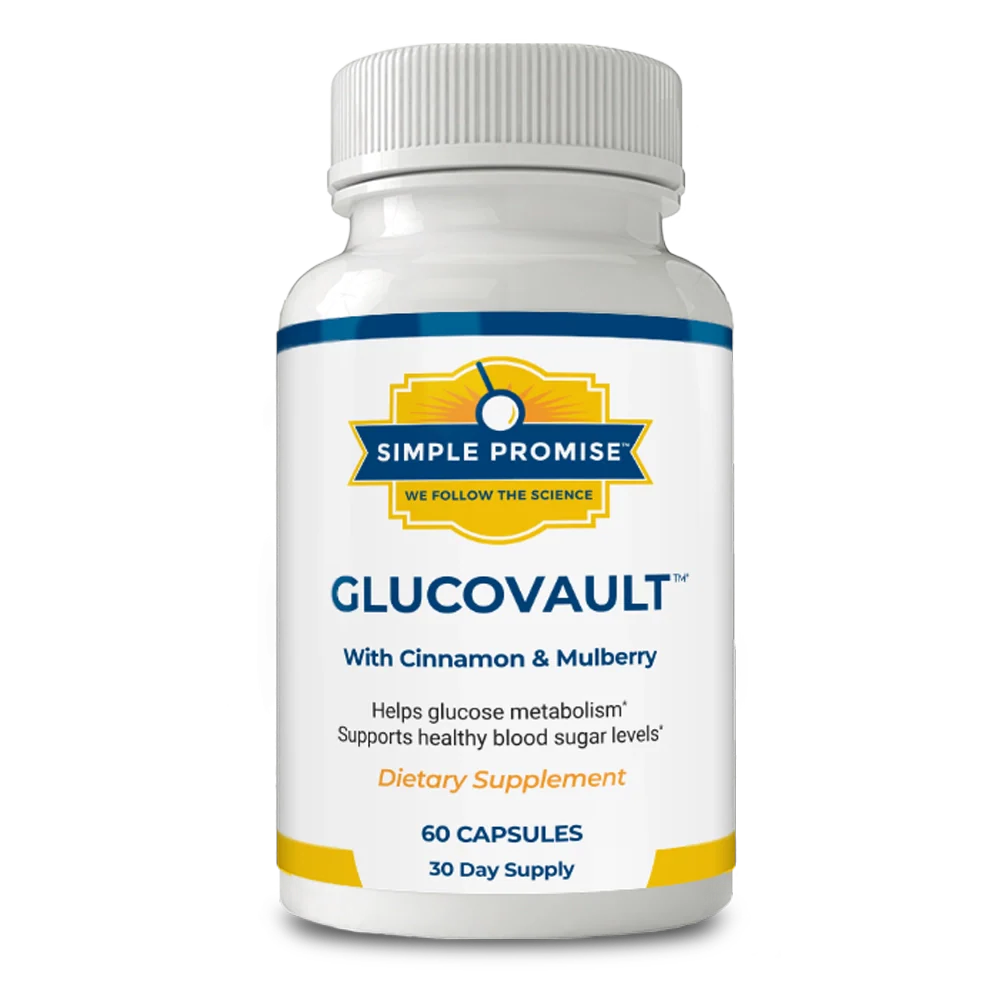
Does GlucoVault Have Side Effects?
GlucoVault may cause side effects or interact with medication, although reliable finished-product side-effect rates have not been supplied. Potential concerns include digestive discomfort, sensitivity reactions, additive blood-sugar lowering and ingredient-specific issues involving licorice, magnesium and multiple botanicals.[6]
This does not mean every user will experience a problem. Risk depends on the current formula, dose, medication use, health conditions and individual response.
Important: People using glucose-lowering medication should not treat GlucoVault as an ordinary wellness supplement. Speak with a qualified healthcare professional first.
Safety at a Glance
Potential general effects
- •Digestive discomfort
- •Nausea
- •Changes in bowel habits
- •Headache
- •Sensitivity or allergic reaction
Main interaction category
- •Insulin
- •Metformin
- •Other glucose-lowering medicines
- •Other blood-sugar supplements
Ingredient-specific caution
- •Licorice
- •Magnesium oxide
- •Chromium
- •Bitter melon
- •Gymnema
- •White mulberry
- •Cinnamon
Higher-risk groups
- •People with diabetes
- •People prone to hypoglycemia
- •Pregnant / breastfeeding people
- •Kidney, liver or heart conditions
- •People preparing for surgery
- •People taking several medicines
Evidence limitation: no reliable finished-product adverse-event rate was supplied for this review.
Possible GlucoVault Side Effects
Because GlucoVault contains many active ingredients, it is difficult to attribute a potential reaction to one component without clinical evaluation. The following are reasonable ingredient-level possibilities, not confirmed rates for the finished product.
Digestive effects
- •Stomach discomfort
- •Nausea
- •Loose stool
- •Constipation
- •Gas or bloating
Magnesium oxide is a lower-absorption form that may cause digestive effects in some users.[4] Several botanicals can also affect digestion. A reaction does not automatically identify which ingredient caused it.
Sensitivity effects
- •Headache
- •Dizziness
- •Unusual fatigue
- •Skin reaction
- •Ingredient sensitivity
These are not documented as common for GlucoVault — no supplied dataset supports a frequency figure.
Allergic reactions
Botanical ingredients may trigger allergic responses in susceptible individuals. Anyone with known plant sensitivities should check the complete label carefully. Severe symptoms require prompt medical attention from a qualified professional.
Can GlucoVault Interact With Diabetes Medication?
Yes, a potential interaction is possible. GlucoVault contains several ingredients marketed or studied for glucose-related effects. Combining them with insulin, metformin or other glucose-lowering treatment may create an additive effect in some users.[6]
Potentially relevant ingredients include chromium,[1] cinnamon,[5] banaba,[10] bitter melon,[7] gymnema,[8] white mulberry[9] and alpha-lipoic acid. The presence of these ingredients does not prove that GlucoVault will lower blood sugar, but it creates enough uncertainty that medication users should seek professional guidance before use.
Higher caution if you use
- Insulin
- Metformin
- Sulfonylureas
- GLP-1 medicines
- SGLT2 medicines
- DPP-4 medicines
- Other prescribed glucose-lowering treatment
- Multiple blood-sugar supplements
We do not provide dose adjustments or combination instructions. Any decision about combining a supplement with prescribed medication belongs with a qualified healthcare professional who knows your history.
Key point
The main safety concern is not a proven named-drug interaction. It is the possibility of additive glucose-related effects when several ingredients are combined with treatment.
Continue with the buying verdict
Need the Complete Buying Verdict?
This page focuses on safety and interaction concerns. Our complete GlucoVault review also examines the formula, pricing, manufacturer-stated guarantee, legitimacy, customer-review transparency and who may or may not want to consider it.
We may earn a commission from qualifying purchases.
GlucoVault Ingredient Interaction Matrix
| Ingredient | Label amount | Status | Potential concern | Higher-caution users | Evidence limitation |
|---|---|---|---|---|---|
| Chromium[1],[6] | 67 mcg | Medication review advised | Possible additive glucose effects with treatment. | People using insulin or glucose-lowering medication. | Human results are mixed; product-specific effects are unknown. |
| Cinnamon[5] | 50 mg (supplied panel) | Evidence uncertain | Potential glucose-related and medication considerations. | People using glucose-lowering treatment; species and exposure matter. | Published product species and amount conflict. |
| Banaba[10] | 25 mg | Medication review advised | Possible additive glucose-related effect. | Medication users and people prone to hypoglycemia. | Evidence is preliminary and formulation-dependent. |
| Bitter melon[7] | 20 mg | Higher caution | Possible additive glucose effect and digestive symptoms. | Medication users, pregnant people and people prone to low blood sugar. | Research varies by preparation and dose. |
| Gymnema[8] | 3 mg | Medication review advised | Potential additive glucose effect. | People using diabetes medication. | Listed amount is small; finished-product relevance unknown. |
| White mulberry[9] | 3 mg | Medication review advised | Possible effect on carbohydrate digestion or glucose response. | People using glucose-lowering treatment. | Preliminary evidence and low listed amount. |
| Licorice extract[2] | 25 mg | Higher caution | Blood pressure, potassium, fluid balance or medication interaction depending on glycyrrhizin content. | People with hypertension, cardiovascular or kidney conditions. | Supplied label does not state whether the extract is deglycyrrhizinated. |
| Magnesium oxide[4] | 125 mg | General tolerability | Digestive effects (loose stool, cramping). | People with kidney conditions or magnesium sensitivity. | Individual response varies. |
| Alpha-lipoic acid | 30 mg | Medication review advised | Potential glucose-related interaction. | People using glucose-lowering treatment. | Listed amount and formulation differ from many researched preparations. |
| Vitamin E[11],[14] | 7 mg | Evidence uncertain | Context with anticoagulant or antiplatelet therapy may matter. | People using blood-thinning medication or preparing for surgery. | Risk depends on total intake, health status and medication context. |
- Medication review advised
- Potential concern
- Possible additive glucose effects with treatment.
- Higher-caution users
- People using insulin or glucose-lowering medication.
- Evidence limitation
- Human results are mixed; product-specific effects are unknown.
- Evidence uncertain
Cinnamon[5]
50 mg (supplied panel)
- Potential concern
- Potential glucose-related and medication considerations.
- Higher-caution users
- People using glucose-lowering treatment; species and exposure matter.
- Evidence limitation
- Published product species and amount conflict.
- Medication review advised
Banaba[10]
25 mg
- Potential concern
- Possible additive glucose-related effect.
- Higher-caution users
- Medication users and people prone to hypoglycemia.
- Evidence limitation
- Evidence is preliminary and formulation-dependent.
- Higher caution
Bitter melon[7]
20 mg
- Potential concern
- Possible additive glucose effect and digestive symptoms.
- Higher-caution users
- Medication users, pregnant people and people prone to low blood sugar.
- Evidence limitation
- Research varies by preparation and dose.
- Medication review advised
Gymnema[8]
3 mg
- Potential concern
- Potential additive glucose effect.
- Higher-caution users
- People using diabetes medication.
- Evidence limitation
- Listed amount is small; finished-product relevance unknown.
- Medication review advised
White mulberry[9]
3 mg
- Potential concern
- Possible effect on carbohydrate digestion or glucose response.
- Higher-caution users
- People using glucose-lowering treatment.
- Evidence limitation
- Preliminary evidence and low listed amount.
- Higher caution
Licorice extract[2]
25 mg
- Potential concern
- Blood pressure, potassium, fluid balance or medication interaction depending on glycyrrhizin content.
- Higher-caution users
- People with hypertension, cardiovascular or kidney conditions.
- Evidence limitation
- Supplied label does not state whether the extract is deglycyrrhizinated.
- General tolerability
Magnesium oxide[4]
125 mg
- Potential concern
- Digestive effects (loose stool, cramping).
- Higher-caution users
- People with kidney conditions or magnesium sensitivity.
- Evidence limitation
- Individual response varies.
- Medication review advised
Alpha-lipoic acid
30 mg
- Potential concern
- Potential glucose-related interaction.
- Higher-caution users
- People using glucose-lowering treatment.
- Evidence limitation
- Listed amount and formulation differ from many researched preparations.
- Evidence uncertain
- Potential concern
- Context with anticoagulant or antiplatelet therapy may matter.
- Higher-caution users
- People using blood-thinning medication or preparing for surgery.
- Evidence limitation
- Risk depends on total intake, health status and medication context.
Key point
Status labels reflect the type of caution we think is reasonable — not a numeric safety score. Medication use and personal medical history matter more than any single row.
Which GlucoVault Ingredients Require the Most Caution?
Licorice extract
The supplied label lists Glycyrrhiza glabra root extract at 25 mg but does not clearly identify whether the extract is deglycyrrhizinated. Glycyrrhizin-containing licorice can create concerns involving blood pressure, potassium balance, fluid retention and medication use.[2] People with hypertension, cardiovascular conditions or kidney conditions should seek guidance before use. We cannot confirm the GlucoVault ingredient definitely contains a harmful glycyrrhizin amount — the label simply does not resolve the question.
Magnesium oxide
The label lists 125 mg. Magnesium oxide may produce digestive effects (loose stool, cramping) in some users.[4] People with impaired kidney function should not make casual supplement decisions without professional guidance.
Bitter melon
May be relevant to glucose management and could theoretically add to medication effects.[7] Pregnancy requires extra caution because of historical concerns and limited safety data.
Gymnema and white mulberry
Both are included in glucose-support formulas and appear on the GlucoVault panel.[8],[9] Product-specific effects remain uncertain, and medication users should not assume the small listed amounts remove interaction concerns.
Cinnamon
Published GlucoVault materials conflict on species and amount (50 mg Cinnamomum zeylanicum on the supplied panel versus 5 mg Cinnamomum cassia in other observed materials).[5] Safety and research interpretation may differ by species, preparation and exposure. Verify the current label. For a full breakdown, see our complete GlucoVault ingredient analysis.
Chromium
Included at 67 mcg and often promoted for glucose metabolism. Human evidence is mixed,[1] and interaction concerns should be considered in medication users.
Other ingredient safety considerations
Vitamin E
Context with anticoagulant or antiplatelet therapy may matter; risk depends on total intake and health status.
Biotin[3]
May interfere with certain laboratory tests. Discuss with your clinician before scheduled bloodwork.
Banaba
Included in glucose-related formulas; evidence is preliminary and preparation-dependent.
Guggul
May interact with thyroid or lipid-lowering medication; discuss if you use either.
Yarrow
Historically avoided in pregnancy; caution advised for people with plant-family allergies.
Cayenne
May cause gastrointestinal warmth or discomfort in sensitive users.
Juniper
Not recommended in pregnancy; caution with kidney conditions.
Vanadium
Very limited safety data; discuss with a professional before use.
L-taurine
Generally tolerated at listed amounts; total intake from all sources still matters.
Zinc & Manganese
Total daily intake from all supplements should stay within tolerable limits; excess zinc affects copper balance.
Key point
Licorice is the most notable non-glucose-related caution because the label does not identify whether the extract is deglycyrrhizinated.
Who Should Avoid GlucoVault or Seek Medical Guidance First?
People using diabetes medication
Additive glucose-related effects are possible when combining ingredients like chromium, cinnamon, banaba, gymnema, bitter melon or alpha-lipoic acid with insulin, metformin or similar treatment.
People with diagnosed diabetes
Supplements should not replace evidence-based care, monitoring or prescribed medication.
People prone to low blood sugar
Unexplained weakness, confusion, faintness or similar symptoms require professional attention — not self-treatment with supplements.
Pregnant or breastfeeding people
Several botanicals (bitter melon, licorice, gymnema, yarrow) lack adequate safety evidence for these groups.
People with kidney disease
Mineral handling and ingredient safety can differ. Do not begin without guidance.
People with liver conditions
Multi-ingredient supplements require extra caution when hepatic function is impaired.
People with cardiovascular conditions or high blood pressure
The licorice extract's glycyrrhizin status is not clarified on the supplied label, which is relevant to blood-pressure considerations.
People using anticoagulant or antiplatelet medication
Vitamin E, botanicals and surgery-related considerations may matter — discuss with your prescriber.
People preparing for surgery
Tell the surgical team about every supplement you take, including GlucoVault.[14]
People under 18
The supplied product is marketed to adults; pediatric suitability has not been established.
People with botanical allergies
The formula lists many plant ingredients. Review every one against known sensitivities.
People taking multiple supplements
Ingredient duplication and cumulative exposure become concerns when several supplements overlap.
Is GlucoVault Safe During Pregnancy or Breastfeeding?
Safety has not been established for pregnancy or breastfeeding. GlucoVault contains multiple botanical ingredients, including bitter melon, licorice, gymnema, yarrow and others that require extra caution in these groups.[7],[2]
Pregnant or breastfeeding people should not begin GlucoVault without guidance from a qualified healthcare professional familiar with their medical history. This guide does not provide trimester-specific advice and does not claim GlucoVault causes pregnancy harm — only that adequate safety data has not been supplied.
Should GlucoVault Be Stopped Before Surgery?
Anyone preparing for surgery or a medical procedure should tell the healthcare team about GlucoVault and every other supplement they use.[14]Glucose-related ingredients, vitamin E, botanicals and medication interactions may affect the surgical team's decision.
We do not provide a specific stop date. That decision belongs with the surgeon, anesthesiologist and prescribing clinician — not with an internet article.
Check for Botanical Allergies and Formula Changes
- •The formula contains many plant ingredients.
- •Readers should compare the label with known allergies.
- •Formula information may change.
- •The cinnamon amount and species have conflicted across published materials.
- •The bottle received should be treated as the current source for ingredient verification.
Current Information Status
Editorial check — not a third-party certification.
- Supplement Facts panel
- Checked July 2026
- Formula discrepancy
- Still unresolved when checked
- Physical bottle inspection
- Not performed
- Laboratory analysis
- Not performed
- Finished-product safety trial
- None supplied for this review
Visiting the offer does not guarantee that the latest label is accurate — verify the bottle received.
What to Check Before Taking GlucoVault
- Read the complete Supplement Facts label.
- Confirm the dosage printed on the bottle received.
- Review the ingredients against known allergies.
- Check for duplication with other supplements.
- Discuss the product if using glucose-lowering medication.
- Discuss the product if using blood-pressure or blood-thinning medication.
- Confirm whether the current cinnamon amount and species are listed.
- Avoid treating the supplement as a replacement for medical care.
- Save the product packaging and order information.
- Report unexpected reactions to a healthcare professional.
When Should You Seek Medical Help?
Stop using the product and seek prompt medical advice if you experience a severe allergic reaction, fainting, confusion, significant weakness, unusual swelling or symptoms suggesting dangerously low blood sugar.
For an immediate or life-threatening concern, contact your local emergency services.
Common GlucoVault Safety Misunderstandings
Myth
"Natural ingredients cannot interact with medication."
Fact
Botanical ingredients and minerals can interact with medication or affect the same biological pathways.
Myth
"A low ingredient amount means no interaction is possible."
Fact
Risk depends on the ingredient, preparation, medication, health condition and combined exposure.
Myth
"A long money-back guarantee proves the formula is safe."
Fact
A refund policy is a commercial term, not clinical safety evidence.
Myth
"If an ingredient has been studied, the finished product is proven safe and effective."
Fact
Ingredient research does not establish the safety or effectiveness of the complete formula.
Is GlucoVault Safe? Our Final Assessment
Lower-concern context
A generally healthy adult using no relevant medication may have fewer obvious interaction concerns, but safety still cannot be guaranteed.
Higher-concern context
People using glucose-lowering treatment, people with diabetes and people with significant medical conditions require professional guidance.
Main safety advantage
The supplied label discloses active ingredient quantities instead of hiding everything inside one unnamed proprietary blend.
Main safety limitation
No reliable finished-product adverse-event rate was supplied, and published formula and dosage information conflicts.
What would improve our safety assessment?
- Finished-product clinical safety data
- Independent purity and potency documentation
- Clear confirmation of the current cinnamon amount and species
- One consistent dosage instruction
- Clear identification of licorice extract type
- Independently verifiable customer adverse-event information
- Genuine qualified medical or pharmacy review
GlucoVault is not automatically unsafe merely because it contains many ingredients, but it should not be treated as risk-free. Its glucose-related botanicals, licorice, magnesium and multi-ingredient design create reasonable interaction and tolerability questions. The safest approach is to verify the current label and review it with a qualified healthcare professional when medication or an existing health condition is involved.
Check the current product information before ordering. We may earn a commission.
GlucoVault Safety FAQ
For the broader buyer questions — pricing, guarantee, "is it a scam?", package selection — see our complete GlucoVault analysis and our full GlucoVault ingredient analysis.
How We Assessed GlucoVault Safety
- Advertiser-supplied Supplement Facts panel
- Ingredient quantities and forms
- Published suggested-use instructions
- Formula discrepancies across sources
- Manufacturer warnings
- FDA supplement guidance
- NIH Office of Dietary Supplements information
- NCCIH ingredient and diabetes-supplement guidance
- Ingredient-level interaction considerations
- Pregnancy and surgery considerations
- No personal use of GlucoVault
- No laboratory testing performed
- No clinical trial conducted
- No personalized medication review
Read more about how Jeff's Reviews researches supplements, our editorial standards, and the corrections process. Browse more supplement reviews.
Update history
- • July 2026 — Published the GlucoVault safety guide using the supplied Supplement Facts panel, manufacturer materials and ingredient-level safety guidance.
Sources & References
Authoritative sources are cited inline throughout this guide. Manufacturer materials verify what the company publishes; they do not independently prove that the finished product is safe or effective.
Government and public-health guidance
- [3]FDA — Biotin (Vitamin B7) may interfere with laboratory tests Accessed July 2026.
- [6]NCCIH — Diabetes and Dietary Supplements Accessed July 2026.
- [12]NCCIH — Using Dietary Supplements Wisely Accessed July 2026.
- [13]FDA — Dietary Supplements overview Accessed July 2026.
- [14]American Society of Anesthesiologists — What You Should Know About Your Patient's Use of Herbal Medicines and Other Dietary Supplements Accessed July 2026.
Ingredient-specific references
- [1]NIH Office of Dietary Supplements — Chromium (Health Professional Fact Sheet) Accessed July 2026.
- [2]NCCIH — Licorice Root Accessed July 2026.
- [4]NIH Office of Dietary Supplements — Magnesium (Health Professional Fact Sheet) Accessed July 2026.
- [5]NCCIH — Cinnamon Accessed July 2026.
- [7]NCCIH — Bitter Melon Accessed July 2026.
- [8]MedlinePlus — Gymnema Accessed July 2026.
- [9]MedlinePlus — White Mulberry Accessed July 2026.
- [10]MedlinePlus — Banaba Accessed July 2026.
- [11]NIH Office of Dietary Supplements — Vitamin E (Health Professional Fact Sheet) Accessed July 2026.
Product and label sources
- [15]Simple Promise — official GlucoVault product materials (advertiser-supplied) Accessed July 2026.